Spring Signing Period

Wednesday, April 17, begins the spring signing period for high school student athletes recruited to play collegiate sports. This date also marks the final signing period for the class of 2019. As time is slowing running out for the 2019 class, opportunities are still available for qualified and committed high school and junior college athletes. 

April 17-August 1 mark the final signing period for 2019 college bound student athletes.

Looking at the dates for the  spring signing period is is clear that this period is considerably long. Actually, ending on August 1, 2019 the spring signing period targets those in regions where spring sports begin in late March or April then finish in June or in some rare cases July. 


The long spring signing period provides college coaches the opportunity to fill roster spots left open from the previous season.  Throughout the season of a collegiate sports program things happen that result in available roster spots. Teams often lose players to the draft, while some athletes decommit and others succumb to injury others simply retire from the game. Whatever the reason, the late season signing period provides college coaches the opportunity to fill rosters with talent athletes. Consequently, qualified high school and junior college athletes can find a roster spot and a college home. Additionally, college bound athletes can sign with colleges through Jul 31st. 

In summary, the spring signing season means that there is still time left for 2019’s, but admittedly not much. Uncommitted unsigned high school athlete still hoping to compete at the college level for the 2019-2020 season need to be very aggressive and very proactive with communication with coaches. It is advantageous to express sincere interest, but don’t expect coaches to make an offer until after their season is over. Lastly, when the spring signing period closes its only 90 days later that the fall signing period begins for 2020’s.
Spring Recruiting Calendar & Communication Rules


During the Spring it is very important to be aware of  the contact communication periods within your sport as well as the communication regulations that accompany them. This information is easy to locate within the NCAA and NAIA regulations on their respective websites. This information can also be accessed in your Prepstar profile under the My Recruiting Calendar tab. 

It is also important to note the communication rules. While many divisions (D1, D2, D3, etc) have similar communication rules, in actuality, there are some glaring differences.  For example, D2 coaches, in comparison, have much more leniency with prospect communications For example, in football, FBS schools (those that go to bowl games) have similar contact periods than FCS or D2 colleges. And D3 college have no restrictions on communications. 

Now, the key to communicating with college coaches in the Spring is to be proactive! Every student -athlete should be aware that    athletes are permitted to contact coaches at any time as long as they are a high school student. This means that to communicate with college coach outside of designated contact periods has to be initiated by the student-athlete. Additionally, this rule also applies to underclassmen (Freshman and Sophomores). So again, no matter what time of year and no matter the contact period, college coaches are permitted to talk with prospects as long as the prospect makes the first move to contact them. 

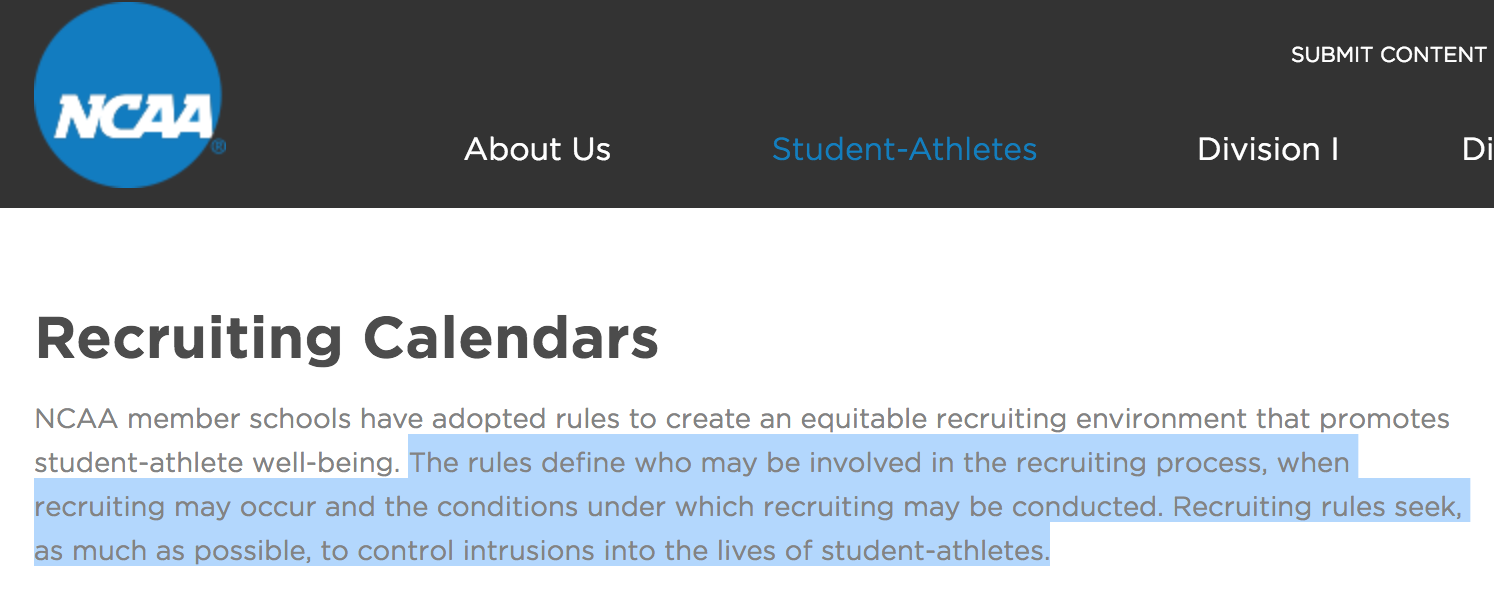
The NCAA posts, “The rules define who may be involved in the recruiting process, when recruiting may occur and the conditions under which recruiting may be conducted. Recruiting rules seek, as much as possible, to control intrusions into the lives of student-athletes.”  However, it makes no mention of prohibiting student initiated communicating with college coaches!

Clearly,  understanding and utilizing this rule would provide a recruiting advantage. So, I highly recommend that student-athlete take the initiative to reach out to coaches with emails, texts and voicemails. Never just wait around for coaches to call you! Instead be proactive and make the effort to contact them. 

To wrap up, it would be an atrocious understatement to say that recruiting is anything but a year round process. There is no downtime because college coaches are always recruiting. They are always looking for that special student-athlete who can impact their program. So make sure to use Spring to your advantage. Its a great time of year to get aquatinted with coaches, plan visits and build that ever important recruiting relationship.