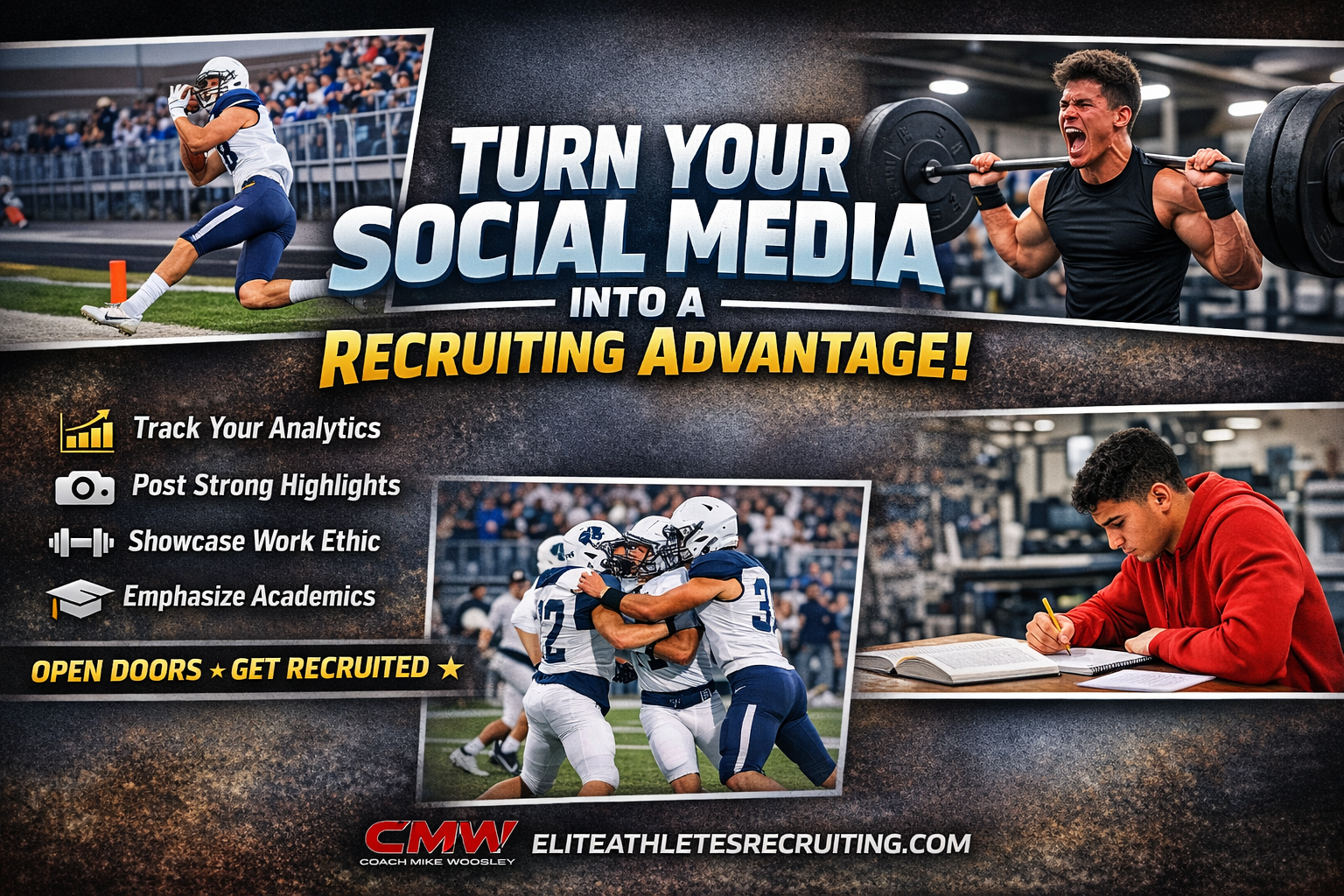
In today’s recruiting landscape, social media has become a front-facing resume for student-athletes. College coaches are no longer evaluating athletes based solely on game film and statistics—they are also evaluating who the athlete is as a person. Social media provides a window into your character, discipline, and decision-making. When used correctly, it can be a powerful tool that enhances your recruiting opportunities. When used poorly, it can quickly become a red flag.
Coaches often review social media profiles to better understand the athletes they are considering. They want to know if you are coachable, disciplined, and someone who will represent their program the right way. Your posts should reinforce what they see on film—your work ethic, leadership, consistency, and character. The goal is simple: make it easy for a coach to say yes to you.
The first step in building a strong social media presence is establishing clear guidelines. Every athlete should define what is appropriate and what is off-limits when posting. This includes language, images, and overall tone. A simple rule is to ask yourself whether you would be comfortable with your coach, parents, or a college recruiter seeing your post. Keeping your content respectful and avoiding negative or controversial topics protects your reputation. Once something is posted, it can be permanent.
Next, athletes should focus on choosing the right platforms. Not every platform needs your attention, but some are essential in recruiting. Twitter (X) is widely used by college coaches for communication and exposure, while Instagram is ideal for sharing highlights, training clips, and personal branding. Platforms like Hudl or YouTube are critical for hosting highlight film. Regardless of the platform, your profile should be public, clean, and easy for coaches to navigate.
Consistency is another key component, which is why developing a content calendar is important. Instead of posting randomly, athletes should plan their content to stay active and intentional. This can include game highlights, training clips, academic achievements, and personal development moments. A consistent posting strategy shows coaches that you are committed, organized, and focused on improvement.
Social media is not just about posting—it’s about engagement. Athletes should respond to comments and messages, and acknowledge when coaches or programs interact with their content. Following college programs and engaging appropriately helps build visibility and relationships over time. This level of interaction demonstrates maturity and communication skills, both of which are highly valued in the recruiting process.
 Elite Athletes Recruiting