Why the “5-in-5” NCAA Proposal Could Create More Opportunity for High School Athletes
One of the biggest positives of the proposed “5-in-5” eligibility model is that it places value back on development, readiness, and long-term fit.
As recruiting continues to evolve, student-athletes who consistently improve their skills, strength, speed, athleticism, and game IQ throughout high school will continue to separate themselves from the competition. Coaches will always look for athletes who are prepared to contribute, can adapt to college athletics, and will fit the culture of their program.
The new 5-in-5 structure also helps create a more level and predictable recruiting landscape. With clearer timelines and age limits, college programs will have greater roster clarity and fewer long-term logjams created by extended eligibility years. That stability can actually benefit high school recruits.
Another important reality that often gets overlooked is what’s happening at the Division II and Division III levels. While the transfer portal has dramatically impacted college athletics, a high percentage of athletes who enter the portal never find a new school or program fit. As a result, many step away from college athletics altogether, which ultimately creates openings on rosters for incoming high school athletes.
That means opportunities continue to emerge for recruits who stay prepared and continue developing.
The student-athletes who will benefit most from this changing landscape are the ones who stay focused on growth instead of fear. Recruiting has never simply been about hype or rankings—it has always been about finding athletes who are ready, coachable, competitive, and capable of helping a program succeed.
For recruits and their parents, the message remains the same: control what you can control. Develop your game, build strong academics, communicate professionally, and continue improving. Programs at every level are still searching for athletes who are ready for the opportunity when it comes.
With the NCAA proposing the new “5-in-5” eligibility model, much of the conversation has centered around concern—especially for younger classes like 2028. But while critics focus on what might change, there’s a powerful upside that recruits and families should not overlook. Interestingly, much of the criticism has come from perspectives that tend to focus on the negatives of today’s recruiting landscape—including concerns about travel teams, single-sport specialization, and the financial investment families make in their athletes. That, however, is a broader conversation for another time.
First, opportunity is not disappearing—it’s evolving.
The reality is that college programs will always need talent. No rule change eliminates the demand for skilled, coachable, and hardworking student-athletes. If anything, a more structured eligibility timeline creates greater clarity for coaches when building rosters, which can benefit recruits who are prepared and proactive.
Second, this model encourages intentional recruiting decisions.
Without the flexibility of redshirts and extended eligibility, college programs will prioritize athletes who are truly a fit—athletically, academically, and culturally. For recruits, this means a better chance of landing in a program where they can contribute and develop, rather than being buried on a roster due to logjams created by extra eligibility years.
Third, it places value back on development and readiness.
Athletes who focus on improving their skills, strength, and game IQ throughout high school will stand out. The new structure rewards those who are prepared to compete earlier in their college careers. That’s a positive shift for disciplined athletes who are committed to the process.
Fourth, it creates a more level and predictable recruiting landscape.
In recent years, COVID eligibility, the transfer portal, and NIL have created uncertainty and roster congestion. The “5-in-5” model helps stabilize that environment. With clearer timelines and age limits, recruits and families can plan more effectively and make smarter decisions about camps, showcases, and communication with coaches.
Finally, this is an opportunity to focus on what truly matters: finding the right college fit.
The best outcome in recruiting has never been simply “getting an offer”—it’s finding a program where an athlete can grow, compete, and succeed long-term. This rule change reinforces that mindset.
The Bottom Line
Yes, the landscape is changing. But high school athletes who are willing to put in the work, stay consistent, and approach recruiting with a plan will continue to have opportunities.
The athletes who succeed won’t be the ones worried about the rules—they’ll be the ones who adapt, prepare, and compete.
That’s always been the formula. And it’s not changing anytime soon.
In today’s recruiting landscape, social media has become a front-facing resume for student-athletes. College coaches are no longer evaluating athletes based solely on game film and statistics—they are also evaluating who the athlete is as a person. Social media provides a window into your character, discipline, and decision-making. When used correctly, it can be a powerful tool that enhances your recruiting opportunities. When used poorly, it can quickly become a red flag.
Coaches often review social media profiles to better understand the athletes they are considering. They want to know if you are coachable, disciplined, and someone who will represent their program the right way. Your posts should reinforce what they see on film—your work ethic, leadership, consistency, and character. The goal is simple: make it easy for a coach to say yes to you.
The first step in building a strong social media presence is establishing clear guidelines. Every athlete should define what is appropriate and what is off-limits when posting. This includes language, images, and overall tone. A simple rule is to ask yourself whether you would be comfortable with your coach, parents, or a college recruiter seeing your post. Keeping your content respectful and avoiding negative or controversial topics protects your reputation. Once something is posted, it can be permanent.
Next, athletes should focus on choosing the right platforms. Not every platform needs your attention, but some are essential in recruiting. Twitter (X) is widely used by college coaches for communication and exposure, while Instagram is ideal for sharing highlights, training clips, and personal branding. Platforms like Hudl or YouTube are critical for hosting highlight film. Regardless of the platform, your profile should be public, clean, and easy for coaches to navigate.
Consistency is another key component, which is why developing a content calendar is important. Instead of posting randomly, athletes should plan their content to stay active and intentional. This can include game highlights, training clips, academic achievements, and personal development moments. A consistent posting strategy shows coaches that you are committed, organized, and focused on improvement.
Social media is not just about posting—it’s about engagement. Athletes should respond to comments and messages, and acknowledge when coaches or programs interact with their content. Following college programs and engaging appropriately helps build visibility and relationships over time. This level of interaction demonstrates maturity and communication skills, both of which are highly valued in the recruiting process.
The first thing most students want to do when a season ends is relax and take a break. But if you’re an athlete with the goal of playing at the next level, coasting is not the best move. In fact, the off-season or the time between sports seasons is when serious athletes separate themselves from the pack. Instead of taking your foot off the gas, this is the time to rev up the engine and cover some serious ground. Remember, you only have a small four-year window to get seen, scouted, and recruited.
Taking time off can put you behind in both your development and your recruiting. It’s easy to fall into a funk where one day off turns into two, then four, then a week or even a month. College coaches recruit athletes year-round, so you should stay focused on your recruiting year-round as well. The off-season is the perfect time to train, improve your speed and strength, update your highlight video, attend camps, communicate with coaches, and get ahead academically.
So, how do you know if your recruiting is on the right track? Use these guidelines to evaluate your progress.
Freshmen: The recruiting process begins earlier than most athletes realize. As soon as you start high school, you should be building good habits. Focus on grades, strength training, skill development, and creating your first highlight clips. Recruiting truly starts the day you graduate eighth grade, so use your first off-season to build a strong foundation.
Sophomores: This is a pivotal year. Athletes who are on the recruiting radar should start receiving letters, emails, and camp invites. Use the off-season to attend camps, improve your testing numbers, and communicate with coaches.
Juniors: By this stage, you should be hearing from multiple coaches through emails, texts, or camp invitations. The off-season is critical for visits, exposure events, and taking the ACT or SAT. This is your most important recruiting year—make it count.
Seniors: Ideally, you should have been in contact with colleges the summer before your senior year. The goal is to be choosing between opportunities, not hoping for last-minute interest. Use the off-season to follow up with coaches, stay in peak condition, and be ready when opportunities arise.
Follow these guidelines and keep working between seasons, and you’ll put yourself in position to reach the home stretch of your recruiting journey.
One final piece of advice: If your recruiting isn’t going according to plan, get help. The earlier you address the problem, the more options you’ll have. Reach out for a free recruiting evaluation and get your process back on track.
A few years ago, I wrote about the value of junior college (JUCO) athletics as an option for high school athletes. At that time, the recruiting landscape was already competitive—but it has changed even more in recent years. The impact of COVID-19, extra eligibility years, and especially the rise of the transfer portal have reshaped recruiting across every level of college sports.
Today, many college programs are filling roster spots with experienced transfers rather than incoming freshmen. As a result, high school athletes are facing more competition than ever before. Because of this shift, junior college is no longer just a backup plan—it can be a smart, strategic step toward reaching long-term athletic and academic goals.
Here are five strong reasons to consider the JUCO route.
1. Cost-Effective College Option
One of the most practical reasons to attend a junior college is affordability. In many cases, tuition at a JUCO is significantly lower than at four-year public or private universities. It is common for junior college tuition to cost only a fraction of what a traditional four-year school charges.
For families concerned about student loan debt, JUCO can provide two years of college credits at a much lower price. When combined with athletic or academic aid, it often becomes one of the most affordable paths to a college degree.
2. Opportunity for Immediate Playing Time
For many athletes, the chance to compete right away is a major factor. At four-year colleges, especially at the Division I level, freshmen often spend their first year or two developing behind older, more experienced players.
At the junior college level, athletes frequently have the opportunity to step into meaningful roles early in their careers. Real game experience is invaluable, and it helps athletes develop the skills, confidence, and maturity needed to compete at higher levels.
Many successful college and professional athletes started at junior colleges, including Aaron Rodgers, Cam Newton, and Warren Moon.
3. A Second Chance in Recruiting
The recruiting process doesn’t always go as planned. Some athletes are overlooked, some develop later, and others simply need more exposure. Junior college gives athletes another opportunity to be recruited.
A strong JUCO season can attract attention from four-year college coaches who are looking for experienced, game-ready players. In today’s transfer-focused environment, coaches often value athletes who have already competed at the college level.
4. Time to Mature Academically and Physically
Not every athlete is ready—academically, emotionally, or physically—to step into a four-year college program right out of high school.
Junior college can provide:
Time to improve grades or test scores
A smaller campus environment
Additional physical development
A smoother transition to college life
Many athletes grow stronger, faster, and more confident during their JUCO years. Late bloomers especially benefit from the extra time to develop before moving on to a four-year program.
5. Athletic Scholarships and Competitive Programs
Junior colleges offer a wide range of competitive athletic programs. The National Junior College Athletic Association (NJCAA) oversees hundreds of schools across multiple regions and divisions.
Many JUCO programs offer athletic scholarships, especially at the Division I and Division II levels. When those scholarships are combined with lower tuition costs, junior college becomes a very attractive financial and athletic option.
With hundreds of programs nationwide across multiple sports, there are more opportunities than many families realize.
Final Thoughts
Junior college is no longer viewed as a last-resort option. In today’s recruiting climate, it can be a smart and strategic pathway for athletes who want to continue developing, competing, and pursuing their college goals.
For the right athlete, JUCO offers:
Lower costs
Immediate playing opportunities
A second recruiting window
Time to mature and develop
Scholarship opportunities
Sometimes the best path to a four-year program—or even a professional career—starts with two strong years at the junior college level.
The college recruiting process can feel stressful and overwhelming, but when an athlete finally commits to a school, it’s often a huge relief and a moment worth celebrating. Unfortunately, that excitement can quickly turn into uncertainty if the coach who recruited you leaves the program before you officially sign.
This situation is more common than many families realize. Coaching changes happen every year across all levels of college athletics, and a verbal commitment does not always guarantee what comes next. If you find yourself in this position, don’t panic—there are clear steps you can take to protect your future and continue pursuing your college goals.
Understand What a Verbal Commitment Really Means
First, it’s important to understand that a verbal commitment is not binding for either the athlete or the school. While it reflects mutual interest and intent, it does not legally secure a roster spot or athletic aid. Until paperwork is signed, the recruiting process is technically still open.
This is why coaching changes before signing day can create uncertainty. A new staff may reassess the roster, recruiting board, or scholarship allocations.
Step 1: Contact the Recruiting Coach or Athletic Department
If the coach who recruited you is leaving or has already left, reach out as soon as possible. If they are still available, ask directly whether your spot and offer remain secure. In some cases, outgoing coaches will advocate for committed recruits during the transition.
If the coach is already gone, contact the athletic department or recruiting coordinator to ask about next steps. Clear, professional communication is key.
Step 2: Introduce Yourself to the New Coaching Staff
Don’t wait for the new staff to contact you. Be proactive.
Send an introductory email to the new head coach or position coach that:
Reintroduces who you are
Confirms your verbal commitment
Highlights your recent athletic and academic progress
Expresses continued interest in the program
This gives the new staff context and shows maturity, initiative, and professionalism—traits coaches value.
Step 3: Keep Your Options Open
Until something is signed, it’s wise to continue communicating with other programs that have shown interest. This is not being disloyal; it’s being realistic. Let those coaches know about the coaching change and where you stand.
Having options protects you if the new staff decides to go in a different direction.
Athletic Grant-in-Aid Agreements: What You Need to Know
What many people still call the National Letter of Intent (NLI) has evolved. Today, athletes sign Athletic Grant-in-Aid agreements, which outline the financial aid being provided by the institution for athletic participation.
Once signed:
The agreement is binding for the academic year stated
The athlete agrees to attend that institution
Other schools must stop recruiting the athlete
While this is an exciting milestone, it’s also a serious commitment. Breaking a signed agreement can lead to penalties, including transfer restrictions or loss of eligibility, depending on the situation.
Because of this, athletes should only sign once they are confident in:
The coaching staff
Their role on the team
The academic and athletic fit
Final Thoughts
A coaching change before signing can feel unsettling, but it doesn’t have to derail your recruiting journey. Stay proactive, communicate clearly, and lean on trusted advisors—parents, high school coaches, and recruiting professionals—to help guide your decisions.
Remember: your commitment should be to the right fit for you, not just to a coach. By understanding the process and taking the right steps, you can navigate this challenge with confidence and position yourself for long-term success.
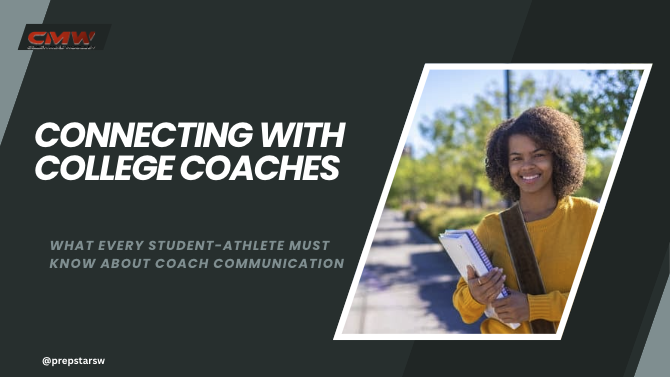
Connecting with college coaches is one of the most important steps in the recruiting process—and one of the most misunderstood. Many student-athletes assume coaches will simply “find” them. In reality, recruiting is a proactive process that rewards preparation, communication, and persistence.
To increase your chances of building meaningful connections with college coaches, focus on the following five proven strategies.
1. Research Potential Schools
Before reaching out to any coach, take the time to research schools that align with both your athletic and academic goals. Look beyond the name on the jersey. Consider the level of competition, the coaching staff and their recruiting history, training facilities, and the quality of academic programs that support your long-term career plans. Targeting the right schools from the start leads to stronger conversations and better recruiting outcomes.
2. Reach Out to Coaches
Don’t wait for a coach to contact you—initiate the conversation. Email, social media, text messages, and phone calls are all tools athletes can use to express interest. Effective communication should highlight not only your athletic ability but also your desire to earn a college education and contribute to the program. Personalized, respectful outreach shows maturity and genuine interest, which coaches value.
3. Link Your Recruit Profile
Your recruiting profile acts as your sports resume. A PrepStar recruit profile provides college coaches with a clear snapshot of who you are as an athlete and student, including statistics, academic information, achievements, and personal details. Always include your profile link when contacting coaches. You can find your link by clicking the Settings button on the Scoreboard homepage, making it easy to share with every coach you contact.
4. Stay Active on Social Media
Social media matters in recruiting. College coaches regularly review a recruit’s online presence to learn more about their character, habits, and behavior. Stay active, positive, and professional. Share training updates, game highlights, and academic achievements while avoiding posts that could raise red flags. Think of social media as an extension of your recruiting profile.
5. Be Persistent and Patient
Recruiting is rarely an overnight process. Coaches manage hundreds of prospects and tight recruiting calendars, so responses may not come immediately. Stay patient, follow up appropriately, and continue developing your skills both on and off the field. Consistent effort, strong communication, and steady improvement often separate recruited athletes from those who get overlooked.
Final Thoughts
Connecting with college coaches requires a plan, consistent action, and the right tools. By researching schools, reaching out confidently, sharing your PrepStar recruit profile, managing your social media presence, and staying persistent, you put yourself in control of your recruiting journey.
Preparation creates opportunity—and opportunity leads to results.
Recruiting timelines and communication rules can appear confusing. But with a little planning and research, athletes can use them to their benefit. For example, it is very important to be aware of the contact communication periods within your sport as well as the communication regulations that accompany them. This information is easy to locate within the NCAA and NAIA regulations pages on their respective websites. This information can also be accessed in the Locker Room tab of your Prepstar recruiting profile.
It is also important to note the communication rules. While many divisions (D1, D2, D3, etc) have similar communication rules, in actuality, there are some glaring differences. The differences range from permissible emails, phone calls or visits. For example, D2 coaches in comparison to DI coaches, have much more leniency with communications. It is helpful to learn the differences.
Contact periods for all colleges run along a similar timeline however. For example, FBS schools (those that go to bowl games) have similar contact periods than FCS or D2 colleges. But, D3 colleges have nominal timeline communication.
Now, for athletes looking to take advantage of recruiting opportunities, the key is to be proactive! Please keep in mind that at any time throughout the year, athletes are permitted to contact coaches. This means that to communicate with college coaches outside of designated contact periods the student-athlete has to be the one to initiate contact. Additionally, this rule also applies to underclassmen (freshman and sophomores). So again, no matter what time of year and no matter the contact period, college coaches are permitted to talk with prospects as long as the prospect makes the first move to contact them. For this reason, I always suggest asking the coach to schedule a few minutes of his/her time for a quick call to talk about their program and recruiting process.
The NCAA posts, “The rules define who may be involved in the recruiting process, when recruiting may occur and the conditions under which recruiting may be conducted. Recruiting rules seek, as much as possible, to control intrusions into the lives of student-athletes.” However, the statement makes no mention of prohibiting student initiated communicating with college coaches.
Clearly, it would be an advantage to use this rule to your benefit. I highly recommend that student-athletes take the initiative to reach out to coaches with emails, texts, social media and phone calls. Never wait around for coaches to call you! Instead, be proactive and make it a priority to contact them.
To wrap up, it is an understatement to say that recruiting is anything but a year round process. There is no downtime. College coaches are always recruiting. They are always on alert, looking for that student-athlete who can impact their program.
Homeschooling continues to rise across the country. In the 2022–23 school year, about 3.4% of all K–12 students in the U.S. — roughly 3 to 4 million — were homeschooled, up from around 2.8% in 2018–19. With more families choosing home education for flexibility, faith, or focus on athletics, many homeschool athletes are now setting their sights on competing at the next level.
The path to college sports is absolutely open for homeschool athletes — it just takes organization, preparation, and understanding the NCAA eligibility process.
Start by creating your Student-Athlete Account at the NCAA Eligibility Center. This is your official starting point for NCAA verification and where you’ll upload your transcript, course details, and proof of graduation.
Next Build a Complete Homeschool Transcript. The transcript should list all courses, grades, and credits earned and be signed and dated by your homeschool administrator (usually a parent). This serves as your official record of academic achievement.
Then, Provide Course Descriptions and Meet NCAA Core Standards. Each course needs a brief outline that includes textbooks, grading methods, and objectives. The NCAA requires 16 core courses in English, math, science, and social studies, so make sure your curriculum matches those expectations.
Along the way, keep detailed records. Save syllabi, graded work, and reading lists. The NCAA may request additional documentation, and staying organized will make the process much smoother. Student athletes will need to submit proof of graduation. So, a homeschool diploma or written statement confirming your graduation date completes your eligibility file.
Throughout your high school care it is important to compete, so get on the field and get noticed!
Join a homeschool athletic association, club program, or — where allowed — your local public school team to gain competitive experience. Exposure is key to being recruited by college coaches.
Coach’s Tip: PrepStar has helped thousands of student-athletes, including homeschoolers, get seen and recruited by college coaches nationwide. If you’re homeschooled and ready to take the next step toward your college recruiting journey follow my IG page- homefieldadvantagehq – our page to help homeschool athletes reach the next level.
The PrepStar featured athlete for this week is Riley Carson. Riley is a versatile, high-impact player who excels in multiple phases of the game. Carson contributes as a wide receiver and strong safety, demonstrating his athleticism and football IQ. His presence on special teams is elite, where he serves as a punter, kickoff specialist, and punt returner. A key contributor to Mica Mountain’s 2024 4A State Championship team, Riley was also selected All Conference First Team Punter, All Conference Second Team Punt Return, All Conference Honorable Mention Wide Receiver and Strong Safety.
This summer he also picked up offers from Lake Forest, Western New Mexico, Wabash, Minot State and Pacific and was selected for the 2025 Fiesta Bowl All State Selection (Punter). Recently, I caught up with the rising Senior about preparation for the coming season and some memorable moments.