Getting Noticed in College Recruiting: Why Talent Alone Isn’t Always Enough

Every year, I talk with athletes who have the ability to play college sports but aren’t getting the recruiting attention they hoped for. That can be frustrating.Especially when you see other athletes getting calls, visits, offers and social media attention.

But here’s something every athlete needs to understand: Being a good athlete and getting noticed by college coaches are two different things.

Some athletes have access to tremendous recruiting resources. They attend large schools with successful athletic programs, experienced coaches, private trainers, recruiting services and established relationships with college programs. Other athletes don’t have those same resources.

They may attend a smaller school, play for a program that doesn’t receive much exposure, or simply have to figure out the recruiting process on their own. That doesn’t mean they aren’t capable of playing at the next level. It may mean they need to be more proactive about getting their name in front of the right coaches.

Don’t Wait to Be Discovered

One of the biggest mistakes an athlete can make is assuming that college coaches will eventually find them.

Instead, athletes should learn how to take ownership of the recruiting process. That means learning how to communicate with coaches, ask good questions, research schools and present themselves professionally.

It also means being willing to do things other athletes aren’t doing.

It’s not a complicated strategy. But it does demonstrate something important: Effort.

Get More Recruiting Attention

That’s why I’m hosting a special live webinar:

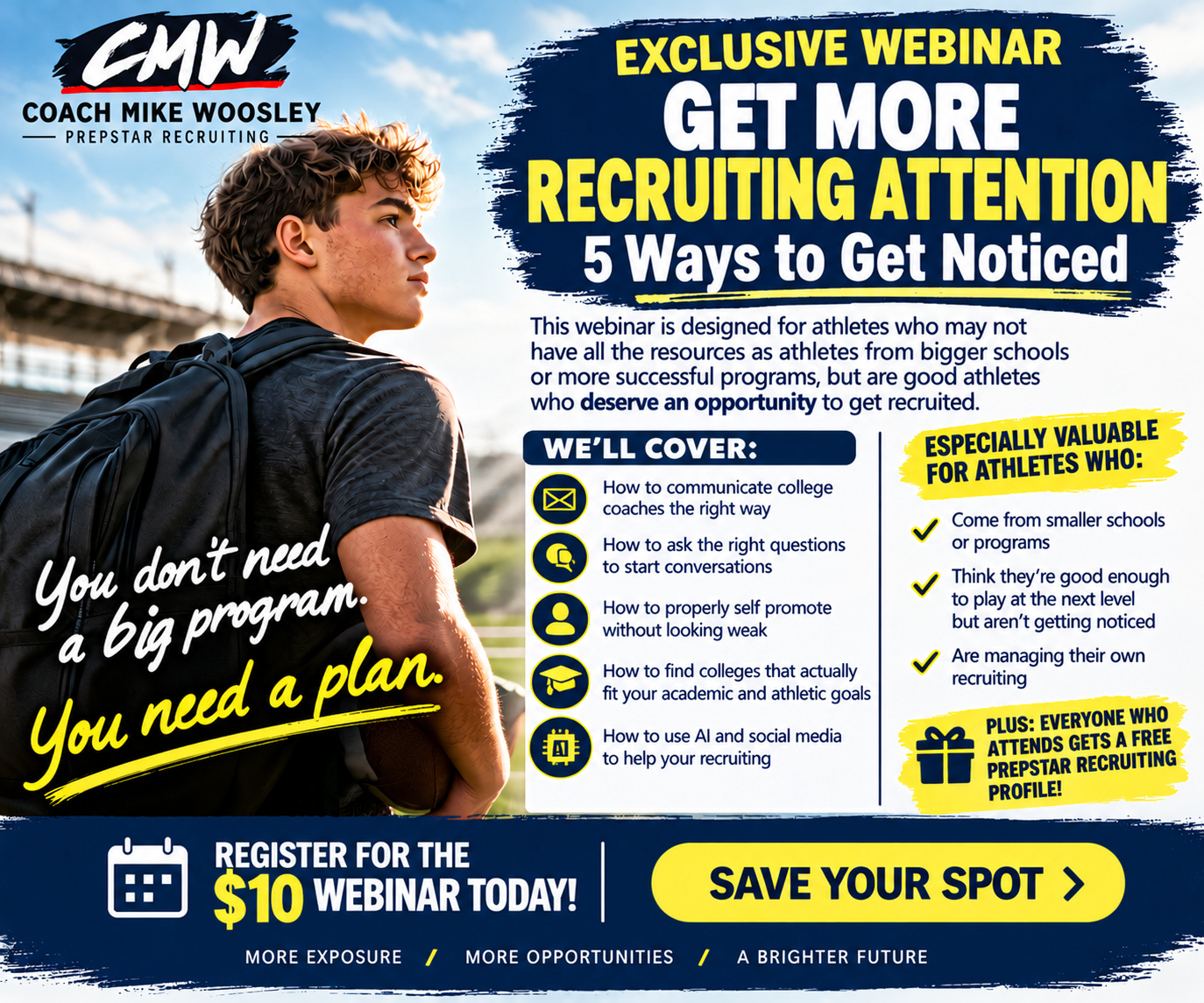
Get More Recruiting Attention: 5 Ways to Get Noticed

Sunday, October 4 at 1:00 PM Pacific Time

Registration: Only $10

In 60 minutes, I’ll show you practical ways to separate yourself from other athletes and do things that most recruits aren’t doing.

We’ll cover:

  • How to communicate with college coaches the right way
  • How to ask the right questions to start conversations
  • How to properly self-promote without looking weak
  • How to find colleges that actually fit your academic and athletic goals
  • How to use AI and social media to help your recruiting

This webinar is especially valuable for athletes who may not have all the resources available to athletes from bigger schools or more successful programs. It’s for the athlete from a smaller school. The athlete whose team doesn’t get a lot of exposure.The athlete who believes they can play at the next level but isn’t getting noticed. And the athlete who wants to take more control of their own recruiting.

See, you don’t need to have every recruiting resource available to you. You need to know what you can do with the resources you have. And sometimes, the difference is simply being willing to do what other athletes aren’t doing.

Join Me Sunday October 4 @ 1pm Pacific

For just $10, you’ll get a 60-minute recruiting webinar focused on practical strategies you can put to work immediately.

And everyone who attends will receive a FREE recruiting profile template that can be used when contacting college coaches.

Seats are limited.

👉 Secure Your Spot for $10

Don’t just wait to be discovered.

Get noticed.
Talent matters, but access, exposure, resources, and knowing how to navigate recruiting can make a major difference.

Get More Recruiting Attention: 5 Ways to Get Noticed – webinar to help athletes and parents

Not every athlete has the same recruiting resources.

Some athletes attend large schools with established athletic programs, experienced recruiting staff, private trainers, recruiting coordinators, and coaches who regularly communicate with college programs.

Others play for smaller schools, smaller programs, or teams that simply don’t attract the same level of attention.

That doesn’t mean they aren’t good enough to play college sports.

It may simply mean they have to work harder to get noticed.

I’ve worked with many athletes who have the ability to play at the next level but aren’t receiving the attention they deserve. They may not have the exposure, connections, or resources that other athletes have. But, what they do have is athletic ability, a willingness to work, and a desire to continue playing.

That’s where taking control of your recruiting can make a difference.

So to help athletes in this undeserving situation, I’m hosting a webinar:

Get More Recruiting Attention: 5 Ways to Get Noticed

This webinar is designed for athletes who want to become more proactive in their recruiting and learn how to create opportunities instead of simply waiting for college coaches to find them.

The webinar will be Sunday, October 4th at 1:00 Pacific time. Cost is only $10.

We’ll discuss practical strategies athletes can use to separate themselves from the crowd, including how to:

  • How to communicate college coaches the right way
  • How to ask the right questions to start conversations
  • How to properly self promote without looking weak
  • How to find colleges that actually fit your academic and athletic goals
  • How to use AI and social media to help your recruiting 

None of these strategies require a five-star rating, a nationally recognized program, or a huge recruiting budget.

They require initiative. (And $10 bucks to reserve your spot).

The goal isn’t to convince every college coach that you’re the right athlete. It’s to help you identify the programs that might be a good fit and give those coaches a reason to notice you!

This webinar is especially for the athlete who thinks:

“I know I can play at the next level, but I’m not getting noticed.”

If that’s you, this webinar can give you some practical tools to take control of your recruiting.

And there’s a bonus: everyone who attends will receive a FREE recruiting profile template that can be used when contacting college coaches.

You don’t have to come from the biggest school or play for the most successful program to have a college opportunity.

You just have to be willing to become more proactive, more prepared, and more recruitable.

Register for the webinar and learn how to make your mark.

See you on the webinar Sunday, October 4th at 1:00 Pacific time.

https://pb-site.com/p/HhWWr7KRht9

Committing to a College: What to Do If a Coach Leaves Before You Sign

The college recruiting process can feel stressful and overwhelming, but when an athlete finally commits to a school, it’s often a huge relief and a moment worth celebrating. Unfortunately, that excitement can quickly turn into uncertainty if the coach who recruited you leaves the program before you officially sign.

This situation is more common than many families realize. Coaching changes happen every year across all levels of college athletics, and a verbal commitment does not always guarantee what comes next. If you find yourself in this position, don’t panic—there are clear steps you can take to protect your future and continue pursuing your college goals.

Understand What a Verbal Commitment Really Means

First, it’s important to understand that a verbal commitment is not binding for either the athlete or the school. While it reflects mutual interest and intent, it does not legally secure a roster spot or athletic aid. Until paperwork is signed, the recruiting process is technically still open.

This is why coaching changes before signing day can create uncertainty. A new staff may reassess the roster, recruiting board, or scholarship allocations.

Step 1: Contact the Recruiting Coach or Athletic Department

If the coach who recruited you is leaving or has already left, reach out as soon as possible. If they are still available, ask directly whether your spot and offer remain secure. In some cases, outgoing coaches will advocate for committed recruits during the transition.

If the coach is already gone, contact the athletic department or recruiting coordinator to ask about next steps. Clear, professional communication is key.

Step 2: Introduce Yourself to the New Coaching Staff

Don’t wait for the new staff to contact you. Be proactive.

Send an introductory email to the new head coach or position coach that:

  • Reintroduces who you are
  • Confirms your verbal commitment
  • Highlights your recent athletic and academic progress
  • Expresses continued interest in the program

This gives the new staff context and shows maturity, initiative, and professionalism—traits coaches value.

Step 3: Keep Your Options Open

Until something is signed, it’s wise to continue communicating with other programs that have shown interest. This is not being disloyal; it’s being realistic. Let those coaches know about the coaching change and where you stand.

Having options protects you if the new staff decides to go in a different direction.

Athletic Grant-in-Aid Agreements: What You Need to Know

What many people still call the National Letter of Intent (NLI) has evolved. Today, athletes sign Athletic Grant-in-Aid agreements, which outline the financial aid being provided by the institution for athletic participation.

Once signed:

  • The agreement is binding for the academic year stated
  • The athlete agrees to attend that institution
  • Other schools must stop recruiting the athlete

While this is an exciting milestone, it’s also a serious commitment. Breaking a signed agreement can lead to penalties, including transfer restrictions or loss of eligibility, depending on the situation.

Because of this, athletes should only sign once they are confident in:

  • The coaching staff
  • Their role on the team
  • The academic and athletic fit

Final Thoughts

A coaching change before signing can feel unsettling, but it doesn’t have to derail your recruiting journey. Stay proactive, communicate clearly, and lean on trusted advisors—parents, high school coaches, and recruiting professionals—to help guide your decisions.

Remember: your commitment should be to the right fit for you, not just to a coach. By understanding the process and taking the right steps, you can navigate this challenge with confidence and position yourself for long-term success.

Recruiting Rules Made Simple: What Every Athlete Must Know About Coach Communication

While many divisions (D1, D2, D3, etc) have similar communication rules, in actuality, there are some glaring differences.

Recruiting timelines and communication rules can appear confusing. But with a little planning and research, athletes can use them to their benefit. For example, it is very important to be aware of the contact communication periods within your sport as well as the communication regulations that accompany them. This information is easy to locate within the NCAA and NAIA regulations pages on their respective websites. This information can also be accessed in the Locker Room tab of your Prepstar recruiting profile.

It is also important to note the communication rules. While many divisions (D1, D2, D3, etc) have similar communication rules, in actuality, there are some glaring differences. The differences range from permissible emails, phone calls or visits. For example, D2 coaches in comparison to DI coaches, have much more leniency with communications. It is helpful to learn the differences.

Contact periods for all colleges run along a similar timeline however. For example, FBS schools (those that go to bowl games) have similar contact periods than FCS or D2 colleges. But, D3 colleges have nominal timeline communication.

Now, for athletes looking to take advantage of recruiting opportunities, the key is to be proactive! Please keep in mind that at any time throughout the year, athletes are permitted to contact coaches. This means that to communicate with college coaches outside of designated contact periods the student-athlete has to be the one to initiate contact. Additionally, this rule also applies to underclassmen (freshman and sophomores). So again, no matter what time of year and no matter the contact period, college coaches are permitted to talk with prospects as long as the prospect makes the first move to contact them. For this reason, I always suggest asking the coach to schedule a few minutes of his/her time for a quick call to talk about their program and recruiting process.

The NCAA posts, “The rules define who may be involved in the recruiting process, when recruiting may occur and the conditions under which recruiting may be conducted. Recruiting rules seek, as much as possible, to control intrusions into the lives of student-athletes.”
However, the statement makes no mention of prohibiting student initiated communicating with college coaches.

Clearly, it would be an advantage to use this rule to your benefit. I highly recommend that student-athletes take the initiative to reach out to coaches with emails, texts, social media and phone calls. Never wait around for coaches to call you! Instead, be proactive and make it a priority to contact them. 

To wrap up, it is an understatement to say that recruiting is anything but a year round process. There is no downtime. College coaches are always recruiting. They are always on alert, looking for that student-athlete who can impact their program. 

Prepstar featured athlete- riley carson

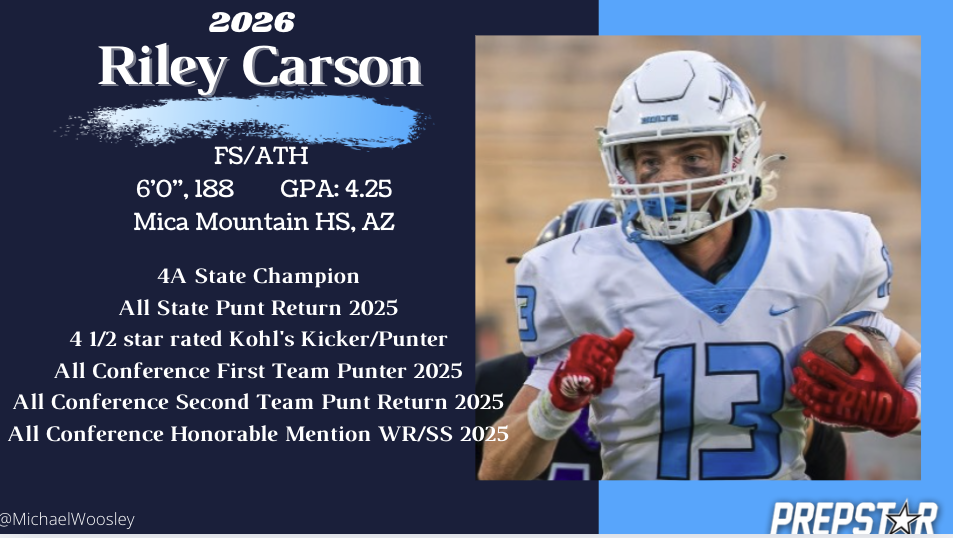
The PrepStar featured athlete for this week is Riley Carson. Riley is a versatile, high-impact player who excels in multiple phases of the game. Carson contributes as a wide receiver and strong safety, demonstrating his athleticism and football IQ. His presence on special teams is elite, where he serves as a punter, kickoff specialist, and punt returner. A key contributor to Mica Mountain’s 2024 4A State Championship team, Riley was also selected All Conference First Team Punter, All Conference Second Team Punt Return, All Conference Honorable Mention Wide Receiver and Strong Safety. 

This summer he also picked up offers from Lake Forest, Western New Mexico, Wabash, Minot State and Pacific and was selected for the 2025 Fiesta Bowl All State Selection (Punter). Recently, I caught up with the rising Senior about preparation for the coming season and some memorable moments.

Metrics
Height 6’0”
Weight 188

Academics
GPA 4.25

Link to recruit profile: PrepStar 360 Athlete
Link to Hudl: 2024 Season Highlights
Twitter/X: @Riley_no13

What made you fall in love with your sport?
Bonding and making relationships with the people around me.

What’s one aspect of your game you’re working on right now?
Being a better play recognition in real time.

What’s the best piece of advice you’ve received from a coach?
Do everything you try at 100%

What’s been your biggest highlight or proudest moment?
Winning the 2024 state championship with the football team.

Who do you look up to as an athlete?
I look up to my dad.

If a college coach asked what sets you apart, what would you say?
I would say my versatility.

What’s your go-to music before games?
Whatever is being played on the speaker in the locker room.

What’s your favorite pre-game snack or meal?
A dirt-n-worms from Freddy’s.

If you weren’t an athlete, what would your hobby be?
I would be a competitive cornhole player.