Peak Performance Starts with the Truth: Why Every Athlete Needs a Personal Evaluation

Every athlete wants to perform at their highest level. They spend hours in the weight room, train with private coaches, buy the latest recovery tools, follow nutrition plans, and scroll through social media looking for the next secret to gaining an edge.

But here’s the question that matters most:

Are you actually getting better?

It’s a simple question that surprisingly few athletes ask themselves honestly.

Activity Isn’t Progress

Today’s athletes have access to more information, training methods, and technology than ever before. Yet many confuse being busy with becoming better.

You can:

  • Lift weights six days a week.
  • Run speed drills every morning.
  • Eat perfectly.
  • Sleep eight hours a night.
  • Spend hundreds or even thousands of dollars on trainers and camps.

None of those things guarantee improvement.

If your performance on the field, court, or track isn’t improving, then something needs to change.

The goal isn’t to become a better weightlifter.

The goal isn’t to become a better gym athlete.

The goal is to become a better football player, basketball player, softball player, soccer player, or lacrosse player.

Everything else is simply a tool to help you get there.

Stop Chasing Trends

Social media has made it easy to believe that every new workout, supplement, or recovery gadget is the missing piece.

The truth?

There is no shortcut around honest evaluation.

Some athletes spend more time filming workouts than studying game film.

Others obsess over vertical jump numbers while ignoring their shooting percentage, tackling technique, first touch, or decision-making.

Peak performance isn’t about looking like an athlete.

It’s about performing like one.

Ask Yourself the Hard Questions

Real growth begins when you’re willing to be brutally honest with yourself.

Ask yourself:

  • Am I better today than I was three months ago?
  • What specific part of my game has improved?
  • What still holds me back?
  • What skills have I avoided because they’re difficult?
  • Do I train with purpose or simply follow a routine?
  • Is my training transferring to competition?

These questions aren’t meant to discourage you.

They’re designed to give you direction.

Measure What Matters

The best athletes don’t guess.

They measure.

Instead of saying, “I’m working hard,” ask:

  • Has my sprint time improved?
  • Am I stronger in ways that help my sport?
  • Am I making better decisions during competition?
  • Have my statistics improved?
  • Do my coaches trust me with bigger roles?
  • Am I becoming more consistent under pressure?

If you can’t measure improvement, it’s difficult to know whether your plan is working.

Change Isn’t Failure

One of the biggest mistakes athletes make is sticking with a plan simply because they’ve invested time in it.

If your current approach isn’t producing results, changing your plan isn’t quitting.

It’s adapting.

Champions constantly evaluate.

They make adjustments.

They seek feedback.

They improve.

Peak Performance Requires Reflection

The athletes who reach the next level aren’t always the most talented.

They’re often the ones willing to look in the mirror, identify weaknesses, and make intentional changes.

Every practice.

Every workout.

Every game.

Every season.

Ask yourself one question:

“Is what I’m doing helping me become a better player?”

If the answer is yes, keep going.

If the answer is no, have the courage to make a change.

Because peak performance doesn’t come from doing more.

It comes from doing what works.


Coach Mike’s Challenge

This week, set aside 30 minutes with a notebook and honestly evaluate yourself.

Write down:

  • Three areas where you’ve improved.
  • Three areas that still need work.
  • One habit that’s helping your development.
  • One habit that’s holding you back.
  • One change you’ll commit to making this week.

Remember, the athletes who improve the fastest aren’t always the ones who work the hardest.

They’re the ones who are honest enough to evaluate themselves, humble enough to accept feedback, and disciplined enough to make changes.

That’s how peak performance is built.

One honest evaluation at a time.

What Do You Need Most to Reach the Next Level?

Every athlete’s journey is different.

Some athletes need to become stronger and more explosive. Others need better nutrition to maximize their performance. Many struggle to stand out on social media or develop the confidence and mental toughness needed to compete at their highest level.

At Elite Athletes Recruiting, our mission has always been to help student-athletes earn opportunities to compete at the next level. But recruiting success isn’t just about sending emails to college coaches—it’s about becoming the type of athlete coaches want to recruit.

That’s why Coach Mike’s Elite Athlete Performance & Recruiting Coaching focuses on developing the complete student-athlete.

Position-Specific Strength Programs

Generic workouts produce generic results.

Our position-specific strength programs are designed around the physical demands of your sport and position. Whether you’re a quarterback looking to improve rotational power, a lacrosse midfielder building endurance and speed, or a softball player developing explosive power, your training should match your goals.

The right training improves performance, reduces injury risk, and helps you separate yourself from the competition.

Nutrition Coaching & Meal Planning

Training hard is only half the equation.

Without proper nutrition, your body can’t recover, build muscle, or perform consistently. Coach Mike provides practical nutrition guidance and meal planning designed for busy student-athletes and their families.

When your nutrition improves, your energy, recovery, and performance usually improve with it.

Personal Branding on Social Media

Today’s recruiting landscape extends far beyond the field.

College coaches frequently evaluate an athlete’s online presence before making recruiting decisions. A professional social media profile can reinforce your character, work ethic, leadership, and dedication to your sport.

We’ll help you create a personal brand that highlights your accomplishments, showcases your personality, and supports your recruiting goals.

Mental Performance Preparation

Talent wins games.

Mental toughness wins championships.

Learning how to stay confident under pressure, recover from mistakes, remain focused, and compete with discipline are skills that separate good athletes from great ones.

Our mental performance coaching helps athletes develop the mindset needed to perform when it matters most.

Which Area Would Help You Most?

As Coach Mike continues expanding the Elite Athlete Performance & Recruiting Coaching program, we want to build resources that provide the greatest value to student-athletes and their families.

We’d love to hear from you.

Which area interests you the most?

  • Position-Specific Strength Programs
  • Nutrition Coaching & Meal Plans
  • Personal Branding on Social Media
  • Mental Performance Preparation

Reply with the number that best matches your biggest need, or let us know if there’s another area you’d like Coach Mike to cover.

Together, we’ll build a plan that not only helps you become a better athlete—but also a stronger college recruiting prospect.

28,000 Views and Three Lessons Learned Along the Way

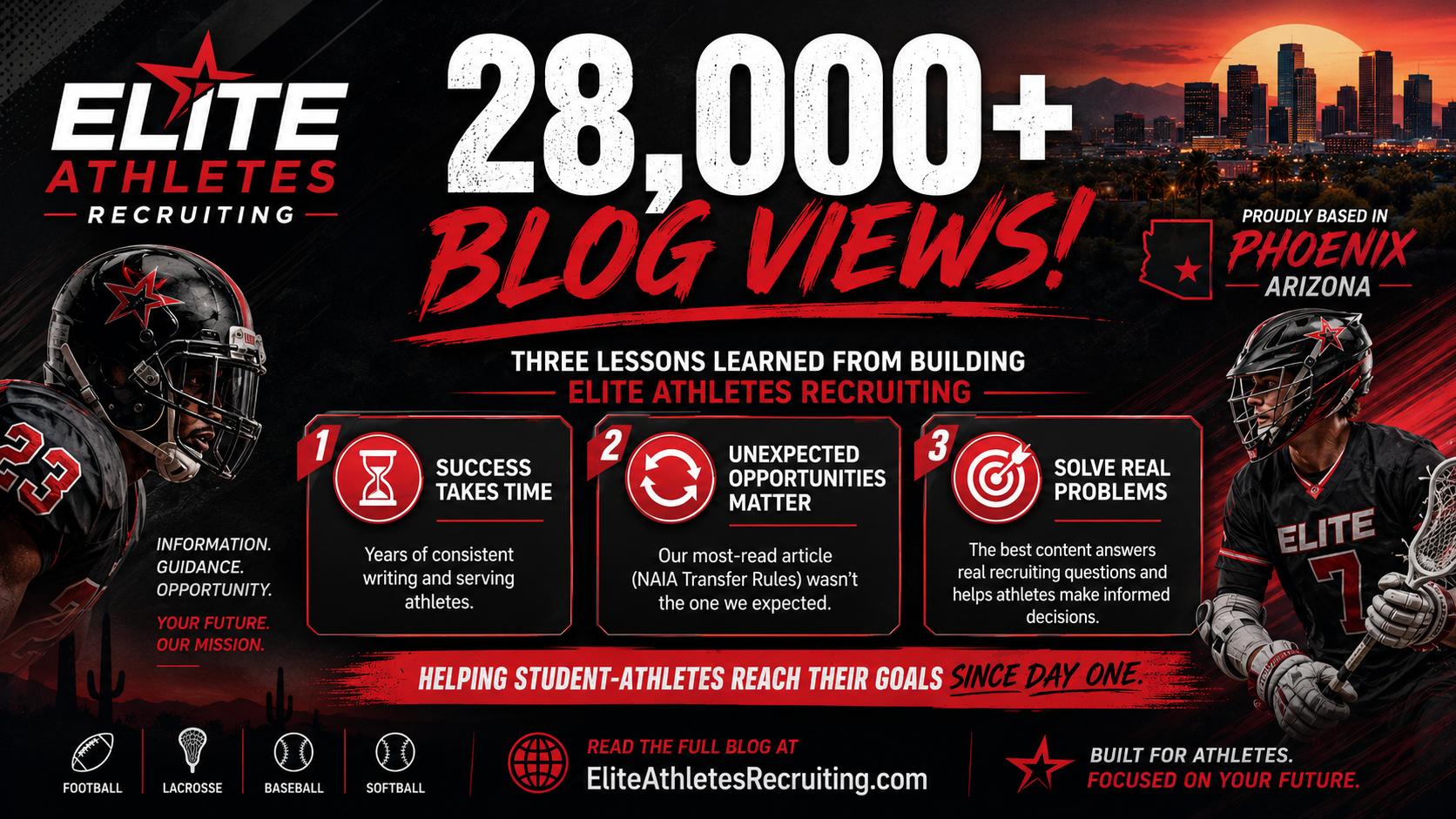
This month, Elite Athletes Recruiting surpassed 28,000 total blog views. While the number itself is exciting, what matters most is that thousands of student-athletes, parents, and coaches have found information that helped them make better decisions during the recruiting journey.

As I reflected on this milestone, three lessons stood out.

1. Success Takes Time

The first lesson is simple: success rarely happens overnight.

I’ve been writing recruiting articles for several years. Some posts gained traction quickly, while others sat quietly for months—or even years—before readers discovered them. Consistent effort, even when results aren’t immediate, compounds over time.

Whether you’re pursuing a college roster spot, building a business, or developing a blog, the principle is the same: keep showing up. The athletes who succeed are often the ones who stay committed long after others quit.

2. Sometimes Unexpected Things Turn Out for the Best

The most-viewed article on the site is NAIA Transfer Rules: How the Transfer Release Aids Student-Athletes, with more than 5,600 views.

When I wrote that article, I never expected it to become the most-read post on the website. I simply wanted to explain a rule change that could benefit student-athletes.

The lesson? You never know which opportunity, relationship, game, or decision will create the biggest impact. Many times, the things we don’t plan for become the most meaningful. Stay open to opportunities and trust the process.

3. The Best Content Solves Real Problems

Looking at the most-read articles, a pattern emerges. Our readers aren’t searching for motivation alone—they’re searching for answers.

Topics such as transfer rules, eligibility requirements, scholarship opportunities, recruiting timelines, and athlete development consistently attract the most attention because they solve real challenges facing student-athletes and families.

The lesson is valuable both in sports and in life: if you want to make a difference, focus on serving others. Find a problem, provide value, and help people move forward.

Thank you to everyone who has read, shared, and supported Elite Athletes Recruiting over the years. The goal has never been to chase views—it has always been to help student-athletes maximize their opportunities.

Here’s to the next 28,000 views and, more importantly, to helping more athletes achieve their goals. ~ Coach Mike

Impact of 5-in-5 NCAA Proposal on High School Athletes

Why the “5-in-5” NCAA Proposal Could Create More Opportunity for High School Athletes

One of the biggest positives of the proposed “5-in-5” eligibility model is that it places value back on development, readiness, and long-term fit.

As recruiting continues to evolve, student-athletes who consistently improve their skills, strength, speed, athleticism, and game IQ throughout high school will continue to separate themselves from the competition. Coaches will always look for athletes who are prepared to contribute, can adapt to college athletics, and will fit the culture of their program.

The new 5-in-5 structure also helps create a more level and predictable recruiting landscape. With clearer timelines and age limits, college programs will have greater roster clarity and fewer long-term logjams created by extended eligibility years. That stability can actually benefit high school recruits.

Another important reality that often gets overlooked is what’s happening at the Division II and Division III levels. While the transfer portal has dramatically impacted college athletics, a high percentage of athletes who enter the portal never find a new school or program fit. As a result, many step away from college athletics altogether, which ultimately creates openings on rosters for incoming high school athletes.

That means opportunities continue to emerge for recruits who stay prepared and continue developing.

The student-athletes who will benefit most from this changing landscape are the ones who stay focused on growth instead of fear. Recruiting has never simply been about hype or rankings—it has always been about finding athletes who are ready, coachable, competitive, and capable of helping a program succeed.

For recruits and their parents, the message remains the same: control what you can control. Develop your game, build strong academics, communicate professionally, and continue improving. Programs at every level are still searching for athletes who are ready for the opportunity when it comes.

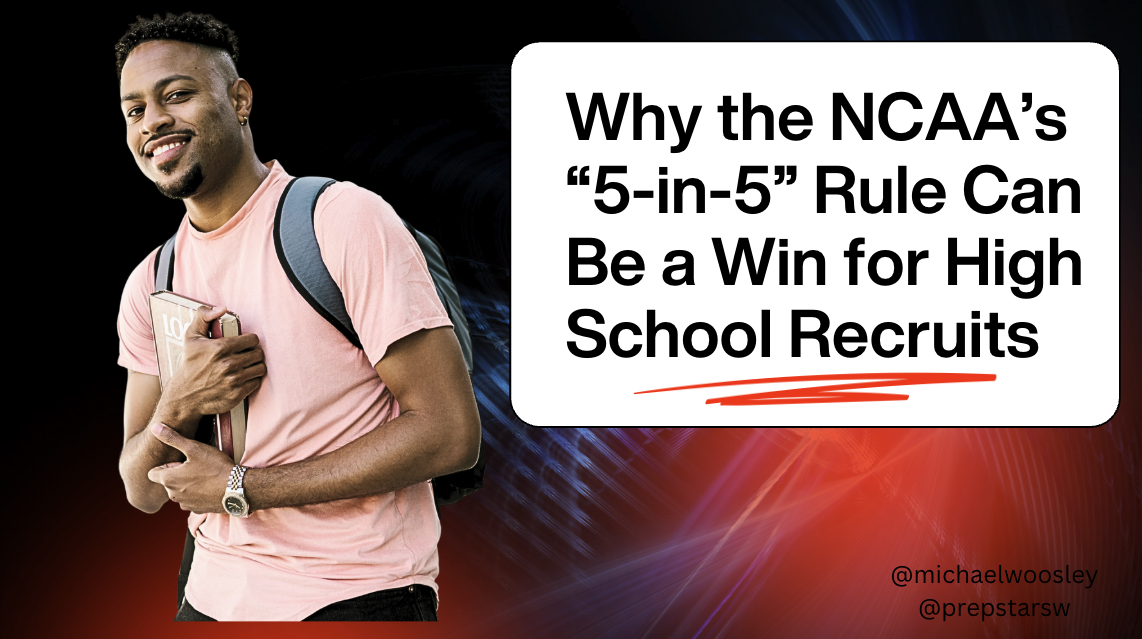
Why the NCAA’s “5-in-5” Rule Can Be a Win for High School Recruits

With the NCAA proposing the new “5-in-5” eligibility model, much of the conversation has centered around concern—especially for younger classes like 2028. But while critics focus on what might change, there’s a powerful upside that recruits and families should not overlook. Interestingly, much of the criticism has come from perspectives that tend to focus on the negatives of today’s recruiting landscape—including concerns about travel teams, single-sport specialization, and the financial investment families make in their athletes. That, however, is a broader conversation for another time.

First, opportunity is not disappearing—it’s evolving.

The reality is that college programs will always need talent. No rule change eliminates the demand for skilled, coachable, and hardworking student-athletes. If anything, a more structured eligibility timeline creates greater clarity for coaches when building rosters, which can benefit recruits who are prepared and proactive.

Second, this model encourages intentional recruiting decisions.

Without the flexibility of redshirts and extended eligibility, college programs will prioritize athletes who are truly a fit—athletically, academically, and culturally. For recruits, this means a better chance of landing in a program where they can contribute and develop, rather than being buried on a roster due to logjams created by extra eligibility years.

Third, it places value back on development and readiness.

Athletes who focus on improving their skills, strength, and game IQ throughout high school will stand out. The new structure rewards those who are prepared to compete earlier in their college careers. That’s a positive shift for disciplined athletes who are committed to the process.

Fourth, it creates a more level and predictable recruiting landscape.

In recent years, COVID eligibility, the transfer portal, and NIL have created uncertainty and roster congestion. The “5-in-5” model helps stabilize that environment. With clearer timelines and age limits, recruits and families can plan more effectively and make smarter decisions about camps, showcases, and communication with coaches.

Finally, this is an opportunity to focus on what truly matters: finding the right college fit.

The best outcome in recruiting has never been simply “getting an offer”—it’s finding a program where an athlete can grow, compete, and succeed long-term. This rule change reinforces that mindset.

The Bottom Line

Yes, the landscape is changing. But high school athletes who are willing to put in the work, stay consistent, and approach recruiting with a plan will continue to have opportunities.

The athletes who succeed won’t be the ones worried about the rules—they’ll be the ones who adapt, prepare, and compete.

That’s always been the formula. And it’s not changing anytime soon.

How Student-Athletes Can Leverage Social Media for Recruiting Success

In today’s recruiting landscape, social media has become a front-facing resume for student-athletes. College coaches are no longer evaluating athletes based solely on game film and statistics—they are also evaluating who the athlete is as a person. Social media provides a window into your character, discipline, and decision-making. When used correctly, it can be a powerful tool that enhances your recruiting opportunities. When used poorly, it can quickly become a red flag.

Coaches often review social media profiles to better understand the athletes they are considering. They want to know if you are coachable, disciplined, and someone who will represent their program the right way. Your posts should reinforce what they see on film—your work ethic, leadership, consistency, and character. The goal is simple: make it easy for a coach to say yes to you.

The first step in building a strong social media presence is establishing clear guidelines. Every athlete should define what is appropriate and what is off-limits when posting. This includes language, images, and overall tone. A simple rule is to ask yourself whether you would be comfortable with your coach, parents, or a college recruiter seeing your post. Keeping your content respectful and avoiding negative or controversial topics protects your reputation. Once something is posted, it can be permanent.

Next, athletes should focus on choosing the right platforms. Not every platform needs your attention, but some are essential in recruiting. Twitter (X) is widely used by college coaches for communication and exposure, while Instagram is ideal for sharing highlights, training clips, and personal branding. Platforms like Hudl or YouTube are critical for hosting highlight film. Regardless of the platform, your profile should be public, clean, and easy for coaches to navigate.

Consistency is another key component, which is why developing a content calendar is important. Instead of posting randomly, athletes should plan their content to stay active and intentional. This can include game highlights, training clips, academic achievements, and personal development moments. A consistent posting strategy shows coaches that you are committed, organized, and focused on improvement.

Social media is not just about posting—it’s about engagement. Athletes should respond to comments and messages, and acknowledge when coaches or programs interact with their content. Following college programs and engaging appropriately helps build visibility and relationships over time. This level of interaction demonstrates maturity and communication skills, both of which are highly valued in the recruiting process.

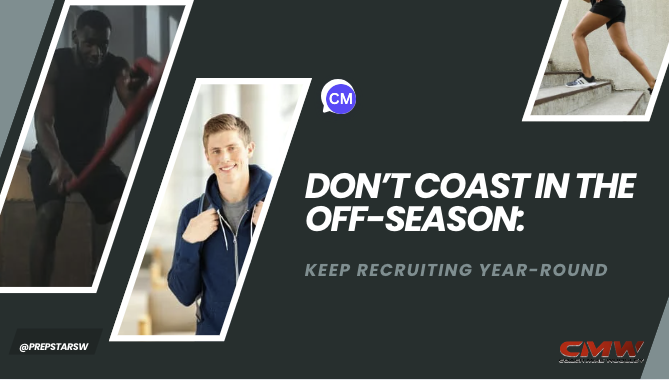
Don’t Coast in the Off-Season: Keep Recruiting Year-Round

The first thing most students want to do when a season ends is relax and take a break. But if you’re an athlete with the goal of playing at the next level, coasting is not the best move. In fact, the off-season or the time between sports seasons is when serious athletes separate themselves from the pack. Instead of taking your foot off the gas, this is the time to rev up the engine and cover some serious ground. Remember, you only have a small four-year window to get seen, scouted, and recruited.

Taking time off can put you behind in both your development and your recruiting. It’s easy to fall into a funk where one day off turns into two, then four, then a week or even a month. College coaches recruit athletes year-round, so you should stay focused on your recruiting year-round as well. The off-season is the perfect time to train, improve your speed and strength, update your highlight video, attend camps, communicate with coaches, and get ahead academically.

So, how do you know if your recruiting is on the right track? Use these guidelines to evaluate your progress.

Freshmen: The recruiting process begins earlier than most athletes realize. As soon as you start high school, you should be building good habits. Focus on grades, strength training, skill development, and creating your first highlight clips. Recruiting truly starts the day you graduate eighth grade, so use your first off-season to build a strong foundation.

Sophomores: This is a pivotal year. Athletes who are on the recruiting radar should start receiving letters, emails, and camp invites. Use the off-season to attend camps, improve your testing numbers, and communicate with coaches.

Juniors: By this stage, you should be hearing from multiple coaches through emails, texts, or camp invitations. The off-season is critical for visits, exposure events, and taking the ACT or SAT. This is your most important recruiting year—make it count.

Seniors: Ideally, you should have been in contact with colleges the summer before your senior year. The goal is to be choosing between opportunities, not hoping for last-minute interest. Use the off-season to follow up with coaches, stay in peak condition, and be ready when opportunities arise.

Follow these guidelines and keep working between seasons, and you’ll put yourself in position to reach the home stretch of your recruiting journey.

One final piece of advice: If your recruiting isn’t going according to plan, get help. The earlier you address the problem, the more options you’ll have. Reach out for a free recruiting evaluation and get your process back on track.

Good luck!

Top 5 Reasons to Consider Junior College Athletics

Junior college can be a smart, strategic step toward your college goals.

A few years ago, I wrote about the value of junior college (JUCO) athletics as an option for high school athletes. At that time, the recruiting landscape was already competitive—but it has changed even more in recent years. The impact of COVID-19, extra eligibility years, and especially the rise of the transfer portal have reshaped recruiting across every level of college sports.

Today, many college programs are filling roster spots with experienced transfers rather than incoming freshmen. As a result, high school athletes are facing more competition than ever before. Because of this shift, junior college is no longer just a backup plan—it can be a smart, strategic step toward reaching long-term athletic and academic goals.

Here are five strong reasons to consider the JUCO route.

1. Cost-Effective College Option

One of the most practical reasons to attend a junior college is affordability. In many cases, tuition at a JUCO is significantly lower than at four-year public or private universities. It is common for junior college tuition to cost only a fraction of what a traditional four-year school charges.

For families concerned about student loan debt, JUCO can provide two years of college credits at a much lower price. When combined with athletic or academic aid, it often becomes one of the most affordable paths to a college degree.

2. Opportunity for Immediate Playing Time

For many athletes, the chance to compete right away is a major factor. At four-year colleges, especially at the Division I level, freshmen often spend their first year or two developing behind older, more experienced players.

At the junior college level, athletes frequently have the opportunity to step into meaningful roles early in their careers. Real game experience is invaluable, and it helps athletes develop the skills, confidence, and maturity needed to compete at higher levels.

Many successful college and professional athletes started at junior colleges, including Aaron Rodgers, Cam Newton, and Warren Moon.

3. A Second Chance in Recruiting

The recruiting process doesn’t always go as planned. Some athletes are overlooked, some develop later, and others simply need more exposure. Junior college gives athletes another opportunity to be recruited.

A strong JUCO season can attract attention from four-year college coaches who are looking for experienced, game-ready players. In today’s transfer-focused environment, coaches often value athletes who have already competed at the college level.

4. Time to Mature Academically and Physically

Not every athlete is ready—academically, emotionally, or physically—to step into a four-year college program right out of high school.

Junior college can provide:

  • Time to improve grades or test scores
  • A smaller campus environment
  • Additional physical development
  • A smoother transition to college life

Many athletes grow stronger, faster, and more confident during their JUCO years. Late bloomers especially benefit from the extra time to develop before moving on to a four-year program.

5. Athletic Scholarships and Competitive Programs

Junior colleges offer a wide range of competitive athletic programs. The National Junior College Athletic Association (NJCAA) oversees hundreds of schools across multiple regions and divisions.

Many JUCO programs offer athletic scholarships, especially at the Division I and Division II levels. When those scholarships are combined with lower tuition costs, junior college becomes a very attractive financial and athletic option.

With hundreds of programs nationwide across multiple sports, there are more opportunities than many families realize.

Final Thoughts

Junior college is no longer viewed as a last-resort option. In today’s recruiting climate, it can be a smart and strategic pathway for athletes who want to continue developing, competing, and pursuing their college goals.

For the right athlete, JUCO offers:

  • Lower costs
  • Immediate playing opportunities
  • A second recruiting window
  • Time to mature and develop
  • Scholarship opportunities

Sometimes the best path to a four-year program—or even a professional career—starts with two strong years at the junior college level.

The Only Comparison That Matters in College Recruiting

If there’s one thing years in the recruiting world have taught me, it’s this: no two student-athletes experience recruiting the same way.

As high school juniors and seniors enter the heart of recruiting season, excitement should be at an all-time high. Instead, many athletes—and parents—find themselves overwhelmed with stress, doubt, and frustration. What should be an enjoyable and motivating process often turns discouraging.

Why?

Comparison.

The Trap of Comparison Syndrome

Comparison syndrome is one of the most damaging distractions in the recruiting process. It creeps in quietly and leaves behind frustration, self-doubt, and misplaced emotion.

Athletes usually know they’ve caught it when a teammate—or even someone from another school—receives an offer, and instead of feeling happy for them, the first thought is:

“I’m better than him. Where are my offers?”

Parents aren’t immune either. A quick scroll through social media reveals another commitment post, and the immediate reaction is:

“My kid is better than that kid.”
“My son or daughter should be getting offers too.”

That mindset is understandable—but it’s also dangerous.

Apples to Oranges: The Position Problem

One of the biggest mistakes athletes make is comparing themselves to players who don’t even play the same position.

A wide receiver comparing offers to a quarterback.
A linebacker watching a defensive end commit.
A baseball shortstop stressing over a pitcher’s recruiting timeline.

Different positions are evaluated differently. They are recruited differently. They mature differently. They peak at different times.

When you compare your journey to someone playing a different role, you’re comparing apples to oranges—and setting yourself up for unnecessary frustration.

Recruiting Is About Fit, Not Fairness

Here’s the truth most people don’t want to hear: recruiting isn’t about who’s “better.” It’s about fit.

Before stressing over someone else’s offer, ask yourself:

  • Would I even want to go to that school?
  • Are they recruiting my position?
  • Does that program fit my playing style?
  • Do they already have upperclassmen at my position?
  • Does that coach typically recruit athletes built like me?
  • Would I get on the field there?
  • Can I afford that school?
  • Do I meet their academic standards?
  • Would I actually be happy living there?

When you slow down and answer those questions honestly, you start to realize something important:

Not getting an offer doesn’t mean you’re not good enough.
It usually means it’s just not the right fit.

Control What You Can Control

Recruiting is a process—and everyone’s process looks different.

You can’t control:

  • What positions colleges need
  • When coaches recruit
  • Who they like
  • When offers are made

But you can control:

  • Your effort
  • Your preparation
  • Your improvement
  • Your attitude
  • Your academics
  • Your performance

That’s where your focus needs to live.

The Only Comparison That Matters

Moving forward, make this commitment:

Stop comparing yourself to other athletes—especially those who don’t play your position.

Instead, ask yourself one simple question every day:

Am I better today than I was yesterday?

That’s the comparison that matters.
That’s the mindset that wins.
And that’s how you stay locked into your recruiting process—without distraction.

Stay patient. Stay focused. Keep getting better.

A New Year, A New Standard: How Student-Athletes Can Elevate Their Game

The start of a new year is more than just turning the calendar—it’s an opportunity for student-athletes to reset, refocus, and recommit to their goals. Success in high school athletics doesn’t happen by chance. It’s the result of intentional planning, daily discipline, and consistent effort both on and off the field.

To truly stand out, athletes must commit to more than simply showing up for practices and games. They need a structured approach that includes clear goal-setting, focused skill development, quality coaching and feedback, and the discipline to care for both their bodies and minds—especially during the demands of in-season competition.

Start With Clear Goals—and Write Them Down

Before progress can happen, athletes must define what success looks like. The most effective goals are specific, measurable, and written down. Whether it’s improving speed, earning a starting role, raising academic performance, or gaining college exposure, outlining goals creates clarity and accountability.

Once goals are set, the real work begins: executing daily habits that support those goals. Big achievements are built through small, consistent actions repeated over time.

1. Commit to Consistent Training and Skill Development

Consistent training is the foundation of athletic growth. This means going beyond team practices and committing to individual skill work, strength training, conditioning, and sport-specific development throughout the year.

Athletes who improve the most are those who train with purpose—focusing on weaknesses, sharpening strengths, and maintaining intensity even when motivation fades. Consistency, not perfection, is what separates average players from high performers.

2. Seek Coaching and Feedback

Great athletes don’t train in isolation. They actively seek coaching, instruction, and honest feedback. Whether it’s from a high school coach, private trainer, or trusted mentor, feedback helps athletes identify blind spots and make necessary adjustments.

Equally important is being coachable—listening, asking questions, and applying what’s taught. Growth accelerates when athletes are willing to learn, adapt, and embrace constructive criticism.

3. Focus on Recovery, Nutrition, and Mental Preparation

Training hard means nothing if the body and mind aren’t properly cared for. Recovery, nutrition, and mental preparation are often overlooked, yet they are critical to sustained performance.

Quality sleep, proper fueling, hydration, mobility work, and mental focus all contribute to staying healthy and performing at a high level—especially during long seasons filled with practices, games, travel, and academic demands. Discipline off the field directly impacts performance on it.

Execution Creates Results

The athletes who separate themselves are those who consistently execute their plan, even when it’s challenging. By setting clear goals, committing to structured training, seeking feedback, and prioritizing recovery and mental readiness, student-athletes give themselves the best chance to maximize their potential.

View Post

The new year is a chance to raise your standard. Write your goals down, create a plan, and attack each day with purpose. Success follows those who are prepared—and preparation starts now.