Development Still Wins in the New Recruiting Landscape

Why the “5-in-5” NCAA Proposal Could Create More Opportunity for High School Athletes
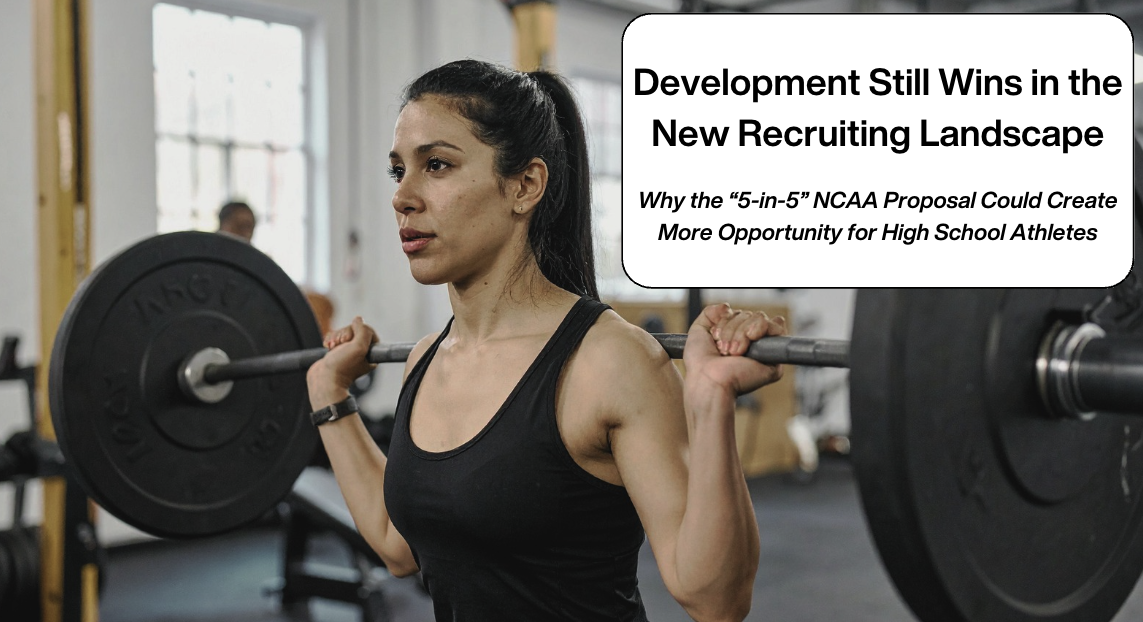
One of the biggest positives of the proposed “5-in-5” eligibility model is that it places value back on development, readiness, and long-term fit.

As recruiting continues to evolve, student-athletes who consistently improve their skills, strength, speed, athleticism, and game IQ throughout high school will continue to separate themselves from the competition. Coaches will always look for athletes who are prepared to contribute, can adapt to college athletics, and will fit the culture of their program.

The new 5-in-5 structure also helps create a more level and predictable recruiting landscape. With clearer timelines and age limits, college programs will have greater roster clarity and fewer long-term logjams created by extended eligibility years. That stability can actually benefit high school recruits.

Another important reality that often gets overlooked is what’s happening at the Division II and Division III levels. While the transfer portal has dramatically impacted college athletics, a high percentage of athletes who enter the portal never find a new school or program fit. As a result, many step away from college athletics altogether, which ultimately creates openings on rosters for incoming high school athletes.

That means opportunities continue to emerge for recruits who stay prepared and continue developing.

The student-athletes who will benefit most from this changing landscape are the ones who stay focused on growth instead of fear. Recruiting has never simply been about hype or rankings—it has always been about finding athletes who are ready, coachable, competitive, and capable of helping a program succeed.

For recruits and their parents, the message remains the same: control what you can control. Develop your game, build strong academics, communicate professionally, and continue improving. Programs at every level are still searching for athletes who are ready for the opportunity when it comes.

Why the NCAA’s “5-in-5” Rule Can Be a Win for High School Recruits

With the NCAA proposing the new “5-in-5” eligibility model, much of the conversation has centered around concern—especially for younger classes like 2028. But while critics focus on what might change, there’s a powerful upside that recruits and families should not overlook. Interestingly, much of the criticism has come from perspectives that tend to focus on the negatives of today’s recruiting landscape—including concerns about travel teams, single-sport specialization, and the financial investment families make in their athletes. That, however, is a broader conversation for another time.

First, opportunity is not disappearing—it’s evolving.

The reality is that college programs will always need talent. No rule change eliminates the demand for skilled, coachable, and hardworking student-athletes. If anything, a more structured eligibility timeline creates greater clarity for coaches when building rosters, which can benefit recruits who are prepared and proactive.

Second, this model encourages intentional recruiting decisions.

Without the flexibility of redshirts and extended eligibility, college programs will prioritize athletes who are truly a fit—athletically, academically, and culturally. For recruits, this means a better chance of landing in a program where they can contribute and develop, rather than being buried on a roster due to logjams created by extra eligibility years.

Third, it places value back on development and readiness.

Athletes who focus on improving their skills, strength, and game IQ throughout high school will stand out. The new structure rewards those who are prepared to compete earlier in their college careers. That’s a positive shift for disciplined athletes who are committed to the process.

Fourth, it creates a more level and predictable recruiting landscape.

In recent years, COVID eligibility, the transfer portal, and NIL have created uncertainty and roster congestion. The “5-in-5” model helps stabilize that environment. With clearer timelines and age limits, recruits and families can plan more effectively and make smarter decisions about camps, showcases, and communication with coaches.

Finally, this is an opportunity to focus on what truly matters: finding the right college fit.

The best outcome in recruiting has never been simply “getting an offer”—it’s finding a program where an athlete can grow, compete, and succeed long-term. This rule change reinforces that mindset.

The Bottom Line

Yes, the landscape is changing. But high school athletes who are willing to put in the work, stay consistent, and approach recruiting with a plan will continue to have opportunities.

The athletes who succeed won’t be the ones worried about the rules—they’ll be the ones who adapt, prepare, and compete.

That’s always been the formula. And it’s not changing anytime soon.