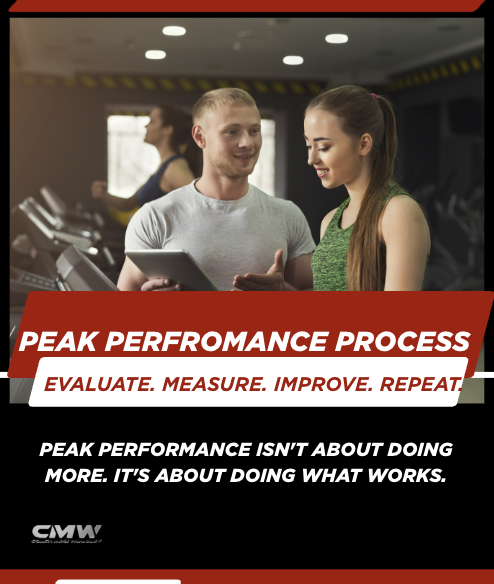
The Peak Performance Process: Evaluate. Measure. Improve. Repeat.

Over the past several weeks, we’ve explored what it really takes for an athlete to pursue peak performance. The biggest takeaway isn’t that athletes need to train harder, lift more, eat better, or add another recovery tool to their routine. Those things can certainly matter, but none of them are meaningful if they aren’t helping you become a better athlete.

Peak performance starts with honest self-evaluation. Before you can improve, you have to know where you stand. Ask yourself a simple question: Am I actually getting better? It’s easy to confuse being busy with making progress. You can spend hours in the gym, attend camps, work with trainers, and follow the latest training trends, but if your performance isn’t improving, something needs to change.

That’s why measuring your progress matters. The Performance Scorecard gives athletes a way to look beyond effort and evaluate the areas that contribute to becoming a complete athlete. Skill development, strength and conditioning, competitive performance, mental toughness, nutrition, recovery, academics, leadership, recruiting progress, and overall improvement all play a role. You don’t need a perfect score. You need an honest one. (Get your scorecard here: Performance Scorecard)

Once you identify your lowest score, the next step is to turn that weakness into a plan. Don’t try to fix everything at once. Identify the one area that could have the greatest impact on your performance and make it your priority. Create a specific goal, establish measurable actions, and give yourself a timeline. Small improvements, repeated consistently, can eventually create major changes.

But improvement also requires something many athletes struggle with: being willing to accept feedback. Great athletes don’t surround themselves only with people who tell them how good they are. They seek coaches, trainers, teammates, and mentors who are willing to tell them the truth. Constructive criticism isn’t an attack. It’s information. It helps you identify the gap between where you are and where you want to be.

At the same time, athletes have to understand that meaningful improvement takes time. You may not see dramatic results after one workout or one week. Real development happens through repetition, consistency, patience, and accountability. The weakness you’re working on today may eventually become one of your greatest strengths.

That brings us to the main message of this entire series:

Peak performance isn’t about doing more. It’s about doing what works.

Evaluate yourself honestly. Measure what matters. Identify what needs improvement. Create a plan. Seek feedback. Make adjustments. Then do it again.

This process doesn’t end when the season ends, when you make varsity, or when you reach the next level. Even the best athletes in the world continue to evaluate themselves, study film, listen to coaches, and look for ways to improve.

That’s because peak performance isn’t a destination.

It’s a process.

And that process can be summed up in four simple words:

Evaluate. Measure. Improve. Repeat.

If you’re willing to do those four things consistently, you’re not just working toward becoming a better athlete.

You’re becoming the kind of athlete who is prepared to reach the next level.

The Performance Scorecard: 10 Metrics Every Serious Athlete Should Track Weekly

Last week, we talked about the importance of personal evaluation. The truth is simple: if you’re putting in the work but your performance isn’t improving, something has to change.

This week, we’re taking the next step.

Instead of guessing whether you’re improving, measure it.

The best athletes don’t rely on feelings. They rely on data, consistency, and honest evaluation.

Every Sunday evening, spend 15–20 minutes grading yourself in these ten areas. Over time, you’ll begin to see trends, identify weaknesses, and make adjustments before small problems become big ones.

The Peak Performance Scorecard

Rate yourself from 1–10 in each category.

1 = Needs Significant Improvement

10 = Elite Standard

Don’t inflate your score. Be honest.

1. Skill Development

Ask yourself:

  • Did I improve a sport-specific skill this week?
  • Did I spend quality time practicing fundamentals?
  • Am I more consistent than last week?

Remember, championships are built on fundamentals.

2. Strength & Conditioning

Did your workouts actually make you a better athlete?

Evaluate:

  • Strength gains
  • Speed
  • Agility
  • Explosiveness
  • Mobility

The goal isn’t lifting the most weight.

It’s becoming more athletic.

3. Competitive Performance

How did you perform during games or practices?

Consider:

  • Effort
  • Decision-making
  • Consistency
  • Coachability
  • Confidence

Your best workouts mean very little if they don’t transfer to competition.

4. Mental Toughness

Elite athletes separate themselves mentally.

Ask yourself:

  • Did I stay positive after mistakes?
  • Did I compete through adversity?
  • Was I focused during practice?
  • Did I control my emotions?

Mental strength wins close games.

5. Nutrition

Fuel matters.

Grade yourself on:

  • Hydration
  • Protein intake
  • Healthy food choices
  • Recovery nutrition

You can’t expect high performance from low-quality fuel.

6. Recovery

Improvement happens between workouts.

Evaluate:

  • Sleep quality
  • Stretching
  • Mobility work
  • Recovery habits

Recovery isn’t being lazy.

It’s preparation for tomorrow.

7. Academic Performance

College coaches recruit students before they recruit athletes.

Track:

  • GPA
  • Assignment completion
  • Class attendance
  • Study habits

A stronger transcript creates more recruiting opportunities.

8. Leadership & Character

Ask yourself:

  • Did I encourage teammates?
  • Was I dependable?
  • Did I show respect?
  • Did I lead by example?

Leadership is earned every day—not just on game day.

9. Recruiting Progress

Every week should move you closer to your recruiting goals.

Did you:

  • Update your recruiting profile?
  • Email college coaches?
  • Add new film?
  • Attend camps?
  • Respond to coaches?

Waiting isn’t a recruiting strategy.

10. Weekly Improvement

This final category brings everything together.

Ask yourself:

Am I better today than I was last Sunday?

If the answer isn’t clearly “yes,” identify why.

Then fix it.

The Sunday Success Routine

Every Sunday evening, complete your Performance Scorecard.

Then answer these four questions:

What was my biggest win this week?

Celebrate progress.

Where did I struggle most?

Be specific.

What one habit held me back?

Honesty creates improvement.

What one change will I make this week?

Focus on one meaningful adjustment rather than trying to change everything at once.

Your Weekly Performance Score

Add your ten scores together.

90–100: Elite Habits — You’re consistently building championship behaviors.

80–89: Strong Progress — You’re on the right path, but there’s still room to grow.

70–79: Average Performance — Some areas need more intentional focus.

Below 70: Time to Reevaluate — Your current approach isn’t producing the results you want. Identify the lowest scores and make those your priority this week.

Remember, the goal isn’t to earn a perfect score.

The goal is to improve your score every single week.

Success Leaves Clues

Professional athletes review game film.

Businesses track performance metrics.

Championship teams analyze statistics.

Why should your athletic development be any different?

If you aren’t measuring your progress, you’re leaving your development to chance.

The athletes who reach the next level don’t simply train harder.

They evaluate.

They adapt.

They improve.

Every week.

Coach Mike’s Challenge

Print this scorecard or create it in your notebook. (Click here to download)

Set aside 20 minutes every Sunday evening.

Score yourself honestly.

Find your lowest category.

Make one adjustment.

Repeat next week.

Peak performance isn’t built through one incredible workout or one great game.

It’s built through hundreds of small improvements, tracked consistently over time.

Because the athletes who win in the future are the ones who are willing to measure their progress today.

What Do You Need Most to Reach the Next Level?

Every athlete’s journey is different.

Some athletes need to become stronger and more explosive. Others need better nutrition to maximize their performance. Many struggle to stand out on social media or develop the confidence and mental toughness needed to compete at their highest level.

At Elite Athletes Recruiting, our mission has always been to help student-athletes earn opportunities to compete at the next level. But recruiting success isn’t just about sending emails to college coaches—it’s about becoming the type of athlete coaches want to recruit.

That’s why Coach Mike’s Elite Athlete Performance & Recruiting Coaching focuses on developing the complete student-athlete.

Position-Specific Strength Programs

Generic workouts produce generic results.

Our position-specific strength programs are designed around the physical demands of your sport and position. Whether you’re a quarterback looking to improve rotational power, a lacrosse midfielder building endurance and speed, or a softball player developing explosive power, your training should match your goals.

The right training improves performance, reduces injury risk, and helps you separate yourself from the competition.

Nutrition Coaching & Meal Planning

Training hard is only half the equation.

Without proper nutrition, your body can’t recover, build muscle, or perform consistently. Coach Mike provides practical nutrition guidance and meal planning designed for busy student-athletes and their families.

When your nutrition improves, your energy, recovery, and performance usually improve with it.

Personal Branding on Social Media

Today’s recruiting landscape extends far beyond the field.

College coaches frequently evaluate an athlete’s online presence before making recruiting decisions. A professional social media profile can reinforce your character, work ethic, leadership, and dedication to your sport.

We’ll help you create a personal brand that highlights your accomplishments, showcases your personality, and supports your recruiting goals.

Mental Performance Preparation

Talent wins games.

Mental toughness wins championships.

Learning how to stay confident under pressure, recover from mistakes, remain focused, and compete with discipline are skills that separate good athletes from great ones.

Our mental performance coaching helps athletes develop the mindset needed to perform when it matters most.

Which Area Would Help You Most?

As Coach Mike continues expanding the Elite Athlete Performance & Recruiting Coaching program, we want to build resources that provide the greatest value to student-athletes and their families.

We’d love to hear from you.

Which area interests you the most?

  • Position-Specific Strength Programs
  • Nutrition Coaching & Meal Plans
  • Personal Branding on Social Media
  • Mental Performance Preparation

Reply with the number that best matches your biggest need, or let us know if there’s another area you’d like Coach Mike to cover.

Together, we’ll build a plan that not only helps you become a better athlete—but also a stronger college recruiting prospect.

Elevate Your Game: Why Recovery Must Be a Year-Round Performance Standard

Peak performance isn’t built in one great workout. It’s built through daily decisions that allow your body and mind to adapt, grow, and perform at a high level year-round.

Last week, we challenged student-athletes to set a new standard—one built on clear goals, disciplined habits, and daily execution. But goal setting doesn’t stop with training plans or game performance. If you want to truly elevate your game and stand out in the recruiting process, recovery must become part of your ongoing performance goals.

College coaches aren’t just evaluating how hard you train; they’re evaluating durability, consistency, and long-term development. Athletes who recover the right way don’t just improve faster—they stay available, stay explosive, and stay reliable.

Peak performance isn’t built in one great workout. It’s built through daily decisions that allow your body and mind to adapt, grow, and perform at a high level year-round.

Goal #1: Make Sleep a Non-Negotiable Part of Your Training Plan

Sleep is one of the most overlooked performance tools in high school athletics. Yet it’s during sleep that your body repairs muscle tissue, restores energy systems, and locks in the skills you worked on during practice.

If your goals include getting faster, stronger, or more consistent on game day, then 7–9 hours of quality sleep must be part of your standard—not an afterthought. Elite athletes treat sleep like training: it’s scheduled, protected, and prioritized.

From a recruiting standpoint, availability matters. Athletes who recover well are more resilient, miss fewer practices, and show up sharper when it matters most.

Goal #2: Fuel Your Body to Support Performance and Development

Nutrition isn’t about shortcuts or trends—it’s about fueling performance. Set ongoing goals around eating balanced meals that include quality protein, carbohydrates, and healthy fats to support your training load.

Post-workout nutrition is especially critical. What you eat and drink after training directly impacts how quickly you recover, how sore you feel the next day, and how prepared you are for your next session.

College-level athletes understand that consistent fueling equals consistent performance. Hydration, nutrient timing, and recovery meals aren’t optional if your goal is long-term development and visibility in the recruiting process.

Goal #3: Build Active Recovery Into Your Weekly Routine

Recovery doesn’t mean being inactive. Smart athletes use active recovery to stay healthy and athletic throughout the season. Low-intensity activities like walking, cycling, swimming, mobility work, or yoga improve blood flow, reduce stiffness, and enhance flexibility.

Add in recovery tools like foam rolling, stretching, or cold exposure to help manage soreness and maintain movement quality. The key is consistency—active recovery should be planned into your week, not added only when you’re already worn down.

Athletes who move well, recover well, and stay fresh perform better late in seasons—when college coaches are paying close attention.

Recovery Is a Recruiting Advantage

High-level performance is about more than effort—it’s about sustainability. When recovery becomes a continuous goal, you train better, compete harder, and stay healthier across an entire season.

The best student-athletes don’t just chase results; they build systems. Adequate sleep, intentional nutrition, and strategic recovery form the foundation of long-term athletic development and give you a competitive edge in the recruiting process.

Set the standard. Execute it daily. Review it weekly. That’s how goals turn into habits—and habits turn into results that college coaches notice.

A New Year, A New Standard: How Student-Athletes Can Elevate Their Game

The start of a new year is more than just turning the calendar—it’s an opportunity for student-athletes to reset, refocus, and recommit to their goals. Success in high school athletics doesn’t happen by chance. It’s the result of intentional planning, daily discipline, and consistent effort both on and off the field.

To truly stand out, athletes must commit to more than simply showing up for practices and games. They need a structured approach that includes clear goal-setting, focused skill development, quality coaching and feedback, and the discipline to care for both their bodies and minds—especially during the demands of in-season competition.

Start With Clear Goals—and Write Them Down

Before progress can happen, athletes must define what success looks like. The most effective goals are specific, measurable, and written down. Whether it’s improving speed, earning a starting role, raising academic performance, or gaining college exposure, outlining goals creates clarity and accountability.

Once goals are set, the real work begins: executing daily habits that support those goals. Big achievements are built through small, consistent actions repeated over time.

1. Commit to Consistent Training and Skill Development

Consistent training is the foundation of athletic growth. This means going beyond team practices and committing to individual skill work, strength training, conditioning, and sport-specific development throughout the year.

Athletes who improve the most are those who train with purpose—focusing on weaknesses, sharpening strengths, and maintaining intensity even when motivation fades. Consistency, not perfection, is what separates average players from high performers.

2. Seek Coaching and Feedback

Great athletes don’t train in isolation. They actively seek coaching, instruction, and honest feedback. Whether it’s from a high school coach, private trainer, or trusted mentor, feedback helps athletes identify blind spots and make necessary adjustments.

Equally important is being coachable—listening, asking questions, and applying what’s taught. Growth accelerates when athletes are willing to learn, adapt, and embrace constructive criticism.

3. Focus on Recovery, Nutrition, and Mental Preparation

Training hard means nothing if the body and mind aren’t properly cared for. Recovery, nutrition, and mental preparation are often overlooked, yet they are critical to sustained performance.

Quality sleep, proper fueling, hydration, mobility work, and mental focus all contribute to staying healthy and performing at a high level—especially during long seasons filled with practices, games, travel, and academic demands. Discipline off the field directly impacts performance on it.

Execution Creates Results

The athletes who separate themselves are those who consistently execute their plan, even when it’s challenging. By setting clear goals, committing to structured training, seeking feedback, and prioritizing recovery and mental readiness, student-athletes give themselves the best chance to maximize their potential.

View Post

The new year is a chance to raise your standard. Write your goals down, create a plan, and attack each day with purpose. Success follows those who are prepared—and preparation starts now.