Over the past several weeks, we’ve explored what it really takes for an athlete to pursue peak performance. The biggest takeaway isn’t that athletes need to train harder, lift more, eat better, or add another recovery tool to their routine. Those things can certainly matter, but none of them are meaningful if they aren’t helping you become a better athlete.
Peak performance starts with honest self-evaluation. Before you can improve, you have to know where you stand. Ask yourself a simple question: Am I actually getting better? It’s easy to confuse being busy with making progress. You can spend hours in the gym, attend camps, work with trainers, and follow the latest training trends, but if your performance isn’t improving, something needs to change.
That’s why measuring your progress matters. The Performance Scorecard gives athletes a way to look beyond effort and evaluate the areas that contribute to becoming a complete athlete. Skill development, strength and conditioning, competitive performance, mental toughness, nutrition, recovery, academics, leadership, recruiting progress, and overall improvement all play a role. You don’t need a perfect score. You need an honest one. (Get your scorecard here: Performance Scorecard)
Once you identify your lowest score, the next step is to turn that weakness into a plan. Don’t try to fix everything at once. Identify the one area that could have the greatest impact on your performance and make it your priority. Create a specific goal, establish measurable actions, and give yourself a timeline. Small improvements, repeated consistently, can eventually create major changes.
But improvement also requires something many athletes struggle with: being willing to accept feedback. Great athletes don’t surround themselves only with people who tell them how good they are. They seek coaches, trainers, teammates, and mentors who are willing to tell them the truth. Constructive criticism isn’t an attack. It’s information. It helps you identify the gap between where you are and where you want to be.
At the same time, athletes have to understand that meaningful improvement takes time. You may not see dramatic results after one workout or one week. Real development happens through repetition, consistency, patience, and accountability. The weakness you’re working on today may eventually become one of your greatest strengths.
That brings us to the main message of this entire series:
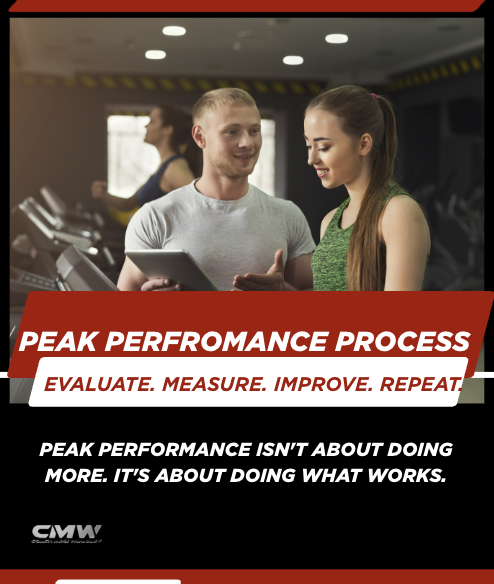
Peak performance isn’t about doing more. It’s about doing what works.
Evaluate yourself honestly. Measure what matters. Identify what needs improvement. Create a plan. Seek feedback. Make adjustments. Then do it again.
This process doesn’t end when the season ends, when you make varsity, or when you reach the next level. Even the best athletes in the world continue to evaluate themselves, study film, listen to coaches, and look for ways to improve.
That’s because peak performance isn’t a destination.
It’s a process.
And that process can be summed up in four simple words:
Evaluate. Measure. Improve. Repeat.
If you’re willing to do those four things consistently, you’re not just working toward becoming a better athlete.
You’re becoming the kind of athlete who is prepared to reach the next level.


