Simple interesting tips to get helpful recruiting attention

Getting attention is necessary for recruiting. The simple reason for this is because coaches can’t recruit players they don’t know about. Here’s a quick tip on how you can use what’s interesting about you to get attention that will help your recruiting.

There is a right way and a wrong way to grab attention.

Simple interesting notice gets attention

Almost immediately, with just a few words and a simple “ding” ESPN managed to get my attention, spike my curiosity and persuade me to watch the video.  And, as any good natured sports fan would do, I picked up my phone to to check it out.

Truthfully, I’m not sure why I watched it. However, those few short sentences caused me to be interested enough to click the play button.  I wasn’t thinking about Colin Cowherd, Jim Harbaugh or M*ch*gan football at the time. (Although, I grew up in Ohio and my allegiance has always been with the Buckeyes so maybe my loathing for that team up north might of had something to do with it.)

Being interesting gets attention

I learned a few things from this experience that I believe can help you with your recruiting. First, its important to be interesting enough to get attention. Second, its important to keep that attention. Third, once you get attention its important that you deliver the goods. Hype is good only if you can back it up.

Try it out, but ask a few questions first

Here’s a good tip. You’ll get the attention you want if what you give interesting information. So when your polishing your Prepstar profile, making a highlight video, sending an email or text, posting on social media or visiting a college campus consider this question ‘What’s interesting about me that makes coaches want to give me their attention?’

To wrap up, everyone has something about them that makes them interesting that makes them worthy of attention. Its a terrible trap to think that you don’t. Try making a list of interesting things about you, or ask a close friend to name some interesting things about you. Then, you’ll be well on your way to sharing interesting information about yourself to help you get the right kind of recruiting attention.

Find these tips helpful? Experience successful result using them? If so, let me know in the comment or message me on Twitter.

cropped-main_logo-12.jpg

Coach Mike Woosley is a National Scouting Director at CSA-PrepStar.  As a professional collegiate sports scout Mike works with qualified next level student-athletes to find the right college athletic and academic fit. Comments and questions are always welcome.
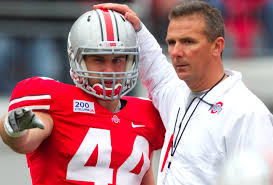
The Courtship of College Recruiting


This summer my wife and I will mark our 18th year of beginning together (married for 16 years).  Believe it or not, however, when I first met my wife she did not immediately start dating me. It’s hard to imagine, I know, but we went through several months of courtship before we committed to dating exclusively. Dating and recruiting are a lot alike. There is always a period of time that it takes for a coach and player to get to know one another before making a formal commitment to spend the next 4 years together.


During the recruiting process the relationship developed between a player and coach leads to great commitment.


So, how does dating relate to recruiting?  I’ve outline three steps to communication to grow a solid player/coach recruiting relationship. During that time lots of communication should happen to grow the relationship. Take note, because there are several similarities in process of getting to know the person you’re going to be committed to for the next 4 years.


The first step is to get to know one another. Whether its text, email, Instagram, Twitter, Facebook or SnapChat athletes and coaches need to communicate with one another. Don’t be timid! Healthy relationships grow out of quality conversations. Its okay to be forward, often a coach expresses his/her interests first starting the recruiting communication process by contacting an athlete, viewing their profile or sending an athlete (or family) written correspondence.


The second step is to ask questions. You should ask questions to get the information you are looking for. Keep in mind that you are interviewing a coach, just as much as the coach is interviewing you. Your decision to accept a scholarship offer is contingent on the answers to your questions. Also, keep in mind, coaches solidify relationships by making scholarship offers to players they are comfortable with and confident in.


The third step is to schedule a meeting. Eventually the time will come to decide whether or not to take the relationship to the next level. Real dates happen face to face, not via technology, so its necessary that a time to meet is scheduled. This can be a campus visit, camp, or meeting at your school/home. Point is the communication you’ve had with the coach will determine the chemistry (or lack of) at the face to face meeting.


Lastly, always keep in mind that every relationship takes time. So my advice to you is to give yourself plenty of time to start and grow that relationship. This is a vital because we are well aware that relationships that happen in a hurry often end in a hurry. If you want the relationship between you and your coach to last, you need to invest the time necessary to assure that it will last.


Coach Mike Woosley is a National Scouting Director at CSA-PrepStar.  As a professional collegiatecropped-main_logo-12.jpg sports scout Mike works with qualified next level student-athletes to find the right college athletic and academic fit. Comments and questions are always welcome.

← Back

Thank you for your response. ✨


Crucial Do’s and Don’ts of the Freshman Year Recruiting Strategy

Screen Shot 2014-12-03 at 11.31.40 PM
The Freshman years is the year you need to stay focused on your plan.

Every day I talk to parents and athletes that have no recruiting strategy. Every athlete dreaming to sign a national letter of intent has to have a recruiting plan. I shared last week that the key is for your recruiting plan to be put in motion during junior high years. But what about now that you’re a big shot high-schooler?

If you put your plan in motion in junior high you’ll be ready both as a student and an athlete. This helps high school student-athletes be prepared for more than a new regime of classes.

According to the NCAA, you become a prospective student-athlete (PSA) on the first day of your Freshman year. But, don’t expect to get a scholarship offer your Freshman year because college coaches are limited by NCAA recruiting guidelines for contacting Freshman athletes. In comparison to upperclassmen, coaches can only send PSA’s institutional educational information as well as questionnaires, and camp invites. One note to parents, be aware that at this point camp invites are more about bringing revenue to the sports program than evaluating athletes. The reason for this is because most student-athletes will undergo a significant transformations between Freshman and Senior year. Coaches know this too. That’s why the focus of the Freshman year should be to work on the 3 S’s.

3 S’s
Smarter– athletes that are great students are more desirable to colleges. Most schools won’t risk giving a scholarship to an athlete that may not be eligible to play.

Speedier– focus on running, agility, and conditioning drills will make you faster. When comparing two athletes, most colleges go with the smarter and faster of the two.

Stronger– weight training should be a vital part of your fitness regime at this stage. Your body needs added strength to withstand the long season.

Crucial Do’s and Don’ts
The Freshman year is pivotal to the plan you put in motion in junior high. Here are five Do’s and Don’ts to guide you through Freshman year.

Do
-Make grades a priority!
-Start taking the required courses to meet the NCAA 16 core course requirements.
-Research colleges you’d like to play for.
-Email college coaches to ask what it takes to play for them.
-Keep record of your academic and athletic accomplishments at the competitive level.

Don’t
-Worry if you don’t make the varsity team.
-Worry if you don’t have game film or skills video.
-Worry about attending combines or showcases.
-Worry about taking unofficial college visits.
-Worry that you’re phone’s not ringing. (It’s not supposed to …yet)

Again, as a Freshman, personal contact or phone calls initiated by a college coaches from Division I & II programs are not allowed. But the good news is that they are permitted your Sophomore year. Next week, I’ll keep the guide alive by giving you valuable recruiting tips for your Sophomore year.

Please follow the blog and leave comments to this week’s post or ask questions to be answered in next week’s post.  As always, I can be reached around the clock on twitter. @michaelwoosley

~Coach Mike