7 Ways to Spot a Scam Offer
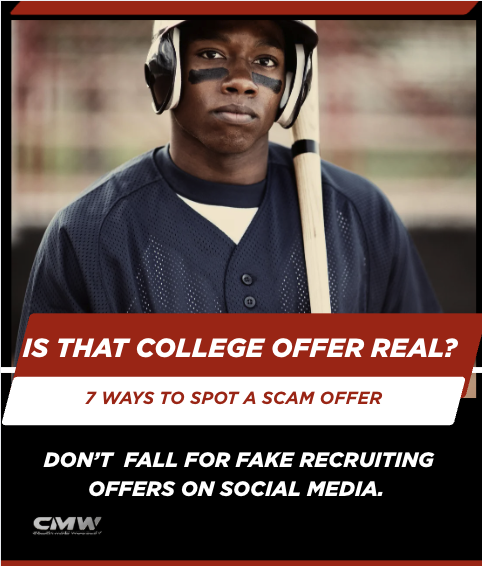
Social media has become one of the best ways for student-athletes to connect with college coaches and build recruiting relationships. Unfortunately, it’s also become a favorite tool for scammers and fake accounts. Every year, more athletes receive fraudulent scholarship offers or messages from people pretending to be college coaches.
Don’t Fall for Fake Recruiting Offers on Social Media.
Before you celebrate or share an offer online, take a few minutes to verify it’s legitimate.
- Visit the college’s athletic website and confirm the coach is listed on the staff directory.
- Compare email addresses. A legitimate coach’s email should match the school’s official domain.
- Check the sender information. If the message comes from a random email address or suspicious account, proceed with caution.
- Read the message carefully. Scammers and bots often use incorrect sport names, graduation years, or awkward wording.
- Ask to schedule a phone call. Real coaches are willing to speak with recruits about their interest and the recruiting process.
- Never share passwords or account information. Legitimate college coaches will never ask for your login credentials.
- Verify before you post. Don’t announce an offer on social media until you’ve confirmed it’s authentic.
A little extra caution can save you from disappointment and protect your recruiting journey. When in doubt, ask a trusted coach, parent, or recruiting advisor to help verify the opportunity before taking the next step.


