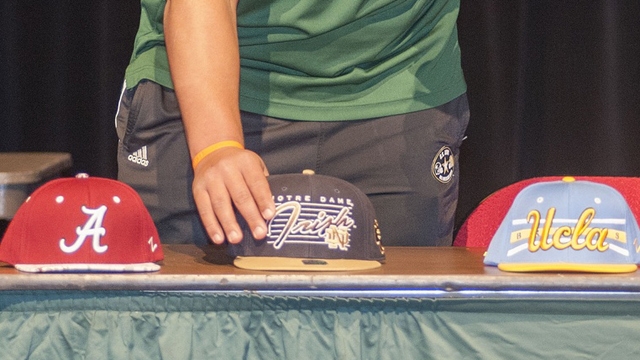
Score Junior Year When the Recruiting Plan Begins to Comes Together

As a young boy I was a big fan of the A-Team. Regardless of the challenge that faced them, the A-Team Ateamalways overcame the odds finding success in the plan. I will forever be reminded of that show when I hear the famous line, “I love it when a plan comes together!” Any good plan will come together with the right execution.

In the sports world coaches talk a lot about execution. Good execution requires that you step up to your responsibility and deliver results. In the timeline of recruiting, the Junior year is when the execution of your recruiting plan should begin to come together.

The challenge to execute the recruiting plan for every hopeful college athlete can be daunting. Similar to the pressure of hitting that last second shot, driving in the game winning run, or rushing against the clock to score the game winning touchdown. But, a well prepared athlete, isn’t flustered. They know that hard work,  preparation and planning has prepared them to accomplish any objective. So when you’re number is called, you relish the pressure to score one for your team!


SCORE

These tips are sure to help you SCORE that scholarship.

Stay focused on academics by scheduling to take the ACT and SAT test no later than the spring.

Create your junior season highlight video that should include your updated skills video along with quality live game footage

Only send your profile and recruiting video to colleges that match your competitive, geographical and academic interests.

Register with the NCAA Eligibility Center and complete the amateurism certification questionnaire (www.eligibiltycenter.org).

Engage interested coaches by planning to attend sport specific camps and combines.


Bring about Victory

You’re number has been called to execute the plan and bring about victory.  The Junior year is when coaches can start to talk scholarship opportunities with prospective athletes. Off campus contact and official visits are permitted for many sports.

Finally, a good plan needs good people to see it through. Don’t hesitate. Contact me to get the help needed to execute your customized recruiting plan. I can be reached around the clock on twitter @michaelwoosley.


~Coach Mike

Avoid the Sophmore Slump with a Focused Recruiting Strategy

sophomoreslumpEver heard of the “Sophomore slump”? In the sporting world the Sophomore year is often the year when performance in the classroom or on the field doesn’t quite meet expectations. How do you avoid the Sophomore slump in recruiting? Simple. All it takes is to be prepared and focused!

For most college sports nearly 85 percent of collegiate athletes are identified by college coaches by the end of their sophomore year. This is true because college coaches can only begin making contact after sophomore year. This means coaches are paying attention to what athletes do Freshman and Sophomore year.  Therefore, the goal with preparation and focus is to get noticed. And to get noticed you have to prepare.

“It’s not the will to win that matters—everyone has that.  It’s the will to prepare to win that matters.”  ~Paul “Bear” Bryant

Prepare

The Sophomore year recruiting strategy is to prepare.

  • Prepare in classroom.
  • Prepare in the weight room.
  • Prepare on the practice field.

Why should you prepare? Because, otherwise, if the Sophomore slump gets to you, the only kind of notice you’ll get from coaches will be disappointment. Conversely, if you want coaches to take note of you, you’ll have to defeat the Sophomore slump with hard work.

Focus

This is the year where the recruiting plan that you put in motion way back in back in Junior high really begins to come into focus. Athletes, the focus should be on putting yourself in position to get noticed by college coaches for your performance in the classroom and in the lineup.  Once again, for most sports, coaches begin to take note of and reach out to contact contact prospective athletes following their sophomore year.

Sophomore Year Recruiting Tips
As a potential collegiate level student athlete you’re sure to be prepared and focused your sophomore year if you keep these recruiting tips in mind.

  • Play up to your potential, avoid the slump.
  • Maintain grades, keeping on track with NCAA core requirements.
  • Research list of potential schools
  • Create a player profile – update it quarterly
  • Start collecting video of game-film and athletic skills footage
  • Record accurate athletic metrics
  • Work towards goal of starting on the varsity team
  • Attend sports camps to continue to improve

Being prepared will help you so say so-long to the sophomore slump. Being prepared will help you get that call or letter of interest after your Sophomore year. So focus on these final recruiting tips is to help you prepare and focus.  Parents and athletes need to know the recruiting timeline. By the time  sophomore year, athletes can receive questionnaire of athletics interest, institutional educational information and camp invites. Personal contact with DI and DII college coaches is not permitted until after your sophomore year.

Want to receive the Elite Athletes blog as your email? Simply click on the follow button above.

Readers are welcome to leave comments to this week’s post or ask questions to be answered in next week’s post.  As always, I can be reached around the clock on twitter @michaelwoosley.

~Coach Mike

Beginners Guide to College Recruiting

Parents of junior high athletes often ask me when they should begin the recruiting process for their son or daughter. Typically, my reply is an emphatic, “Now!”  The most frequent response I get from that parent then is, “well, we have time.” Sorry friend, that’s just not true. Here’s why. According to the NCAA student-athletes become college prospects the first day of their Freshman year. So while the goal is not to get a college scholarship in the 8th grade, instead, the goal should be to use the junior high years to get your student athlete prepared for the recruiting process. This week, I’m going to help you come up with that plan as part of my beginners guide to recruiting series.

Parents of young athletes with big dreams need to start planning now.

It may be true that only a select few athletes get on college recruiting boards the first day of Freshman year, it is equally true that you need to start making plans for your student-athlete if he or she ever expects to get noticed by college coaches.

The Junior high years, 7th and 8th grades, are the formidable years of athletic development. This is the time when athletes start to take an interest in favorite sport. Also, it is during the Junior high years talent begins to either blossom or wither.

Look for the 3 D’s
During the Junior high years parents need to look for the 3 D’s. Junior high is a great time to test for the 3 D’s. As a scout, I measure athletes by the 3D’s because they are found in the DNA of elite athlete, The 3 D’s are desire, determination and drive.

Desire– athletes that have an unyielding passion for the game. They eat, sleep, and breath it!
Determination  – athletes that motivated by the “have to” effect. These athletes have to master there position.
Drive– athletes that thrive on competition and the relentless pursuit to be the best.

The 3 D’s separate good athletes from great athletes. Good athletes get by on talent. Great athletes put in the work to become great. Almost every athlete has some amount of the 3 D’s, but I’m looking for the student- athlete that has noticeably more dedication to the 3 D’s than their peers. So parents, if your student athlete a shows measurable amount of the 3 D’s then its time to devise a plan.

Plan the plan
Usually, we fail when we fail to plan. If your goal is to get a scholarship to play a sport in college now is the time start making a plan. Remember to keep in mind that plans are flexible, not rigid. So my advice is to devise a plan, work towards that plan, and if necessary, adjust accordingly. Advice that I was given when I was young sums it up completely, “Plan the plan.”

Put the plan in motion
Now that a plan is coming together, start putting that plan in motion. Plan to be in the midst of your plan on day 1 of Freshman year. Here are a few suggestions to consider when putting your plan in motion.

  • Practice frequently
  • Get private position coaching
  • Go to sport specific camps.
  • Start playing on a competitive travel ball team
  • Start planning your high school course load.
  • Excel in the classroom and get good grades. (Only eligible players can play. )
  • Learn good study habits
  • Research your local high school, find out how many teams it has (Fr, JV, Var) and get to know the coaches.

All recruiting begins with a plan. These are just some the beginning steps to get you started with college recruiting. Next week’s post of the guide to recruiting with focus on Freshman year. That’s when the real fun begins!

So, if you want to be sure to get all the posts take a moment to click the follow button to make sure you get the entire beginners guide to recruiting sent to your email.

As always, readers are welcome to leave comments to this week’s post or ask questions to be answered in next week’s post. Tweet me around the clock with questions or comments on Twitter @michaelwoosley.

3 Tips to Defeat to the Fear of Not Being Recruited

Finding-Success-as-a-college-entrepreneur


The scariest thing about recruiting is not being recruited.  Beware, waiting for some coach to come knocking on your door is not the way to get recruited. If this is your plan, then I’m afraid that your chances of signing that letter of intent on National Signing Day are pretty grim!

But you’re not afraid. You’re an elite athlete determined to succeed! You’ve put in the hard work, extra reps, aches and pains…sweat…blood…tears. Now its time to get your reward in full.

Here are three tips to keep away that scary thought of not playing at the next level.

1. Start early
The sooner you begin the recruiting process the better. Most D1 caliper athletes are identified by the end of their sophomore year! That means recruiting starts in 8th or 9th grade. Get noticed by starting early.

2. Be proactive
Don’t be afraid to take control of your recruiting process. Do your homework. Learn the recruiting timelines. Find out about contact dates. Keep good stats and up to date film.  Don’t fret, instead make something happen but taking control.

3. Get help
College recruiting can be confusing so you’ll want help to help you navigate safety through the process. There are a number of different avenues to explore to get assistance, advice and increase exposure. Use coaches, and contacts as well as websites and recruiting organizations to help you get noticed.

So, don’t be scared by the recruiting process. Get in there and get going! Start a plan towards success today!

Have questions? Need help. Contact me to set up a time to talk or use the comment section below.


Coach Mike – Email: mwoosley@csaprepstar.com   Phone: 805-622-STAR