When is the right time to start the recruiting process?

One of the most common questions parents ask me is, “When is the right time to start the recruiting process?” So, I want to share three tips to know when is the right time to start the recruiting process and improve the chance of playing at the next level.

1. Start early

The earlier athletes begin planning the recruiting process the better. Most D1 prospects athletes are identified by the end of their sophomore year! Also, recruiting boards of D2 and D3 colleges start to fill up early. So Athletes that are serious about recruiting should start early.  

Don’t be afraid to take control of the recruiting process…
too many athletes (and parents) wait, and later wished they hadn’t.

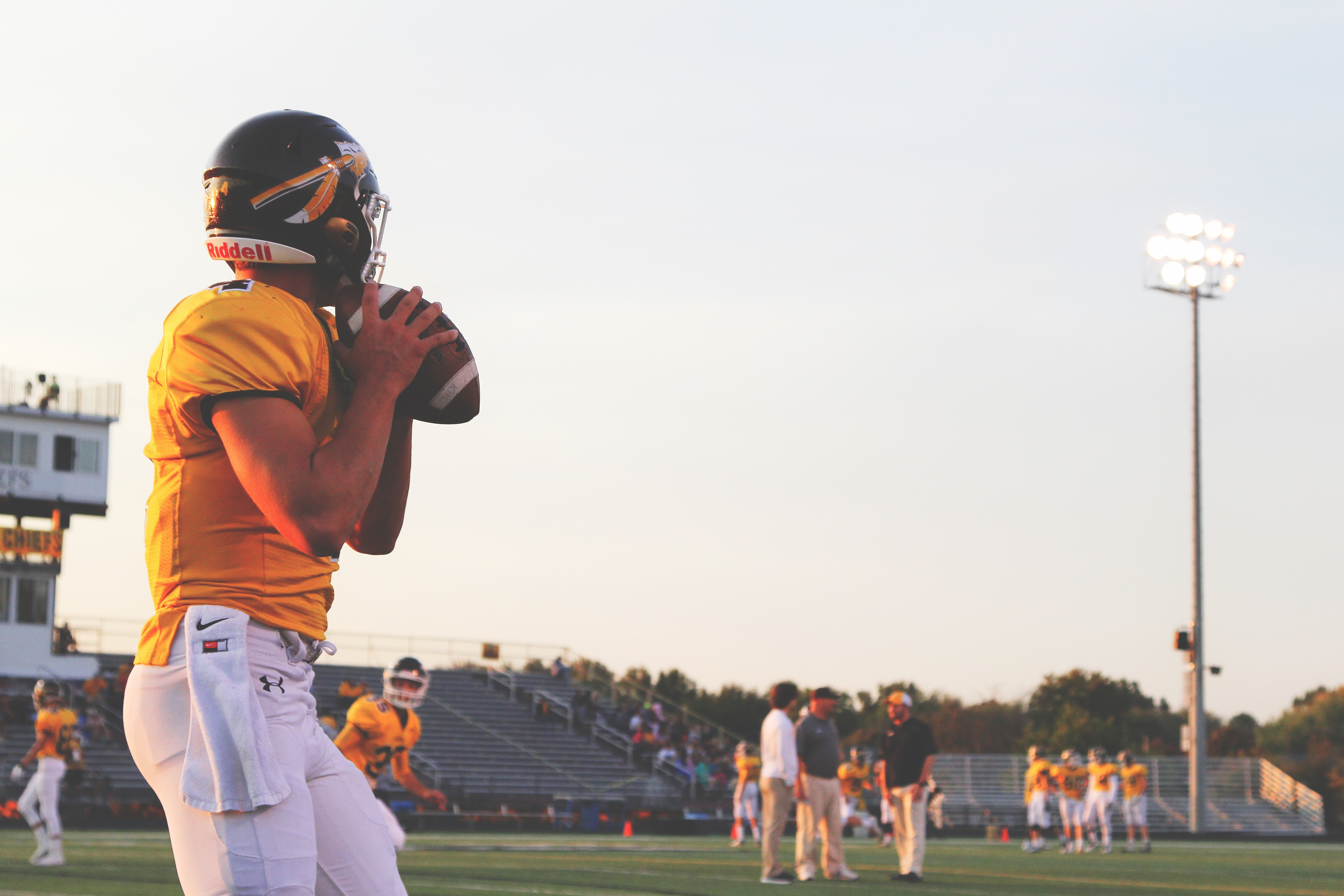
Photo by John Torcasio on Unsplash

2. Be proactive

Don’t be afraid to take control of the recruiting process. For one reason or another, too many athletes (and parents) wait, only later to wish that they had started the process earlier.  Proactive people make something happen by taking control.

3. Get help

College recruiting can be confusing so you’ll want help to navigate the process. Since 1981, PrepStar has been a reliable recruiting resource helping both families and college coaches.

Not sure if now right time to start the recruiting process? Please contact me by Twitter (@michaelwoosley) or phone (805-622-7827) to set up a time a free recruiting evaluation (get free advice!) I’m glad to help!

Be committed, get committed.


Helpful tips about recruiting video

Video is crucial to the recruiting process. But, what kind of recruiting video is most beneficial? And, what footage should the video feature? Actually, the answer varies by sport. For example, game video is paramount for high school football prospects.  However, sports like baseball, softball and soccer requires that skills video accompanied by game footage. But, no matter the sport, the purpose of the recruiting video is to demonstrate position specific athletic skills and capability.  

No matter the sport, the purpose of the recruiting video is to demonstrate position specific athletic skills and capability.  
(Photo by Jeffrey F Lin on Unsplash)

Though it may be a matter of debate, it makes little difference if the video is professionally recorded or self-recorded. What matters is that the coaches must be able to clearly identify the player and clearly view all the required skills. 

Lastly, it should be obvious that having no video will hurt the overall recruiting process. Athletes trying to get recruited with no video will find it very challenging. In fact, limited exposure will surely put the student-athlete at a tremendous recruiting disadvantage.
Not sure if your video is on point? Contact me on twitter and I’ll send you my top 5 tips for creating a solid recruiting video.
Email or tweet me at (mwoosley@csaprepstar.com) or on Twitter (@michaelwoosley).

Rev’up Recruiting in Summer

For most student-athlete the school year is finally over. The first thing most students want to do is to relax and take a break. But if you’re an athlete with the goal of playing at the next level coasting is not the best thing to do. So instead of taking your foot off the gas and coasting down the recruiting highway, rev up the engine and cover some serious ground! 

Instead of taking your foot off the gas and coasting down the recruiting highway, rev up the engine and cover some serious ground!
Photo by Evgeni Tcherkasski on Unsplash

Taking time off can put you behind in recruiting. Plus, athletes can get in a funk where one day off turns into to two, then four, then a week or even a month. Be cautious not to fall behind. Remember, you only have a small window of opportunity to get seen, scouted, and recruited.  
Next, how do you know that your recruiting is on course? Follow these tips as a guideline to gauge where you are with your recruiting. College coaches start recruiting athletes early, so this outline will help reach your destination.

Freshmen- Day 1 of Freshman year, the very first day you step on high school campus, college coaches can begin to communicate with athletes. Get any early start before the school year begins because recruiting really starts the day you graduate 8th grade.

Sophomores that are starting to show up on the recruiting radar of college coaches should be getting letters, emails and camp invites. This is a pivotal year for most prospective athletes and the best time to get noticed. Most D1 college identify prospects by the end of sophomore year. 

Juniors can tell that they are on pace recruiting by receiving  emails, texts, prospect camp invites. Actual conversations with college coaches is a very good sign. Additionally, Junior year is a great time to take the ACT and SAT tests.

Seniors, by now, should have regular communication with college coaches the summer before their senior year. Ideally, seniors want to be in a position to narrow down college choices instead of hoping that a college coach will show interest.  


Follow these tips and you’ll be heading towards the home stretch.

One other piece of advice. If you find that your recruiting isn’t going according to plan, you should get some help to get you up to speed.  I’m willing to help. Just contact me via twitter (@michaelwoosley) or the email below for a free recruiting evaluation.
Good luck!
Coach Mike

Recruiting video; A few reasons why is important

Every student- athlete serious about recruiting needs to have one, or even multiple, recruiting videos.  This blog will outline a few reasons why recruiting video is important as well as how a good video can help make the recruiting experience a highlight. 

No matter the sport, the purpose of the video is to demonstrate position specific athletic skills and capability.

Recruiting video is most often used as the initial evaluation entry point for many coaches. Back in my playing days, my head-ached always preached that the “big eye in the sky, don’t lie.” Meaning, video catches everything. Game video records great plays as well as grand mistakes. It also shows how players handle the emotions of the game. 

So what kind of video is most beneficial? Actually, the answer varies by sport. For example, in high school football game video is paramount. In contrast, sports such as baseball, softball and soccer requires skills video should be accompanied by supplemental game footage. No matter the sport, the purpose of the video is to demonstrate position specific athletic skills and capability.  Though it may be a matter of debate, it makes little difference if the video is professionally recorded or self-recorded. What matters is that the coaches must be able to clearly identify the player and clearly view all the required skills. 

Lastly, it is clear that not having video can hurt the overall recruiting process. Overall, having no video will certainly limit exposure and put the student-athlete at a tremendous recruiting disadvantage. So, if a student- athlete does not have a video created for recruiting purposes I highly recommned to start working on it today. There are a number of resources available to assist in the process.  Good places to start are with a quick online search or with the team head coach. 

For my blog  readers, send me an email at  mwoosley@csaprepstar.com with your name, grade and sport and in return I email you a free guide to recording a recruiting video

Stats: The importance of accurate stats is often overlooked

The importance of accurate stats is often overlooked. Sadly, I notice many high school coaches neglect to keep accurate stats and by doing so negatively impact recruiting potential of their athletes. I often say, “stats are facts” because stats are excellent proof of both athletic ability and consistent performance.  Smart recruits keep track of their stats and frequently update them on their recruiting profile.

Anyone remember learning how to do proofs in Geometry class? For some of us learning proofs may have happened a long time ago. We learned how to write proofs to show the progressional steps of the work and prove how we arrived at the correct answer. In recruiting it is necessary that you have accurate facts if you are an athletes looking to catch the eye of a coach. Accurate statistical information is an invaluable assets to the recruiting process. Game stats, like proofs, are a series of facts that prove the correct solution to the problem a college coach is looking to solve.

Unfortunately, many high-school coaches do a poor job of keeping and posting accurate stats. When scouting prospective college athletes, I see it everyday. One reason I suspect that coaches don’t keep and post accurate stats is simple; stats can highlight a player’s weakness. A lot of coaches are sympathetic to the athlete and don’t want to make them feel bad about their overall performance. But good coaching is about helping players improve their strengths as well as work on their weaknesses so that they become strengths!

Accurate stats help players improve their strengths acknowledge their weaknesses

Overall, I believe good coaching includes keeping accurate stats because these stats help players become better players! Ultimately, a coach that does not post stats doesn’t help his/her players and consequently does a great deal of harm to the athletes’ prospect status.
All in all, stats leave a trail for college coaches to follow to determine if you are the athlete they are looking for. Like your high school geometry teacher grading the steps to your answers, college coaches are looking to find players to be a solution to their problems. So without accurate thorough and up-to-date stats college coaches may never be able to determine if you are the solution.

One final word to parents. Most coaches, high school or club, aren’t against stats. Many coaches are overwhelmed with responsibilities beyond recording and posting game stats. So, if your high school coach doesn’t post stats parents please step-up and offer to help! It just may make a difference between a student-athlete being passed over and a student-athlete having the opportunity for an athletic scholarship.

Spring Signing Period

Wednesday, April 17, begins the spring signing period for high school student athletes recruited to play collegiate sports. This date also marks the final signing period for the class of 2019. As time is slowing running out for the 2019 class, opportunities are still available for qualified and committed high school and junior college athletes. 

April 17-August 1 mark the final signing period for 2019 college bound student athletes.

Looking at the dates for the  spring signing period is is clear that this period is considerably long. Actually, ending on August 1, 2019 the spring signing period targets those in regions where spring sports begin in late March or April then finish in June or in some rare cases July. 


The long spring signing period provides college coaches the opportunity to fill roster spots left open from the previous season.  Throughout the season of a collegiate sports program things happen that result in available roster spots. Teams often lose players to the draft, while some athletes decommit and others succumb to injury others simply retire from the game. Whatever the reason, the late season signing period provides college coaches the opportunity to fill rosters with talent athletes. Consequently, qualified high school and junior college athletes can find a roster spot and a college home. Additionally, college bound athletes can sign with colleges through Jul 31st. 

In summary, the spring signing season means that there is still time left for 2019’s, but admittedly not much. Uncommitted unsigned high school athlete still hoping to compete at the college level for the 2019-2020 season need to be very aggressive and very proactive with communication with coaches. It is advantageous to express sincere interest, but don’t expect coaches to make an offer until after their season is over. Lastly, when the spring signing period closes its only 90 days later that the fall signing period begins for 2020’s.

Spring Recruiting Calendar & Communication Rules


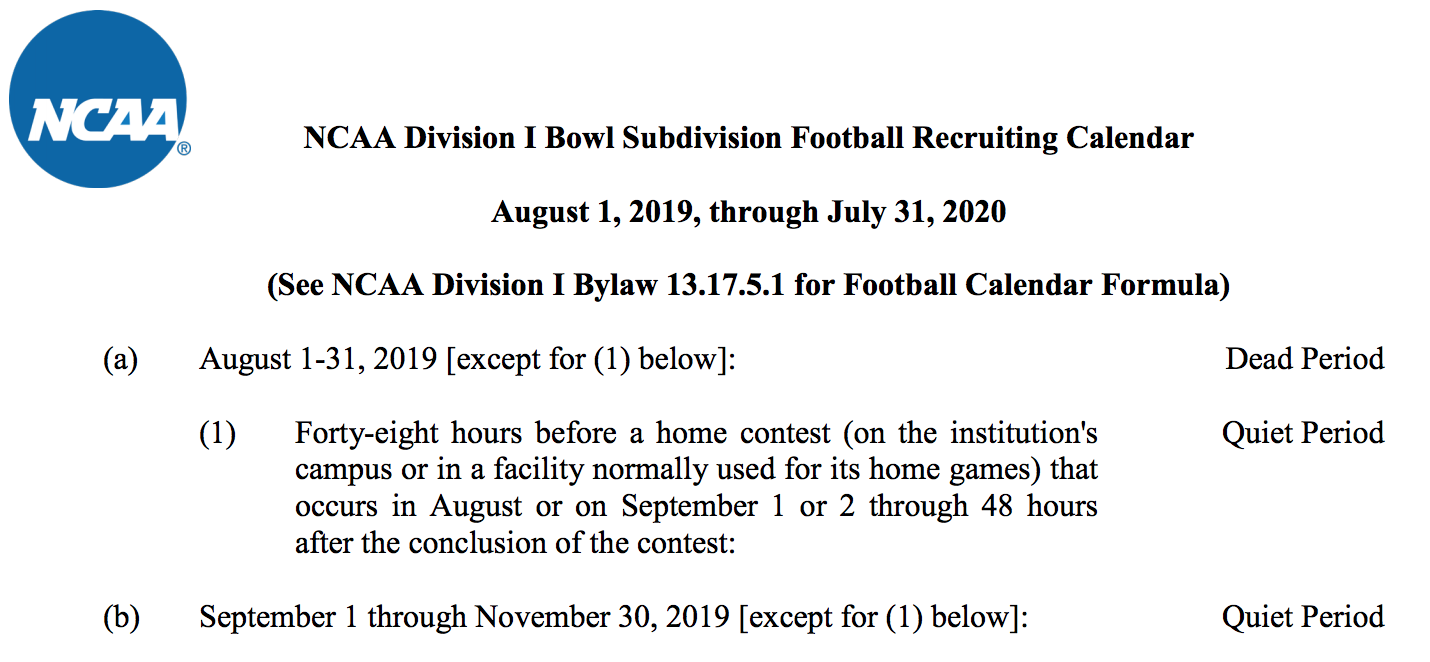
During the Spring it is very important to be aware of  the contact communication periods within your sport as well as the communication regulations that accompany them. This information is easy to locate within the NCAA and NAIA regulations on their respective websites. This information can also be accessed in your Prepstar profile under the My Recruiting Calendar tab. 

It is also important to note the communication rules. While many divisions (D1, D2, D3, etc) have similar communication rules, in actuality, there are some glaring differences.  For example, D2 coaches, in comparison, have much more leniency with prospect communications For example, in football, FBS schools (those that go to bowl games) have similar contact periods than FCS or D2 colleges. And D3 college have no restrictions on communications. 

Now, the key to communicating with college coaches in the Spring is to be proactive! Every student -athlete should be aware that    athletes are permitted to contact coaches at any time as long as they are a high school student. This means that to communicate with college coach outside of designated contact periods has to be initiated by the student-athlete. Additionally, this rule also applies to underclassmen (Freshman and Sophomores). So again, no matter what time of year and no matter the contact period, college coaches are permitted to talk with prospects as long as the prospect makes the first move to contact them. 

The NCAA posts, “The rules define who may be involved in the recruiting process, when recruiting may occur and the conditions under which recruiting may be conducted. Recruiting rules seek, as much as possible, to control intrusions into the lives of student-athletes.”  However, it makes no mention of prohibiting student initiated communicating with college coaches!

Clearly,  understanding and utilizing this rule would provide a recruiting advantage. So, I highly recommend that student-athlete take the initiative to reach out to coaches with emails, texts and voicemails. Never just wait around for coaches to call you! Instead be proactive and make the effort to contact them. 

To wrap up, it would be an atrocious understatement to say that recruiting is anything but a year round process. There is no downtime because college coaches are always recruiting. They are always looking for that special student-athlete who can impact their program. So make sure to use Spring to your advantage. Its a great time of year to get aquatinted with coaches, plan visits and build that ever important recruiting relationship. 

Featured Athlete: Sam Shields

Although its only March, the football preseason has been very busy for 2020 offensive lineman Sam Shields as he has made his rounds with Power 5 campus visits. Shields, standing 6’5, 280 is a highly sought after recruit from Manhattan High School in Kansas. To date, Shields has already received offers from the University of Kanas, University of South Dakota, and has taken visits to University of Iowa and Kansas State.

The PrepStar scouting reports notes that as you watch Sam on film, what strikes you the most is that he has very good feet, they are always moving and he has excellent balance. He also has excellent upper body and lower body strength, and he uses it to his maximum advantage. While a run blocker, he displays excellent footwork, he has a low center of gravity and uses that along with his strength to get under the DL and push him back. He also displays a wide base and excellent footwork, his feet are always moving which allows him to always be in a balanced position. As soon as he steps on the field, he is a beast, giving 110% on each play and he even has a little nasty edge.

Beside being a stellar football player, Shields is also an exceptional student. He carries a 3.6 GPA and is a member of the National Honor Society.

NAIA Transfer Rules- how the transfer release aids student-athletes.

Recently, the college sports news has been dominated with transfer notices of NCAA athletes. But many viewers may not be aware that college athletics is made up of more than just the NCAA. College athletes also includes the NAIA and NJCAA. While these organizations share similarities in processes there are some distinct differences in certain procedures. Today, lets look at the transfer rules of the NAIA. 

To begin, the NAIA (National Association of Intercollegiate Athletics) is comprised of 65,000 student athletes, 250 member colleges,  with21 conferences and over $600 million in scholarship money. In total NAIA athletics compete for 26 different championships. Having 65,000 student athletes naturally assures that there will be transfers.  And the reason for transfers varies. An athlete can transfer from one school to another such as JC to NAIA, NAIA to NAIA or NCAA to NAIA. The reasons also vary as athletes often decide to transfer because of competitive, academic, or even personal preference.  So what is the process for transferring in the NAIA? 

The change to the NAIA transfer rules seems to have shifted more control over the academic and athletic experience to the student athlete. 

According to the NAIA a transfer is defined as, “A student who becomes identified with an NAIA institution after having previously been identified with a two- or four-year institution of higher learning.”  So then, for an athlete to transfer the student much complete the official NAIA Transfer Player Eligibility Statement prior to their first participation at the NAIA institution no matter how long ago the transfer occurred. The athlete must also request a written release from the previous college before being able to compete at the subsequent college.

Additionally, the NAIA also has residency regulations for transfer. The Play NAIA websites states residency requirements for transfers determine how soon an athlete can compete once transferring from a four-year college or two year college. Assuming that the athete meets the academic requirements including minimum GPA of 2.0, an athete transferring from a 4 year college must wait 16 weeks to participate unless a waiver is granted. However, an athlete transferring from a 2-year college to an NAIA college is does not have a waiting penalty. 

Similar to the NCAA, new legislation regarding approving the release of a student athlete took shape in August 2018. The change stated that if the written release request had not warranted a response within 30 days the written release would be automatically approved.  This new change comes to the aid of the student athlete by prohibiting colleges from blocking or delaying the transfer of student-athletes wanting to move on to compete at another college. The August 2018 change to the NAIA transfer rules seems to shift more control over the academic and athletic experience to the student athlete. 

Featured Athlete: Brett Wozniak

Spring of 2019 has been good to 2020, LHP, Brett Wozniak. This University of Nebraska commit verballed after his official January visit, is an intricate part of the #1 ranked CIF Cypress Centurions, and in a serendipitous event met NFL quarterback Baker Mayfield while taking in some Spring Training games.

In June of 2017, Coach Mike of PrepStar identified Brett Wozniak as one of the top rising southpaw baseball prospects in Southern California for the class of 2020. Following an MVP freshman season and summer roster spot on SoCal NTIS 15U, Wozniak has continued to impress. His skillset has already drawn national recognition by Prep Baseball Report, Baseball Scouting USA and earned him a pre-season All-American nod by Rawlings-Perfect Game.

As a sophomore Wozniak has made significant contributions with key roles as a starter and middle reliever and first-baseman on the Empire League co-Championship and Nationally ranked Cypress HS varsity baseball team. At the plate i 2018, Wozniak hit .328 with a .394 OBP. Dominating on the hill Wozniak consistently kept top competition at bay with an impressive 1.76 ERA. A fine student-athlete Wozniak was named to the Empire League All-Academic Team with an impressive 3.86 GPA.

Heading into his junior season, Prep Baseball Report named Wozniak as one of the top 5 uncommitted pitchers in Southern California. However, while on the radar of several Division 1 colleges, Wozniak didn’t stay on that list very long. Midway through the 2019 campaign there are many resemblances as Cypress is again ranked and currently standing at #1 in CIF Division 1 as well as in the top 10 teams nationally. At the plate Wozniak is carrying a .411 average but equally as impressive he is 4-0 on the bump with a 1.12 era and allowing opponents on 4 earned runs. Earlier this month Wozniak was recognized by the Orange County Register as Fryer’s Diamond Club: Orange County baseball standouts of the week, March 5 for an impressive 6 inning outing to defeat top slated Orange County Lutheran 2-1.