Recruiting after September 1 : the contact rules have changed

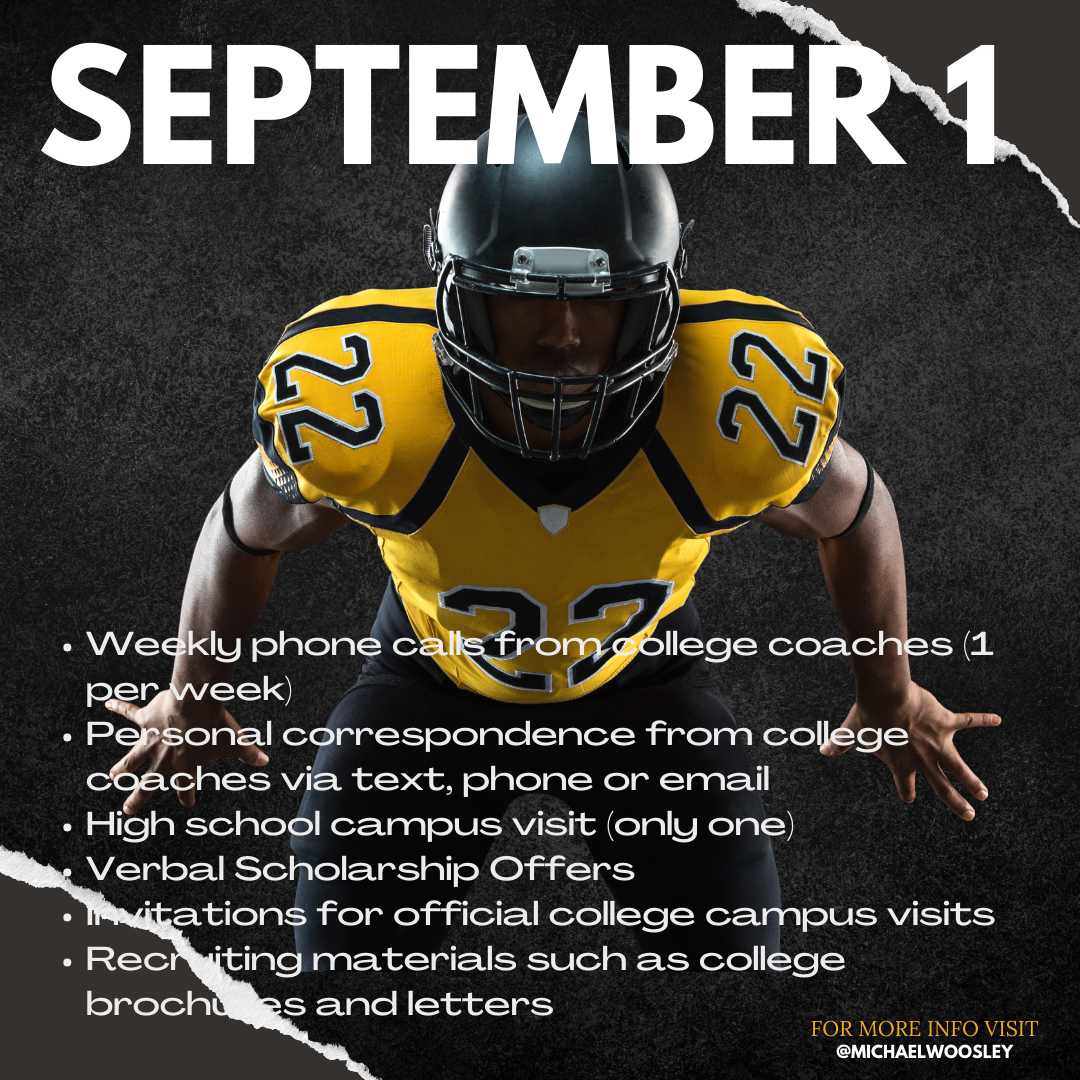
There is some crucial information to know about the recent recruitment period. It is important to realize that September 1 marks the beginning of the contact period. College coaches can now send Junior and Senior college prospects a lot more communication.

Here are some forms of communication that can take place, however the most common are:

  • Weekly phone calls from college coaches (one per week)
  • Personal correspondence from college coaches via text, phone or email
  • High school campus visit (only one)
  • Verbal Scholarship Offers
  • Invitations for official college campus visits
  • Recruiting materials such as college brochures and letters

Athletes who experience this level of communication can be sure that it is a favorable indicator of interest.

However, athletes not getting any communication should start being proactive immediately. There is an old but true phase, “if you keep doing what you’re doing, you will keep getting what you”re getting.” If the results you have are not what you expected then it’s time to make a change.

Student athletes and supportive parents should consider contacting a reputable and credible recruiting resource like PrepStar to to learn how to increase exposure and open recruiting communication with college coaches.

Have questions? Need help?  Contact me to set up a time to talk (get free advise!) or use the comment section below.

Recruiting myths about the quiet period 

Recruiting becomes hot as August begins, just as summer begins to cool down. However, before it starts to boil, there is a brief pause in recruiting. That pause is known as the Quiet Period.

There are many myths and misconceptions about the Quiet Period, so this article will clear up five of them. 

Photo by Lucas Andrade at Unsplash

Myth #1: That quiet period means absolute silence. Most parents and athletes think that this mean coaches can’t talk to prospective student athletes. True, NCAA communication rules are restricted during the quiet period. But in the end, colleges coaches are permitted to communicate with prospective student athletes during the quiet period.

Myth #2: Athletes can’t contact coaches. Not true. According to the NCAA recruiting guidelines, prospective student athletes can contact college coaches beginning on the first day of freshman year. Additionally, student-athletes are permitted to contact coaches at any time during the recruiting process.

Myth #3: College Coaches don’t recruit during the quiet period. False, coaches recruit year round. Just look at all the offers posted on social media! So, since college coaches continue to recruit during the quiet period athletes need both communication and recruiting exposure year around

Myth #4: On campus invites during the Quiet Period are money grabs. Not necessarily. Some invites are in fact money grabs so it’s up to the athlete and parents to learn the difference. The NCAA rules state contact with prospective student athletes is permissible on the college campus. So, how else can coaches get athletes on campus but to invite them to a prospect camp? 

Myth #5: College coaches can’t make offers during the quiet period. Again, the quiet period does not mean dead silence. Instead, the quiet period regulates communication between college coaches and prospective student athletes. During the quiet period coaches can and do make scholarship offers. 

The origin of these myths and misconceptions is from athletes and parents being unfamiliar with the recruiting process. Information is pieced together from bits and pieces heard from other players and parents. It’s similar to trying to put together a jumbled puzzle, but missing several key pieces. It doesn’t matter how much effort you put in, the end result will be an incomplete picture. Don’t rely on rumors and hearsay from other parents. Become educated about the recruiting process or find someone who is. 

what student athletes can do to improve their recruiting situation during the quiet period

What is the quiet period? What does it mean for recruiting?

According to the NCAA, during a quiet period a college coach may not have face-to-face contact with college-bound student-athletes or their parents, and may not watch student-athletes compete or visit their high schools. Coaches may write and telephone student-athletes or their parents during a dead period.

So, with prospective student athletes, college coaches are not permitted to have; in person evaluations, official campus visits or in person contacts. But, student athletes should be aware that written and telephone communication is permissible during the quiet period. 


Photo by Chris Chow on Unsplash

However, like any other Quiet Period throughout the recruiting calendar, the recruiting process does not stop. Consider the quiet period a time-out from the evaluation process.  

So, student-athletes, what can you do to improve your recruiting situation right now?  

First, get your highlight reel looking sharp. By now you should have a highlights from summer camps, showcases as well as previous seasons, plus some training video. Use this footage to make short highlight and skills videos that can be added to your recruiting profile and viewed by college coaches. 

Next, assess recruiting goals with realistic expectations. If you’ve had your mind set on certain school but have not been contacted by a college coach don’t expect contact anytime soon. Instead, do an honest comparison of your level of play to the quality of athletes being recruited. This will help you determine a good college fit and will also point you to college coaches that you should be contacting. 

Then, expand your methods of contacting college coaches. Don’t just rely on twitter to blast out your video links or show clips of getting one hit during a game. Instead, use multiple points of contact including email, text, and, if you’re brave enough, go old school, by actually making a phone call to a college coach.

Overall, during the quiet period it is important for the student-athlete to stay focused!  The quiet period does not mean that recruiting comes to a dead stop. Lots of recruiting is still to come. 

Is recruiting is going the way you hoped it would? Have questions about the recruiting process? Comment below or DM me. I’m glad to help.

Now that summer sports camps are over, what can student-athletes do to help their recruiting?

A big mistake that I see athletes make is they do not use summer sports camps to their recruiting advantage. 

For most athletes when camp season ends in July, many student-athletes take a break. However, this is the perfect time to start thinking about the next steps in your recruiting process.

College athletic camps in the summer are a staple in the recruiting process for  high school student-athletes. Camps are offered at almost every grade level and skill level. However, the high school camps comprise the implications of recruiting. Athletes attend camps to demonstrate skills, talent, and personality. They also have a chance to see the college campus, take some pictures for social media and shake a few hands of revered college coaches. 

True, college camps are a fun experience, but actually they are vital in moving the recruiting process forward for prospective student athletes. Certainly, student-athletes want to come away from a camp with more than a t-shirt and sunburn.So, now that cams season is over, what must a serious student-athlete do? How can the investment of time, energy and money of summer camps be used as a recruiting advantage?   

Immediately after camp season completes the student athletes should develop a plan to improve the identified strengths and weaknesses. The measure and collecting of metrics and statistics during camps should reveal the areas in need  of improvement. For example, if a timed speed metric is too high then, the next step for the student athletes is to figure out what is needed to lower the time to the appropriate range. This may include adapting new speed drills and revising workouts to improve speed. 

In recruiting, college coaches want student-athletes who put in the work to improve all aspects of their game. . Staying the same is not good. So develop a plan to strengthen strength and work on weaknesses.  Surely, coaches will notice the next time the opportunity to be evaluated. 

Next, student-athletes should update their recruiting profile with current metrics and measurements.  Recruiting profiles are excellent for sharing academic and athletic information with college coaches. But, if a student-athlete does not have an athletic profile, then immediately after reading this blog, go build one ! 

Summer sports can also provide opportunities to capture useful video for recruiting. Featured footage from camp competition, drills, skills, and agility can easily be edited for recruiting purposes. Most importantly, include video links of the new film to your newly updated recruiting profile. 

Finally, take all that new information and then touch base with coaches you met at camps. Best forms of communication are email and direct messages. In this communication, make sure to mention the name and dates of the camp you attended. 

Following these simple steps can surely help move the recruiting process forward for any student-athlete. 

is the transfer portal good for the student-athlete?

In October of 2018 the NCAA made a drastic change to the transfer rules in D1 sports. Three years later,  the NCAA approved regulations that allowed student-athletes to transfer once without penalty provided the student athlete is in good academic standing and has not had a transfer situation prior to the new transfer initiative. Before the new rule, transfer student-athletes were subject to having to sit out a year.

While it’s too early to tell what will come of it, it is without question that the transfer changes has began to cause quite a stir in college athletics. The goal of this article, therefore, is to briefly outline the changes while shining some light on the idea that the changes are to the benefit of the college student athlete.

The new NCAA transfer rules and transfer portal have changed the ways student-athletes communicate the want to transfer.

At the heart of the DI rule changes is that student athletes no longer have to request permission to transfer. Instead, student athletes simply have to inform the university compliance officer or approved administrator that they want the opportunity to talk with other colleges about the possibility of transfer. In response, the college the student athlete is currently attending will then add the name of the student-athletes to the NCAA transfer database. Next, As a result of the request, once the student-athlete has been entered into the database all colleges will be able to see his or her name and contact info. It is only after the student-athlete is entered into the transfer portal that the student-athlete can begin receiving communication regarding transfer opportunities.

Traditionally, student-athlete transfers had to sit out a year before being able to compete. Now, however, for immediate participation to happen, an approved NCAA waiver stating the student-athlete meets the transfer criteria is all that is required.

Clearly, this rule favors D1 student athletes. The reason for the new transfer rules is because previously for an athlete to transfer he or she a must ask a coach for permission to contact other schools. A school interested in recruiting a transferring player also must ask the current school for permission to recruit. So, without permission from the original school, the student-athlete is unable get financial aid from another school. Essentially, this allowed coaches to block permission to transfer while keeping players from playing at competing colleges.

Although, the new transfer rules are designed to prohibit those tactics athletes requesting transfer still inertia some risk. For example, once a Division I athlete informs their university of their plan to transfer, the university has the right to cancel the athlete’s sport scholarship at the end of the semester. It is also possible that the coach if he/she desires can immediately remove the athlete from their team. So does this rule really benefit the student athete? Or does the rule place them at risk? Again, its too early to tell. 

How to get Recruiting coaching videos from Coach MIke

Coach Mike is a 20 year veteran coach of softball, baseball, football and lacrosse. He is the #1 Director of Scouting and Recruiting at CSA PrepStar & PrepStar Magazine. A former college athlete himself, Coach Mike assists and coaches families through the academic, athletic and financial aspects of college recruiting.

For two decades, Coach Mike has helped elite athletes so he created, Elite Athlete Recruiting and the Coach Mike Woosley websites, to provide more recruiting resources to families including video tutorials, articles, video assessment and recruiting tips and timelines. His passion is evident in the hundreds of athletes across various college sports who have gone on to play at the collegiate level under his guidance and care as a coach and college scout. “To Get Committed, You have to be Committed!”

YouTube Channel Link: https://www.youtube.com/c/CoachMikeWoosley/videos

PrepStar Coaching: The Ultimate Tool To Find the Right College Fit

PrepStar Coaching: The Ultimate Tool To Find the Right College Fit

 A Difference Working with Coach Mike- Morgan’s experience

Unlike conventional recruiting platforms Prepstar knows the athletes we work with. The PrepStar 360 team provides 1-1 relationship opportunities between athletes and our scouts. Athletes like Morgan benefit from the personal approach while they are going through the ever-changing path that is college recruiting. 

PrepStar 360A new and improved recruiting platform

“At PrepStar 360 we know the specific needs of our athletes and the college recruiters, so we have developed a new recruiting platform based upon that insight. We truly feel it is a better recruiting tool than what is currently out there on the market.”– Mike Woosley, national scouting director of PrepStar “Our service goes beyond traditional recruiting. Our site and comprehensive program helps find the right colleges, academics for each individual athlete. That is what we mean by PrepStar 360.

PrepStar is different from other recruiting platforms

For athletes like Morgan, PrepStar’s 360° approach provides an athlete from beginning to end of their college recruiting journey and the system is unprecedented. Its team of fully-trained college scouts conduct one-on-one recruiting assessment, video visits and progress evaluations that far exceed the recruiting services of conventional recruiting sites. Coach Mike, National Director at PrepStar explains, “The PrepStar 360° approach was created with an athlete’s needs, and not a 3 year experience, or a 4 year experience. Our personalized recruiting approach provides a supportive and unique recruiting experience to help athletes discover their perfect college fit. 

The PrepStar Difference

Powered by technology and decades of interaction we take pride in being the only national, high school recruiting program of its kind. In today’s world athletes and coaches communicate digitally in every possible way. PrepStar 360 is designed to be more intuitive than any of its competitors. Here’s why: How do you get coaches to find you? PrepStar will give you your best chance of being seen, recruited and getting a college scholarship. We connect you with the best coaches, most passionate parents and a community of support. Because we’re a scouting and recruiting company we understand the importance of your college future.

PrepStar Coaching

“We like to challenge ourselves to find the most efficient, efficient recruiting solution for our athletes.” Bethany Juarez, social media liaison at PrepStar Southwest. Now the group does more than just share information with recruits and the schools. In addition to creating the platforms and compiling information. PrepStar 360 is also making it available for college recruiters. The clients for PrepStar 360 cover nearly every major college sport. Since their platform is so unique, they make the communications with the colleges available to the schools as well. “The schools are able to communicate with us on the college recruiting platforms directly.”

Conclusion

This article outlines how PrepStar 360 changed the life as a softball prospect like Morgan and how it can for other athletes too. While there are many powerful tools out there, not all of them are the right fit for everyone. Our scouts are waiting to talk to you. Reach out today and let’s take your athletic future to the next level. Coach Mike Woosley is the national scouting director for PrepStar. He has helped place a large number of college scholarship offers. To contact Coach Mike call 480-605-4050 or email: mwoosley@csaprepstar.com