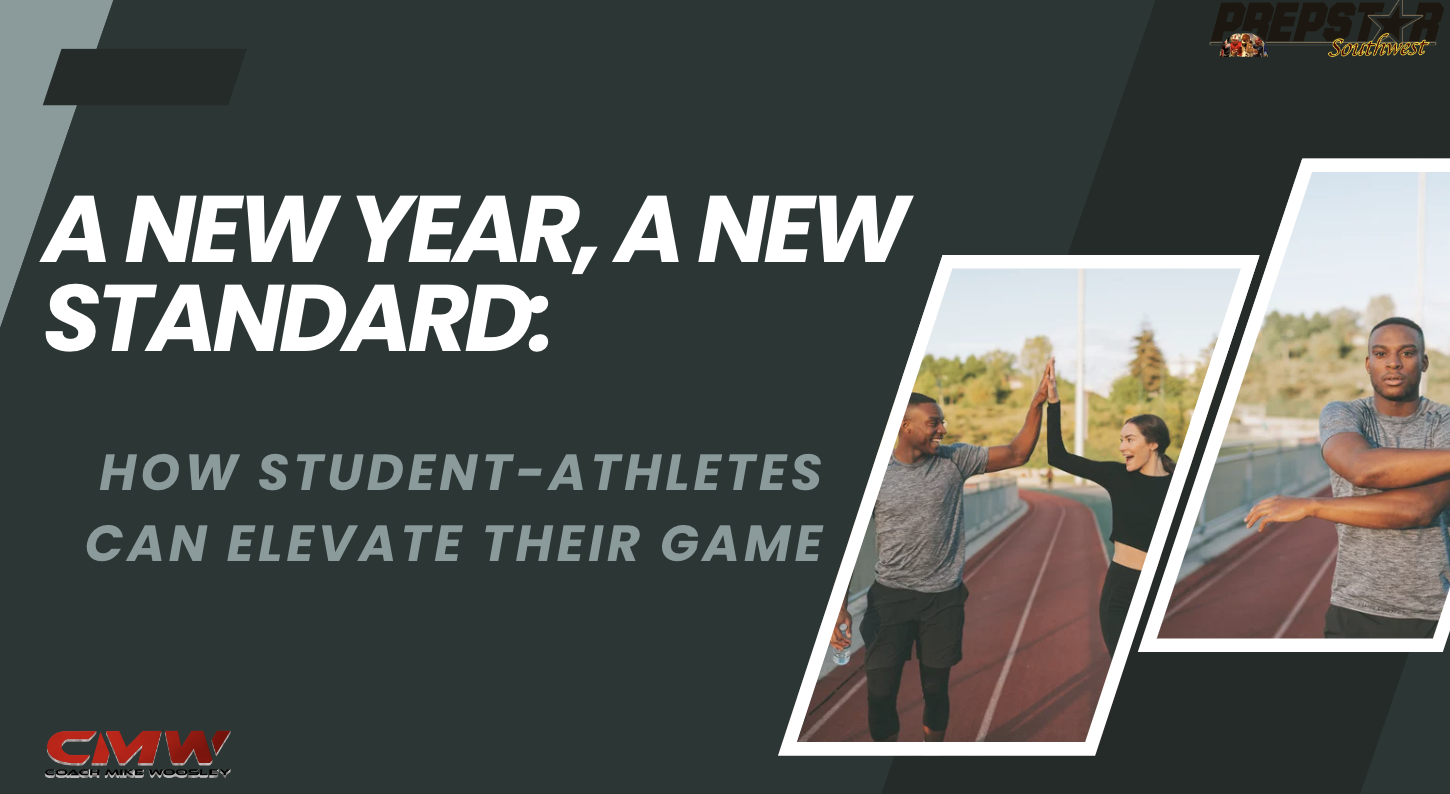
A New Year, A New Standard: How Student-Athletes Can Elevate Their Game

The start of a new year is more than just turning the calendar—it’s an opportunity for student-athletes to reset, refocus, and recommit to their goals. Success in high school athletics doesn’t happen by chance. It’s the result of intentional planning, daily discipline, and consistent effort both on and off the field.

To truly stand out, athletes must commit to more than simply showing up for practices and games. They need a structured approach that includes clear goal-setting, focused skill development, quality coaching and feedback, and the discipline to care for both their bodies and minds—especially during the demands of in-season competition.

Start With Clear Goals—and Write Them Down

Before progress can happen, athletes must define what success looks like. The most effective goals are specific, measurable, and written down. Whether it’s improving speed, earning a starting role, raising academic performance, or gaining college exposure, outlining goals creates clarity and accountability.

Once goals are set, the real work begins: executing daily habits that support those goals. Big achievements are built through small, consistent actions repeated over time.

1. Commit to Consistent Training and Skill Development

Consistent training is the foundation of athletic growth. This means going beyond team practices and committing to individual skill work, strength training, conditioning, and sport-specific development throughout the year.

Athletes who improve the most are those who train with purpose—focusing on weaknesses, sharpening strengths, and maintaining intensity even when motivation fades. Consistency, not perfection, is what separates average players from high performers.

2. Seek Coaching and Feedback

Great athletes don’t train in isolation. They actively seek coaching, instruction, and honest feedback. Whether it’s from a high school coach, private trainer, or trusted mentor, feedback helps athletes identify blind spots and make necessary adjustments.

Equally important is being coachable—listening, asking questions, and applying what’s taught. Growth accelerates when athletes are willing to learn, adapt, and embrace constructive criticism.

3. Focus on Recovery, Nutrition, and Mental Preparation

Training hard means nothing if the body and mind aren’t properly cared for. Recovery, nutrition, and mental preparation are often overlooked, yet they are critical to sustained performance.

Quality sleep, proper fueling, hydration, mobility work, and mental focus all contribute to staying healthy and performing at a high level—especially during long seasons filled with practices, games, travel, and academic demands. Discipline off the field directly impacts performance on it.

Execution Creates Results

The athletes who separate themselves are those who consistently execute their plan, even when it’s challenging. By setting clear goals, committing to structured training, seeking feedback, and prioritizing recovery and mental readiness, student-athletes give themselves the best chance to maximize their potential.

View Post

The new year is a chance to raise your standard. Write your goals down, create a plan, and attack each day with purpose. Success follows those who are prepared—and preparation starts now.

The PrepStar featured athlete

The PrepStar featured athlete for this week is Riley Baughman. At 6’5”, 285, Riley is a massive offensive lineman from Cactus Shadows High School and ranked as one of the top linemen in Arizona (#11). Heading into the summer camp season, Baughman already has offers from Augustana University, Black Hills State University, University of Sioux Falls and Fort Lewis College. Recently, I caught up with the rising Senior about a few future goals, passion for the sport, memorable moments, and some light, fun personality-based questions.

Academics
GPA 3.67 ACT: 33 SAT: 1340

Metrics
40 Yard: 5.5 (Laser) Wing Span: 78

Link to recruit profile: PrepStar 360 Athlete
Link to Hudl: 2024 Season Highlights
Twitter/X: ​​@RileyBaughman75

What’s one skill you’re focused on improving this season? 

This season I’m just focused on perfecting my footwork to lockdown in pass protection.

What’s the best advice you’ve gotten from a coach? 

The best advice I’ve gotten is just that things are going to get tough, you just have to keep on moving forward.

What’s been your biggest accomplishment so far? 

Personally, my biggest accomplishment has been earning First Team All Region last year (2024).

How do you handle pressure or setbacks?

I handle it with the mindset of just dealing the cards you’re dealt. You need to make the best of your situation.

If a movie was made about you, who would star? 

I think Dwayne Johnson “the rock” could do a great job

What’s your favorite in-game moment? 

My favorite in game moment was our game winning 60 yard td run against our rival Notre Dame.

What do you want to be known for as an athlete?

I want to be known as someone who was always bringing good energy and working hard.

What’s your go-to pre-game meal or snack?

My go to pregame meal for everything is steak and a baked potato.

Favorite pump-up song before a game? 

Recently I’ve been listening to the rapper Baby Smoove to get me hyped up.

Who is your favorite pro athlete and why?

My favorite pro athlete is Taylor Lewan, he went to my high school and seems like a great person and always has positive energy.

The All-Rounder Advantage: Exploring the Benefits of Multi-Sport Participation

The Benefits of Being a Multi-Sport Athlete

In today’s highly specialized sports environment, young athletes are often encouraged to focus on a single sport from an early age. However, becoming a multi-sport athlete offers numerous benefits that can enhance an individual’s overall athletic development. Here are three key advantages of engaging in multiple sports: learning game strategy from other sports, developing strength, agility, and coordination, and being exposed to different coaching styles.

Learning Game Strategy from Other Sports

Participating in multiple sports provides athletes with a diverse set of strategic insights that can be transferred from one sport to another. For instance, understanding spatial awareness in soccer can enhance a basketball player’s ability to navigate the court. Similarly, the quick decision-making required in fast-paced sports like hockey or lacrosse can improve a football player’s reaction time and on-field intelligence.

Different sports emphasize various aspects of strategy, such as teamwork, positioning, and tactical thinking. By engaging in multiple sports, athletes can draw on a wider range of experiences and apply these strategies to their primary sport. This cross-pollination of ideas fosters a more comprehensive understanding of game dynamics, allowing athletes to anticipate opponents’ moves, identify opportunities, and make smarter plays.

Developing Strength, Agility, and Coordination

Another significant benefit of being a multi-sport athlete is the overall development of physical attributes such as strength, agility, and coordination. Each sport typically emphasizes different muscle groups and movement patterns. For example, playing soccer or basketball can enhance cardiovascular fitness and lower body strength, while swimming can improve upper body strength and flexibility.

Engaging in a variety of sports helps athletes develop a well-rounded physical foundation. This holistic development reduces the risk of overuse injuries that often result from repetitive motions associated with a single sport. Additionally, the varied physical demands of multiple sports can improve overall athleticism, making athletes more adaptable and resilient.

For instance, a baseball player who also participates in track and field will benefit from increased sprinting speed and explosive power. Similarly, a gymnast who also practices martial arts can gain better balance, flexibility, and body control. These physical benefits translate into enhanced performance in any sport, as athletes become more versatile and capable of excelling in diverse athletic situations.

Exposure to Different Coaching Styles

Being exposed to different coaching styles is another valuable advantage of participating in multiple sports. Each coach brings their unique philosophy, methods, and approaches to training and competition. Experiencing a variety of coaching styles allows athletes to learn from different perspectives, adapt to various teaching methods, and develop a more well-rounded approach to their sport.

Different coaches may emphasize different aspects of training, such as technical skills, mental toughness, or teamwork. By working with a range of coaches, athletes can gain a more comprehensive understanding of their sport and discover new techniques and strategies. Additionally, exposure to different coaching styles helps athletes develop adaptability and resilience, as they learn to thrive under varying expectations and communication styles.

Furthermore, athletes who engage with multiple coaches can build a diverse support network. These relationships can provide valuable mentorship, guidance, and opportunities for growth. Learning to navigate different coaching styles also fosters critical thinking and self-awareness, as athletes reflect on their experiences and determine what works best for them.

Conclusion

In conclusion, being a multi-sport athlete offers numerous benefits that contribute to overall athletic development. By learning game strategy from various sports, athletes gain a broader understanding of tactics and decision-making. The physical development gained through diverse sports participation enhances strength, agility, and coordination. Finally, exposure to different coaching styles enriches an athlete’s training experience and fosters adaptability. Encouraging young athletes to engage in multiple sports can lead to more well-rounded, resilient, and versatile individuals who excel both on and off the field.