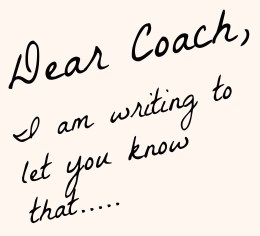
How to write an academic recruiting email


Communication is perhaps the most important aspect of college recruiting. To be more specific, written communication has an essential role in the recruiting process.

Unfortunately, many athletes miss out on great opportunities because they don’t learn how to properly communicate with college coaches, assistant coaches or recruiting coordinators.

So, I want to give you an effective strategy for using email in the recruiting process so that you can avoid the mistake of missed opportunity.

As you begin, it helps to be aware that most college coaches are looking for athletes who actually want to get an education at the school they work for. Truth is, for the majority of colleges outside of the Power 5, educational opportunities draw more prospective student athletes than athletic program.   

balancing-sports-education1
Academic interest emails display understanding the balance between collegiate academic and athletics. 

Next, if you want to be considered as a prospect or recruit at a college you will have to find a way to communicate that information to a college coach, assistant coach or recruiting coordinator. The best way to do that is by email, especially if you’re interested in colleges out-of-state.

The recommendation of many online resources is for athletes to blindly email coaches asking about available scholarships and roster spots. While there is a proper time to ask those questions, it’s helpful to know that an academic interest email is not the email to ask those questions.

So, what should you include in the email?

Obviously, in an academic interest email it is important to display your interest in the academic programs offered.

Why? Because coaches like it when you show them that you’ve done some research on the school as well the team. Another useful tip is to include facts about the program as well as some recent statistics such as graduation rate or placement rate after graduation. Ultimately, coaches want to know the athletes emailing is goal oriented and highly motivated to succeed.

To wrap up, proper communication is important for recruits. To be effective, your communication needs to display your level of interest in the college and that your objective is to find a college that will academically position you for success after your career.

Finally, there are several key pieces of information required in recruiting emails so I will continue providing readers great tips and useful information in future posts.


Be Committed,


Coach Mike

New NCAA regulations on electronic communication is sure to impact recruiting 

Recently, in an April meeting NCAA D1 council changed its regulations on the use of text message communication for recruiting.  Although this change has been regulated for D1 college only, it will surely impact other divisions of college athletics.

As stated on the NCAA website

  • The Council deregulated electronic communication with prospective student-athletes who participate in football, cross country, track and field and swimming and diving.

Electronic communication includes

images
Student athletes will be more accessible than ever  once electronic communication is deregulated.
  • Text Message
  • Twitter DM
  • Facebook message
  • Instagram message

Since the announcement coaches, pundits and media outlets have started debating how this regulation will both hurt and help college coaches and recruits. It also means the NCAA  gets off easy because they no longer has to monitor electronic contacts.

The reason I want to bring this new rule to your attention is because
1) it directly impacts your recruiting
2) it is likely to change the way coaches reach out to players
3) it means the student athlete will need to learn how to effectively communicate with college coaches.

Once this rule takes effect, communication with college coaches via social media is going to be different for student athletes. Surely, this will impact the content student-athletes post to social media. Especially when considering college coaches will be permit to interact with athlete at any time.
Be committed,

Coach Mike

Why grades, stats and measurables matter for recruiting

For the longest time the eye-test ruled collegiate and professional recruiting. Today, recruiting has evolved to also include specific measurements that are used to predict and project athlete potential.

This is why stats, metics and grades are important to your recruiting profile.

Hanging in my office is a well used stopwatch. Its serves as a reminder that today sports are broken down into fractions of a second. Basic math, statistics and advanced data analysis not only separates athletes but also accounts for the difference between wins and losses.

Your goal is to win at the game of recruiting.  So use your stats, metrics and grades to separate yourself from the crowd and show the college coaches your talent.

In your Prepstar profile you can update this information as often as you like. Simply click the “Edit” button, enter the data then click “Save”.

If your not sure what to add, feel free to contact me. I’m here to help.

Be committed,

Coach Mike

Why Average isn’t Impressive : tips for a top-notch recruiting profile

The recruiting profile is much like a resume. A good resume lets the employer know who the candidate is, why she/he is more qualified than other applicants, and what unique skills they have to help the company. Typically, the best candidates have the most impressive resumes. Without question, their experience stands outs in the accomplishments and achievements listed.


Average isn’t impressive. 
The recruiting profile represents the accomplishments of prospective student-athletes in the classroom and in athletic competition. Its your chance to be extraordinary, not average.

Surely, candidates with incomplete resumes stand less of a chance compared to prospects with resumes chock-full of impressive information.

So, your recruiting profile can be a great tool to the get attention of the college coach. However, if your profile looks like everyone else’s then you are more likely to get looked over than to get attention.

Be “extra”-ordinary
College coaches are looking for players that have something “extra”-ordinary about them.
Practically every college coach is looking for student-athletes with the right experience, skills and qualifications to convince them that he/she will be able to succeed at the next level.

I encourage you to use your recruiting profile to let coaches know why you are an excellent choice and great fit for the college and athletic program!

So, the best way to do that is to frequently update your recruting profile!

What then should be included in your profile? 

  • Academic accomplishments
  • Academic transcripts
  • Future academic interests
  • Community involvement
  • Extracurricular clubs / programs
  • College entry exam scores
  • Media web-links and newspaper articles
  • Strength and Speed Metrics
  • Recent statistics
  • Experience /accomplishments including playoffs, state championships, tournament championships
  • Letters of recommendation from coach, counselor, teacher or mentor
  • Game Video highlights
  • Position Skills video
  • Travel team information
  • Goals and objectives
  • Contact information including phone, email, social media

Why does your profile need this information?
If you don’t give coaches the information they need, they will just glance over your profile and move on to the next qualified athlete in their search for the right fit. Please do not expect a college coach to track down all of your information. Truthfully, most won’t. Instead, show them why you deserve their attention.

1-2-3 How recruiting can easily go viral

Do you know who Marisa Arriaga is? Monday, her amazing hit trick video went viral. After her video went viral, it’s safe to say Marisa Arriaga has gained more popularity than she ever imagined.

College athletic recruiting works a lot like that. With the right kind of exposure a student- athlete goes from a total unknown one day to being known by every college coach the next.

[https://www.youtube.com/watch?v=R3VE9wSh3Ok&feature=youtu.be]
Answer these questions to determine if recruiting exposure is needed?

  1. My student-athlete is one of the best athletes on the team and one of the top players in the league

  2. My student-athlete works harder in and out of the classroom than his/her peers

  3. My student-athlete is totally committed to playing college athletics and earning a scholarship

Parents, if you answered all three questions with a “Yes!” then it’s time to start getting the recruiting recognition that your student-athlete deserves.

So, if you answered yes to all three of these questions you have 3 recruiting options.

  1. Try to figure out a fancy trick, record it and hope it goes viral.

  2. Do nothing at all.

  3. Contact me through the comment sections so I can connect with you to lay out a plan to get your athlete the national recognition they deserve!

Prepstar student-athletes get evaluated by thousands of college coaches everyday!

I guarantee, with Prepstar your student-athlete’s recruiting will go viral.

Recruiting, recognition, results….that’s what your student-athlete deserves!

Let’s go viral today!

Coach Mike

Coach Mike Woosley is a National Scouting Director at CSA-PrepStar. As a professional collegiate sports scout Mike coaches qualified next level student-athletes through the recruiting process to find the right college athletic and academic fit.

cropped-cropped-main_logo-11.jpg

No Last Minute Miracle Needed- 5 Tips for Athletes Manage College Recruiting

Time Management

Most athletic competitions have time constraints. For example, soccer has two 45 minute halves, basketball four 8 minute quarters, even track and swimming measure placements by time. Baseball and softball limits games by a specified number of innings. Clearly, time management is vital to every game.

Usually the team that did the best job of managing the clock wins the game.  Teams that don’t have to rely on a last minute miracle.  

Last Minute Miracles

Truth is athletes only have one shot at getting recruited.  No one can have a high school do-ver. So athletes in the midst should never rely on a last minute miracle to land a scholarship.

I’m not a miracle worker, but I know how to manage the recruiting clock.  Partnering with me will assure success!

Senior year should be one of recruiting celebration not  recruiting anxiety.

Think of it like this. Would you rather hurry and scurry around as the clock winds down hoping to score at the last second or would you prefer to know that victory is eminent  and relish the moment of celebration?

5 Tips to Enjoy the Recruiting Process (and avoid hoping for a last minute miracle)

Follow these few tips to be certain that you’ve met your goals and victory belongs to you!

  1. Have a solid recruiting plan. Start working the plan early and stay the course. This is where years of recruiting exposure will pay off.
  2. Keep focused in the classroom and on the field. The classroom is not the place to let your performance slip.
  3. Be familiar with the recruiting timeline. Depending on the sport, calls from college coaches for recruiting can begin in June, July and September.
  4. Know communication rules Communicate with as many coaches as possible.
  5. Take official visits to colleges recruiting you. Five official visits are permitted, use them wisely.  Make sure you know the academic and athletic expectations for athletes at each school.

The clock is ticking. Time will eventually run out.  When this happens I want to be sure your family is celebrating!

Be committed, get committed. 

cropped-cropped-main_logo-11.jpg

Coach Mike Woosley is a National Scouting Director at CSA-PrepStar.  As a professional collegiate sports scout Mike works with qualified next level student-athletes to find the right college athletic and academic fit. Comments and questions are always welcome.

Tips to create an impressive highlight video

The highlight video is very important to college recruiting.
The highlight video is more important to your college recruiting than you think.

The recruiting video is a valuable asset for athletes wanted to get recruited. In most cases the highlight video can make or break an athlete’s recruiting. Since September 1st only 3 weeks away, college hopefuls must have their highlight video ready for this major recruiting period!

Did you know that every PrepStar 360 Athlete gets expert edited highlight videos included in their recruiting program? Because PrepStar has been working with college coaches for 34 years our video experts know the exact specifications college coaches want to see.

However, if you choose to go it alone here’s a few tips to create a good highlight video.

A good highlight video:

  • is an appropriate length of 3-5 minutes
  • easily identifies the student athlete
  • shows athletic talent and all aspect of skills required for the position

Coaches watch highlight videos to save time and money. Truth is, if they don’t like what they see then they won’t invest in the travel expenses to come to watch in person.

Common highlight videos mistakes

  • music in the background
  • overuse of additional graphics
  • videos that are too long
  • unclear or obstructed footage

A good highlight video that impresses the coach to want to see and know more about you as a student-athlete. A mediocre highlight video does not help your recruiting whatsoever.

Keep these tips in mind and your highlight video should be a help, not a hinderance, to you recruiting.
Good luck.

cropped-cropped-main_logo-11.jpg

Coach Mike Woosley is a National Scouting Director at CSA-PrepStar.  As a professional collegiate sports scout Mike works with qualified next level student-athletes to find the right college athletic and academic fit. Comments and questions are always welcome.

Six Details to Include in a Short Email to College Coaches

Athletes that get recruited know that at some point it is necessary to email a college coach. This brief communication is crucial to your recruiting because needs to be short but detailed enough to give the coach enough information to put you on the recruiting radar. So, if writing isn’t your strong-suit or your unsure of what to include this blog will help.

For serious recruitings drafting a recruiting email takes serious effort
For serious recruits drafting a recruiting email takes serious effort

The format I’m sharing with you is great for the initial email to college coaches. However, if a coach contacts you this email will work, but you need to add one extra detail.  That detail is to ALWAYS thank the coach for contacting you. Do this in the introduction of the email. Also its a good idea to include how the coach contacted you. For example,  “Thank you for taking the time to contact me… write me…..email me..send me a postcard…”

Now, on to the 6 important details. Here’s what should be included. 

1. Introduce yourself

  • Name, City, State,

2. Give them some specifics about you

  • graduation year, sport, position, academic interest
  • I attended the [camp/combine] on [date]

3. Tell them something about their program and/or college (some brief research will help )

  • Ex. “Your school has both a great [sport] team but also a top-notch [subject] program”

4. Request information about the college’s athletic and academic programs be sent to your home

  • Ex. “I would like to know more about your athletic program and the academic programs offered at [name of the school]”

5. Include address and phone number in your signature.

  • Name, address, phone

6. Help them connect with you on social media

  • hyperlink your Twitter handle or Facebook profile info at the bottom of your signature.

Again, remember to keep this email short. Its not necessary to be long winded. Truthfully, no more than two paragraphs is necessary.

One other tip. As your recruiting gets more serious a longer email will be necessary. I’ll show you what to include for that email in another blog.

Good luck,

cropped-cropped-main_logo-11.jpg

Coach Mike Woosley is a National Scouting Director at CSA-PrepStar.  As a professional collegiate sports scout Mike works with qualified next level student-athletes to find the right college athletic and academic fit. Comments and questions are always welcome.

Reputation Ruined by a Press of a Button

This week’s tip about social media is very important. So, here’s the tip: coaches pay attention to how athletes present themselves on social media. 

Recently, All-Pro NFL superstar J.J. Watt lectured students on this very topic.  Watts’ wisdom was this, “A reputation takes years and year and years to build, and one press of a button to ruin.” You can find the article here.

Here’s an example of the harm that can’t be undone. Recently, I spoke with an athlete that was kicked off his team because someone in a picture with him was holding an illegal drug. One stupid mistake has sidelined this stellar senior athlete and jeopardized his future. Please, don’t let this happen to you.

Make wise choices to avoid costly decisions.

Social media is a tremendous way to interact with people all over the world and express ourselves in any way we choose. But with great opportunity comes great responsibility.  Here are some important things to keep in mind before you send your message into the great global conversation.

  1. Anyone, anywhere can see your post
  2. Your post speaks for your personality and character
  3. Pictures can speak for the company you keep.
  4. Posts are nearly impossible to erase once its out in cyber-space

To close, I’m not saying don’t use social media. I’m only suggesting that you use it to your advantage. Used properly social media really can make a difference with your recruiting.  So before you press ‘send’ think about the consequences. If you have any reservations for what your about to send, by all means don’t send it!

Be smart with social media.

Coach Mike Woosley

Coach Mike Woosley is a National Scouting Director at CSA-PrepStar.  As a professional collegiate sports scout Mike works with qualified next level student-athletes to find the right college athletic and academic fit. Comments and questions are always welcome.

cropped-cropped-main_logo-11.jpg