Recruiting after September 1 : the contact rules have changed

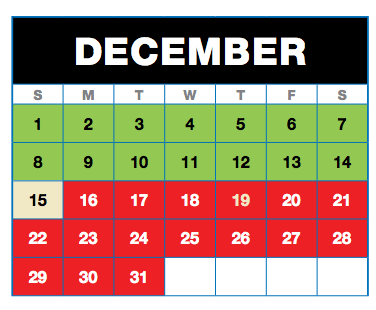
I wanted to share a quick tip about the recent communication period. It is important to know that as of September the recruiting contact period begins. Now that the contact period begins, Junior and Senior college prospects can start receiving a lot more communication from college coaches.

Here are some forms of communication that can take place, however the most common are:

  • Weekly phone calls from college coaches (one per week)
  • Personal correspondence from college coaches via text, phone or email
  • High school campus visit (only one)
  • Verbal Scholarship Offers
  • Invitations for official college campus visits
  • Recruiting materials such as college brochures and letters

Athletes who experience this level of communication can be sure that it is a favorable indicator of interest.

However, athletes not getting any communication should start being proactive immediately. There is an old but true phase, “if you keep doing what you’re doing, you will keep getting what you”re getting. If the results you have are not what you expected then it’s time to make a change.

Student athletes and supportive parents should consider contacting a reputable and credible recruiting resource like PrepStar to to learn how to increase exposure and open recruiting communication with college coaches.

Have questions? Need help?  Contact me to set up a time to talk (get free advise!) or use the comment section below.

Coach Mike oversees the recruiting of talented next-level athletes by helping families develop and implement a recruiting strategy for athletes to get exposure, evaluated and recruited. As former college athlete with over 20 years of coaching experience Mike now mentors families through the academic, athletic and financial aspects of college recruiting.  

Coach Mike – Email: mwoosley@csaprepstar.com   Office: 805-622-STAR

Recruiting contact periods during the high school football season

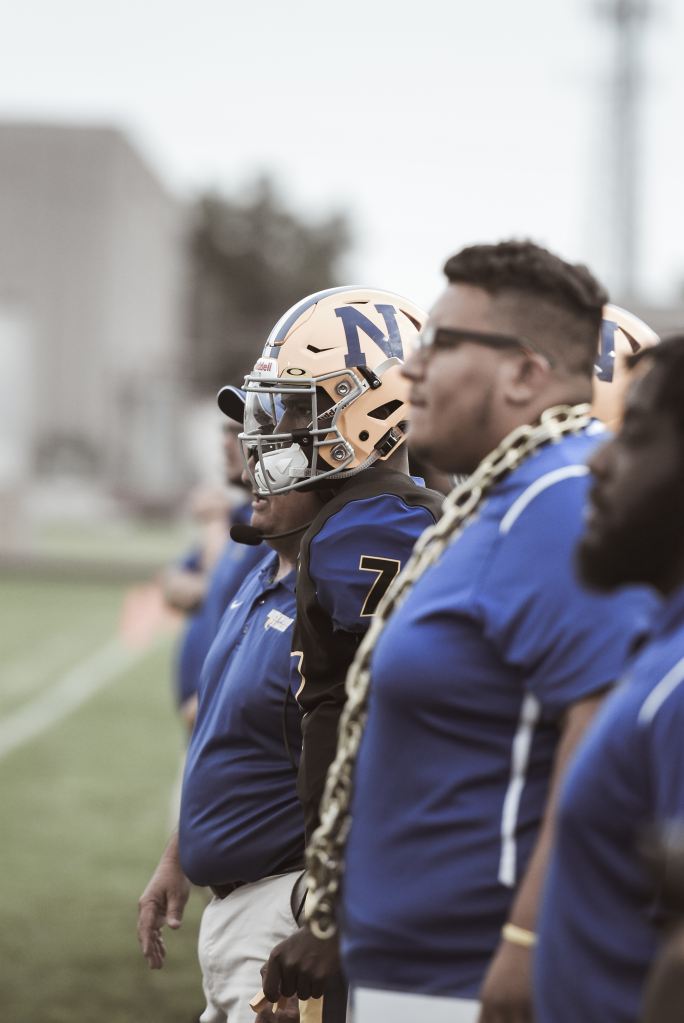
Many high school football teams will take the field towards the latter part of this week to compete in their season opener. Along with the excitement of the lights, crowds and cheers comes the hopes of college recruting. In the previous two article  we looked at the three contact periods that take place within the football season. This article is to outline the dead period and provide some useful tips improving recruiting opportunities throughout the season. 

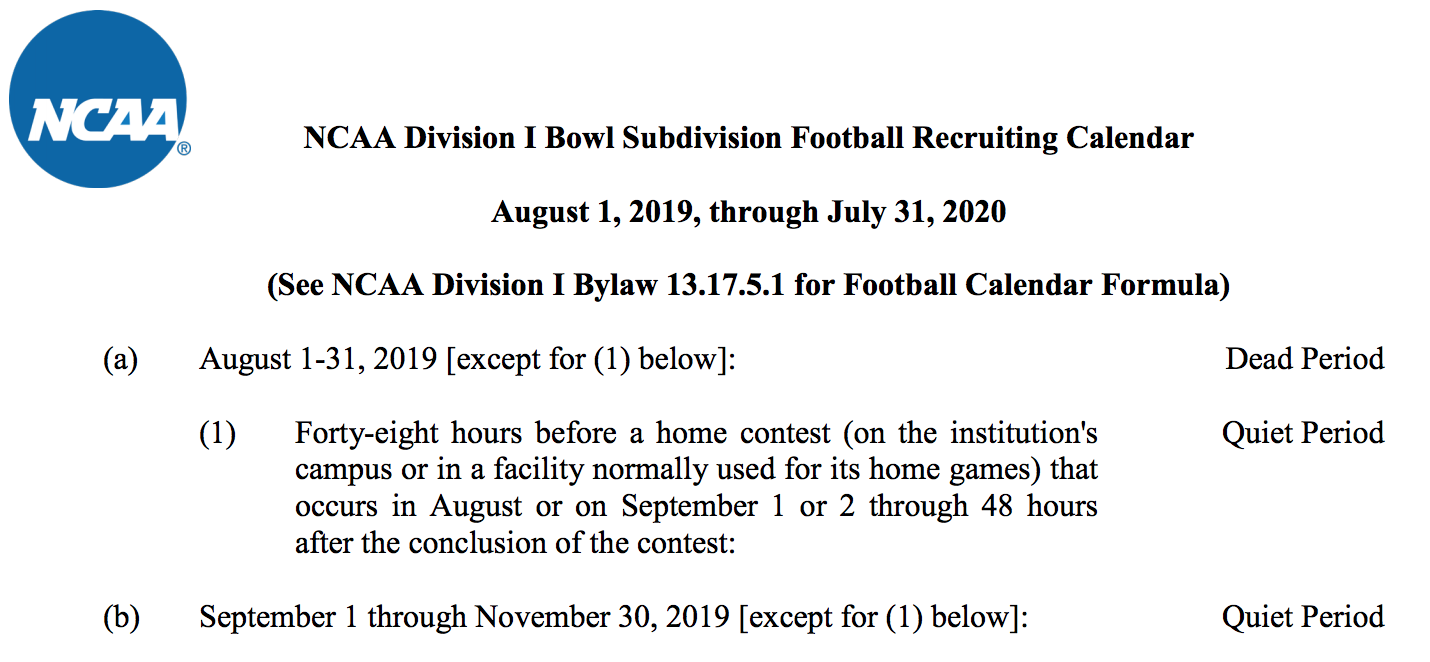
By definition during a dead period a college coach may not have face-to-face contact with college-bound student-athletes or their parents, and may not watch student-athletes compete or visit their high schools. Coaches may write and telephone student-athletes or their parents during a dead period.

Not to be mistaken for the quiet period, the dead period does leave open the doors for communication. However, there is no room for coaches to evaluate players by watching games in person or visiting high school campuses. 

Not to be mistaken for the quiet period, the dead period does leave open the doors for communication.

This rule seems to handcuff athlete exposure. So how can athletes get exposure during the quiet period?  First, athletes should rely of video. They can improve exposure opportunities by keeping game video resources up to date with recent game film. Additionally, athletes can contact coaches by email and social media but should do so not expecting a return reply.  Athletes can also use a credible, reputable recruiting resource to keep them on the radar.  These groups, like PrepStar, act as a go between. For instance, PrepStar provides college coaches with your updated athletic, academic and video highlights throughout your high school career, ensuring you that college coaches always have access to your latest and most updated information.

To conclude this outline of the three contact periods that take place during the high school season I want to wish a success season to all high school football players. Hopefully, the details provided have been helpful and created some new ideas for communicating with college coaches during the season. If you need help, I’m glad to share tips or advice to help you along in the process. Simply, text the word GAMEPLAN to 480-605-4050.  I’m glad to talk with you about your recruiting concerns and give you some helpful suggestions. 

Communicating with Coaches during the Fall Season

Often I compare the recruiting process to a roller-coaster. The speed of the cart is determined by the track. How the track is designed involves many twists and turns as well as places where the pace becomes so slow that it seems to stop. Like a roller-coaster, and depending on the sport, recruiting in the Fall can simultaneously cause both excitement and anxiety so here a few tips to as you buckle-in for the ride.
During the Fall, and after the window of the contact period closes, it is very important to know what contact period of your sport and the communication regulations that accompany them. This information is easy to locate within the NCAA and NAIA regulations on their respective websites. This information can also be accessed  in your Prepstar profile.
Now, be aware that all divisions (D1, D2, D3, etc) have similar, but different, communication rules. For example, D2 coaches have much more leniency  with communications in comparison to D1 coaches.  Additionally, in football, FBS schools (those that go to bowl games) have similar contact periods but different number of evaluation opportunities.

The key to communicating in the Fall is to be proactive! Throughout the year, and at any time, athletes are permitted to contact coaches. This means that to communicate with college coach outside of designated contact periods, student-athletes have to be the one to initiate contact. Additionally, this rule also applies to underclassmen (Freshman and Sophomores). Again, no matter what time of year and no matter the contact period, college coaches are permitted to talk with prospects as long as the prospect makes the first move to contact them.

So, I highly recommend that student-athletes take the initiative to reach out to coaches with emails, texts and voicemails.  Don’t ever wait for them to call you, instead you call them.

To wrap up, it is an understatement to say that recruiting is a year round process. There is no downtime because college coaches are always recruiting. So use the latter part of year to your advantage. For Fall sports this is a great time of year to get aquatinted with coaches, take visits and build that ever important recruiting relationship. Likewise, student-athletes that play winter or spring sports can use the Fall to as a great opportunity to get on the radar and generate interest from coaches for the upcoming seasons.

Good luck!

Coach Mike oversees the the recruiting of talented next-level athletes to develop a recruiting strategy to get seen, scouted and recruited.  As a coach with over 20 years of experience, and a as former college athlete, Mike now mentors families through the academic, athletic and financial aspects of college recruiting.  

Coach Mike – Email: mwoosley@csaprepstar.com   Office: 805-622-STAR

#1 recruiting mistake I see most often

As Scouting Director I get to see many of the country’s most talented athletes. As I evaluate, talk and meet with families across the nation and I’ve discovered that a larger number of them struggle with recruiting. I want to share what I’ve found to help you with your athlete’s recruiting.

Most often recruiting struggles have little to do with the athlete’s ability and more to do with timing. The number one recruiting mistake I see most often is related to starting the recruiting process too late.

Because college coaches cannot recruit a player that he/she does not know about you can avoid this mistake by starting the recruiting process early. An early start assures more control over the recruiting process and greater opportunities to be scouted and recruited by more coaches, as well as, saves your family time, money and worry.

everyone-makes-mistakes-the-wise-are-not-people-who-never-make-mistakes-but-those-who-forgive-themselves-and-learn-from-their-mistakes

However, neglecting to start early has severe consequences. The most common are

  • unnecessarily spending of precious time and money trying to make up for lost time,
  • loss of control over the recruiting process
  • no competitive advantage over the thousands of other athletes hoping to fill roster spots and get scholarships
  • athletes that are overlooked and not recruited like they should be

Partnering with PrepStar and myself can assure you the right amount of recruiting exposure and assistance you need to stay ahead of the recruiting game or catch up if you are behind.

I hope this tip is both helpful and useful for your athlete’s recruiting. I’ve included a few recruiting resources are included below to help you out.

~ Coach Mike


Coach Mike Woosley is a National Scouting Director at CSA-PrepStar.  As a professional collegiate sports scout Mike works with qualified next level student-athletes to find the right college athletic and academic fit. Comments and questions are always welcome.

cropped-cropped-main_logo-11.jpg

Time Left on the Clock

photo6201
Image provide by http://www.pacificlegal.org/page.aspx?pid=4621

Social media has been lit up announcing hundreds of high school senior student athletes signing their letter of intent. What you need to know is that there are many more athletic scholarship yet to be filled.  Despite the early signing period arriving today, if you haven’t signed a national letter of intent (NIL) there is still time for you to get a college athletic scholarship.

Don’t be offended, but to be honest, most of the students signing today are the top 5%. These are the athletes that have been heavily recruited since their sophomore year (or earlier). Colleges have spent a lot of time and resources on these athletes. And these athletes and their family have spent a lot of time and resources on getting college exposure.

The good news, however, is that these athletes take up only fill a small percentage of the available scholarships. College coaches now have to focus on filing in the gaps with players they need. So your goal is to be one of these players!

There is still time left to be recruited. The next NIL signing day is in February. So, don’t give up. Don’t sulk because you didn’t sign. Stand up straight and go do something about it!

If want to be signing your NIL in 2016 here’s 4 things you need to do if you want to enjoy that glorious moment next Spring.

1. Increase your exposure to college coaches. Exposure is all about connections.  Use the NCAA regulations to help you know what you can and can’t do.
2. Update your video footage. Use the most recent footage. This highlight video should showcase your athleticism!
3. Start a recruiting campaign. Show coaches why you are the athlete you are looking for. Build a profile with all your stats, metrics, grades, pictures and video footage.
4. Get help. Ask your coach to make some calls. Find a recruiting organization like PrepStar to you get connected with college coaches.
5. Keep working hard! Do not slack off. Work out, get faster, get ripped, stay in shape. Be ready to show the coach who are interested in you why he/she should recruit you.

If you don’t know how to do any of these things, take to your phone and contact me. I’m glad to help you. It’s what I do!

Here’s how you can contact me. Email me at mwoosley@csaprepstar.com, call or text me at 805-622-7827, Tweet me @michaelwoosley on Twitter.

Your Future Isn’t Just in Your Hands….

The average debt of 2013 college graduates was over $35000. Its essential that whoever helps you get recruiting exposure helps you find the right college fit, otherwise you'll be paying to play.
The average debt of 2013 college graduates was over $35000. Its essential that whoever helps you get recruiting exposure helps you find the right college fit, otherwise you’ll be paying to play.

Fact is, who you choose to help you get to the next level can make a substantial difference. Please don’t take this consideration lightly.  Afterall,  its your future that you place in the hands of whomever you choose to help you get noticed by college coaches.

Let’s be honest, there are only a select few athletes who don’t need help to get to the next level. Truth is most athletes rely on help from an outside source such as a coach, family friend, or recruiting organization to help them get noticed by college coaches.

Not to sound too overly dramatic, but you must choose carefully because your future depends on it!  Take some time to ask yourself two simple questions. ‘Does this person has your best interest in mind?’ “Do they want to see me succeed not just in sports but in life?”

Again, the person or organization you choose to guide you through the recruiting process will make a world of difference. Here are three reasons why you need to put some thought as you to choose the right person to help you get to the next level. The right person handling your recruiting can help you get maximum exposure, financial assistance and the right fit. Here’s a brief explanation of each.

Exposure– who you choose to help you needs to have reach. What I mean by reach is relationships and connections with colleges nationwide to help you get the exposure you need to get noticed. A person with reach should know coaches from coast to coast. More reach equals more exposure and more exposure equals more opportunity for collegiate athletic scholarships.

Financial assistance– who you choose to help you will impact the amount of scholarship money offered to you. There is a huge difference between playing for a school and getting a scholarship to play for a college. The difference is not just the financial assistance you will receive, it also means the amount of money you will have to finance to pay back after you graduate.

Fit– who you to help you will have an affect on fit. By this I mean whether or not you fit in athletically and academically at your new college. Fit is more than going to a school you “like”.  Fit is knowing the answers to questions like these. Does the college you want to play at have a the major you want to study? Is that program top notch? What are the values of the college? Do you like the community where the college is located? Will going to that college prepare you for a career after you graduate? What kind of athletic program are you going to be a part of? Do you have a good repore with the coaches? Do you like the offensive or defensive schemes? Is your position already filled or will you have a fair shot a earning a spot on the depth chart and seeing playing time as an underclassman?

So, what’s your recruiting strategy? Who are you relying on to get you noticed by college coaches?

Need help? Want some advice? Use the comment section to ask me questions.

3 Tips to Defeat to the Fear of Not Being Recruited

Finding-Success-as-a-college-entrepreneur


The scariest thing about recruiting is not being recruited.  Beware, waiting for some coach to come knocking on your door is not the way to get recruited. If this is your plan, then I’m afraid that your chances of signing that letter of intent on National Signing Day are pretty grim!

But you’re not afraid. You’re an elite athlete determined to succeed! You’ve put in the hard work, extra reps, aches and pains…sweat…blood…tears. Now its time to get your reward in full.

Here are three tips to keep away that scary thought of not playing at the next level.

1. Start early
The sooner you begin the recruiting process the better. Most D1 caliper athletes are identified by the end of their sophomore year! That means recruiting starts in 8th or 9th grade. Get noticed by starting early.

2. Be proactive
Don’t be afraid to take control of your recruiting process. Do your homework. Learn the recruiting timelines. Find out about contact dates. Keep good stats and up to date film.  Don’t fret, instead make something happen but taking control.

3. Get help
College recruiting can be confusing so you’ll want help to help you navigate safety through the process. There are a number of different avenues to explore to get assistance, advice and increase exposure. Use coaches, and contacts as well as websites and recruiting organizations to help you get noticed.

So, don’t be scared by the recruiting process. Get in there and get going! Start a plan towards success today!

Have questions? Need help. Contact me to set up a time to talk or use the comment section below.


Coach Mike – Email: mwoosley@csaprepstar.com   Phone: 805-622-STAR

Top 10 Recruiting Myths & Mistakes

Collegiate sports recruiting has changed significantly over the years. Things are done differently than they used to be…don’t believe me? If you have a parent who was lucky enough to play college sports, ask them how they got recruited. I’m certain that every one of them will admit that the way they were recruited then was much different than how recruiting is done now.

Unfortunately, there are a lot of out- dated ideas about recruiting. They may have worked 20 or more years ago, but they are not as effective today. Here are 10 of the most common recruiting myths and mistakes. Consequently, placing all your hope in these myths and making mistakes can be the difference between earning a scholarship and paying for your scholar-ship.

scholarships

1. I am being recruited because I am receiving letters from colleges

Hate to break it to you but thousands of other kids are getting the same exact letter as you are. You are in their database which is cool, but that does not qualify as being recruited. When you get a real recruiting letter (not just an invite to their camp) you will know the difference.


2. I am the best player on my team so coaches will find me

As recruiting budgets continually get cut, college coaches have fewer staff and financial resources to find you, even more so if you are a little off of the beaten path.  You need a way to stand out among the hundreds of thousands of best players!


3. I have got until my senior year to get the recruiting process started

False! Recruiting needs to start early! Colleges can start making offers day 1 of your Freshman year.

Wake up, look around!  How many kids on your team the past three seasons that did not start the recruiting process early in their Freshman, Sophomoric, or early in their Junior year are now playing at the next level?


4. If I am not a top player, I can not get recruited

Not true. Lots of great players are affected by parent politics and pressure put on coaches to play upperclassman.

The key to getting recruited is setting realistic expectations on what level you can actually compete at athletically and academically then getting and staying on the staff radar by consistently providing them relevant information like highlights, grades, test scores and stats so they can keep evaluating your progress.


5. My coach has a bunch of connections so I am all set

That is great. You should leverage every opportunity you can to get additional exposure. That said, it would not be wise to put all of your eggs in this basket, or any basket for that matter. Ultimately, coaches are charged by schools and organizations to win ballgames and keep the program running smoothly. Truth is, your recruiting future is not necessarily one of their top priorities.


6. I am an awesome player so my bad grades are no big deal

Wrong! Wrong! Wrong!  The first thing any college coach at any level looks at is your grades to see if you qualify academically before they invest time any amount of time evaluating your athletic ability. You would never invest in a car that couldn’t get you from point A to point B. It would only be a waste of money! Simply put, schools want to invest in students who will finish their degrees, not finish games.


7. I do not need a highlight video, my stats are enough

After coaches look at your grades and test scores to see if you qualify academically, your highlight video is the single most important thing a coach needs to see in order to evaluate whether or not you are a potential fit for their program – and the highlight film needs to be short and sweet and create instant WOWs – or they are off to the next kid.

8. Coaches look at the highlight CDs my dad mails out

Back in the pre-Internet days this was absolutely true because there was no other way, besides going to a game, to get a look at an athlete. Sorry dad but time and convenience are the niche now. The Internet has changed the recruiting playing field forever and technology has made it so simple (a click of a mouse) to evaluate 10 times the number of kids in the same amount of time it took to view one.

9. I am doing combines, camps and showcases which is getting me plenty of exposure

This is in fact true if you are placing in the 95th percentile. You will absolutely get additional exposure which will help you get on the radar of more schools. These special opportunities also cost lots of cash $.

That said, the truth is that the majority of student athletes competing at these types of events gain little to no benefit in the recruiting process, in fact, if you do poorly, your times and performance are non-erasable from the Internet.

10. My team plays in a tough division so scouts will discover me

This does not exactly sound like a recruiting plan. Yes, you may in fact get lucky, but the law of averages is not on your side. Too many athletes from top teams in their STATE fall under the radar so why would you wait and hope to happen to be the lucky one who gets discovered and lands the scholarship?


If you’re serious about playing the sport you love in college you will need a recruiting strategy with a number of ways to maximize exposure and get you noticed by colleges.  I can help you put together that strategy! Contact me to get started!

Finally, let’s help one another out by keeping  the conversation going. Use the comments section to share other recruiting myths or mistakes.

5 Key Stats that first generation student athletes must know

Nearly one out of five college athletes taking the field, court, pool, or pitch are the first from their family to attend college. According to a recent study published by the NCAA

1. 18% of NCAA student- athletes are first in their family to go to college
2.  Over 80% of students whose parents attended college receive financial help from their family to pay for college tuition.
3. Needs based aids and government loans are required for 64% of first generation students to fund college tuition.
4.  Of first generation college student athletes 53% would not have attended college if it weren’t for athletic scholarships.
5. 55% of first generation students are concerned that high tuition cost will keep them from completing their bachelor’s degree.

 
Athletics are an excellent way to supplement college tuition. That is, if an athlete is good enough to compete at the next level.

  • Every year more than 7,000,000 young men and women compete in high school and club team sports.
  • Less than 6% of high school athletes will ever compete in sports on the collegiate level.

Unfortunately, for a variety of reasons, many good athletes go unnoticed. And each year hundreds of college scholarships go unfilled. Recruiting assistance is available for high school student- athletes dreaming of playing the sport they love at the next level. Find out how PrepStar can help student athletes get both athletic and academic scholarship money for college.

Chart provided by NCAA (Sept. 2014)

Contact Coach Mike with recruiting questions at mwoosley@csaprepstar.com


main_logo-1