Getting the hang of managing your time is super important for doing well in school, sports, and recruiting. It’s like finding the right balance between everything, and it’s not just about being good but also staying strong when things get tough. Using your time wisely means giving each part of your life the attention it needs. This helps you do great in school, shine in sports, and handle the challenges of recruiting.
Balancing everything is like having a secret game plan for success, where staying focused and being prepared makes your recruiting journey smoother. So, in the mix of school, sports, and recruiting, managing your time well is the key to rocking it all.
Why Student-Athletes Should Prioritize Standardized Testing for College Recruiting If you’re a student-athlete looking to play at the next level, taking standardized tests like the SAT or ACT is more important than ever. Many colleges—including private institutions, public universities, and state higher education systems—have reinstated their test score requirements this year. After experimenting with test-optional policies during the pandemic, schools are reaffirming the value of standardized testing in the admissions process.
For student-athletes, strong test scores can be a game-changer. Not only do they help meet admissions requirements, but they can also make you a more attractive recruit by demonstrating academic readiness. Some schools remain test-optional or test-preferred, meaning they may consider SAT or ACT scores when making admissions decisions and awarding scholarships. Submitting competitive scores can set you apart from other recruits, potentially leading to better financial aid opportunities and improving your chances of acceptance at your dream school.
As you navigate the college recruiting process, be sure to research each school’s testing policy. Understanding whether a college requires, prefers, or considers test scores can help you make informed decisions and maximize your recruiting opportunities. Don’t let a missing test score hold you back—prepare, take the test, and give yourself every possible advantage in the recruiting and admissions.
The NCAA has recently implemented significant changes to the transfer portal for Division I football and women’s basketball. These adjustments, particularly the two-window system, are intended to streamline the transfer process while balancing flexibility and stability within college athletics.
The revamped notification-of-transfer process now operates within a 30-day period split into two windows: one in winter and another in spring. For the 2024-25 academic year, the first transfer window will open on December 9, the Monday following the FBS conference championships, and close on December 28. The second window will span April 16-25, providing athletes with another opportunity to enter the portal. By consolidating these periods, the NCAA aims to simplify decisions for athletes while minimizing disruptions for both teams and individual players.
The two-window system also limits the possibility of last-minute transfers that may disrupt team dynamics or require urgent roster adjustments. By setting definitive dates, the NCAA allows for better planning by athletic departments and more thoughtful decision-making by student-athletes.
Overall, these NCAA adjustments balance athletes’ needs for flexibility with institutional stability, promising a more controlled and transparent transfer system that should benefit both current players and prospective recruits.
Off-Season Training: Bulk Up While Improving Speed and Agility
For high school athletes, the off-season is the perfect time to build strength, bulk up, and enhance speed and agility. A well-rounded approach combining strength training, functional drills, and proper nutrition can help achieve these goals.
Start with strength and power training. Incorporate compound lifts like squats, deadlifts, and bench presses to build muscle. Add explosive movements such as power cleans and box jumps to improve power. Pair this with speed drills like resisted sprints and sled pushes to translate strength gains into speed.
A high-calorie diet rich in lean protein, complex carbs, and healthy fats fuels muscle growth. Consuming 4–6 meals daily ensures consistent energy for workouts.
Don’t forget rest promotes recovery so get plenty of it. Aim to get at least 8 hours of sleep every night.
Finally, integrate hybrid training. Combine sprint intervals, cone drills, and lifting sessions to enhance agility and strength. Include recovery methods like dynamic stretching or yoga to maintain mobility.
By following this regimen, athletes can bulk up and dominate on the field when the season begins.
Goal setting is a powerful tool for student-athletes to achieve success, both on and off the field. By setting clear objectives and measuring progress, athletes can build discipline, focus, and confidence. Here are four essential steps to effective goal setting:
1. Set Your Goal
Define what you want to accomplish. Your goal should be specific, measurable, and realistic. For example, instead of saying, “I want to be a better hitter,” set a goal like, “I want to increase my batting average by 20 points this season.” Clarity provides direction and motivation.
2. Write Action Steps
Break your goal into actionable steps. If your goal is to improve strength, your action steps might include committing to a 4-day workout plan, maintaining a protein-rich diet, and incorporating recovery techniques like stretching and hydration. Writing these steps down makes your goal tangible and creates a roadmap to success.
3. Track Progress
Consistently monitor your efforts and results. Keep a journal or use an app to log workouts, practice times, or game statistics. Tracking progress keeps you accountable and helps you adjust your plan when needed.
4. Celebrate Success
Reaching your goal is the ultimate reward. Reflect on your journey, recognize your growth, and set new challenges. Success fuels motivation and confidence for future endeavors.
Effective goal setting isn’t just about reaching the finish line—it’s about building habits that lead to continuous improvement. Start today!
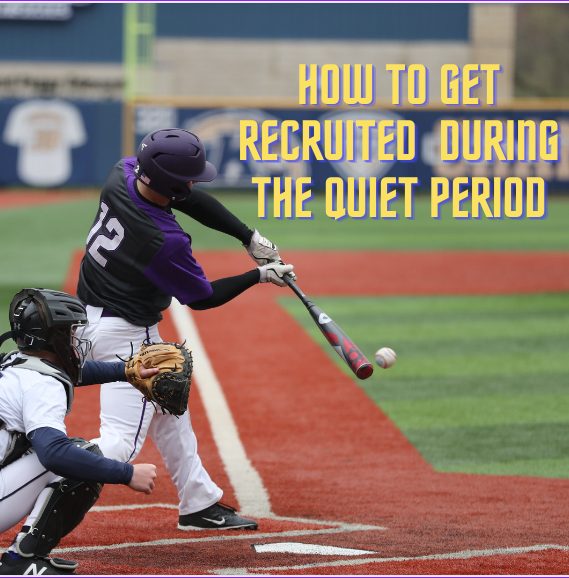
Recruiting becomes hot as August begins, just as summer begins to cool down. However, before it starts to boil, there is a brief pause in recruiting. That pause is known as the Quiet Period.
There are many myths and misconceptions about the Quiet Period, so this article will clear up five of them.
Myth #1: That quiet period means absolute silence. Most parents and athletes think that this mean coaches can’t talk to prospective student athletes. True, NCAA communication rules are restricted during the quiet period. But in the end, colleges coaches are permitted to communicate with prospective student athletes during the quiet period.
Myth #2: Athletes can’t contact coaches. Not true. According to the NCAA recruiting guidelines, prospective student athletes can contact college coaches beginning on the first day of freshman year. Additionally, student-athletes are permitted to contact coaches at any time during the recruiting process.
Myth #3: College Coaches don’t recruit during the quiet period. False, coaches recruit year round. Just look at all the offers posted on social media! So, since college coaches continue to recruit during the quiet period athletes need both communication and recruiting exposure year around
Myth #4: On campus invites during the Quiet Period are money grabs. Not necessarily. Some invites are in fact money grabs so it’s up to the athlete and parents to learn the difference. The NCAA rules state contact with prospective student athletes is permissible on the college campus. So, how else can coaches get athletes on campus but to invite them to a prospect camp?
Myth #5: College coaches can’t make offers during the quiet period. Again, the quiet period does not mean dead silence. Instead, the quiet period regulates communication between college coaches and prospective student athletes. During the quiet period coaches can and do make scholarship offers.
The origin of these myths and misconceptions is from athletes and parents being unfamiliar with the recruiting process. Information is pieced together from bits and pieces heard from other players and parents. It’s similar to trying to put together a jumbled puzzle, but missing several key pieces. It doesn’t matter how much effort you put in, the end result will be an incomplete picture. Don’t rely on rumors and hearsay from other parents. Become educated about the recruiting process or find someone who is.
What is the quiet period? What does it mean for recruiting?
According to the NCAA, during a quiet period a college coach may not have face-to-face contact with college-bound student-athletes or their parents, and may not watch student-athletes compete or visit their high schools. Coaches may write and telephone student-athletes or their parents during a dead period.
So, with prospective student athletes, college coaches are not permitted to have; in person evaluations, official campus visits or in person contacts. But, student athletes should be aware that written and telephone communication is permissible during the quiet period.
However, like any other Quiet Period throughout the recruiting calendar, the recruiting process does not stop. Consider the quiet period a time-out from the evaluation process.
So, student-athletes, what can you do to improve your recruiting situation right now?
First, get your highlight reel looking sharp. By now you should have a highlights from summer camps, showcases as well as previous seasons, plus some training video. Use this footage to make short highlight and skills videos that can be added to your recruiting profile and viewed by college coaches.
Next, assess recruiting goals with realistic expectations. If you’ve had your mind set on certain school but have not been contacted by a college coach don’t expect contact anytime soon. Instead, do an honest comparison of your level of play to the quality of athletes being recruited. This will help you determine a good college fit and will also point you to college coaches that you should be contacting.
Then, expand your methods of contacting college coaches. Don’t just rely on twitter to blast out your video links or show clips of getting one hit during a game. Instead, use multiple points of contact including email, text, and, if you’re brave enough, go old school, by actually making a phone call to a college coach.
Overall, during the quiet period it is important for the student-athlete to stay focused! The quiet period does not mean that recruiting comes to a dead stop. Lots of recruiting is still to come.
Is recruiting is going the way you hoped it would? Have questions about the recruiting process? Comment below or DM me. I’m glad to help.
Last week the NCAA announced another extension to the current recruiting dead period for D1 colleges. The extension is set to expire December 31, 2002. Coaches are profited from in person evaluations as well as off-campus evaluations (watching games).
For D1 colleges, the current dead period has been in effect since March. Colleges at the D2 and lower levels lifted the Dead Period restrictions in September.
At this time, D1 coaches are limited to online evaluations, email, text and social media communication.
Because, many athletes and parents lack understanding of the contact rules and regulations many athletes are put at a disadvantage and ultimately miss out on recruiting opportunities. Serious athletes and their parents need to stay informed.
For example, did you know that during the December contact period it is permissible for an authorized athletic department staff member to have in person, off campus contacts with prospective student athletes. Who is included in the scope of authorized athletic department staff member?
Other misconceptions derive from not knowing what communication is permitted and what is prohibited during the regulated NCAA contact periods. These contacts, along with evaluations, are not only restricted but must also be counted by the coach as a contact, otherwise , it can lead to a recruiting violation.
Here is a quick summary of the recruiting periods.
A contact occurs any time a college coach says more than hello during a face-to-face contact with a college-bound student-athlete or his or her parents off the college’s campus.
During the contact period a college coach may have face-to-face contact with college-bound student-athletes or their parents, watch student-athletes compete and visit their high schools, and write or telephone student-athletes or their parents.
During the evaluation period a college coach may watch college-bound student-athletes compete, visit their high schools, and write or telephone student-athletes or their parents. However, a college coach may not have face-to-face contact with college-bound student-athletes or their parents off the college’s campus during an evaluation period.
During the quiet period a college coach may not have face-to-face contact with college-bound student-athletes or their parents, and may not watch student-athletes compete or visit their high schools. Coaches may write or telephone college-bound student-athletes or their parents during this time.
During a dead period a college coach may not have face-to-face contact with college-bound student-athletes or their parents, and may not watch student-athletes compete or visit their high schools. Coaches may write and telephone student-athletes or their parents during a dead period.
So, athletes, what can you do to improve your recruiting situation right now?
Get your highlight reel looking tight. By now you should have a highlights from previous seasons on your Hudl page, plus some training video available online.
Broaden your reach with coaches you want to contact. Use more than one medium to contact coaches. Don’t just rely on twitter to blast out your Hudl link. Rely on email and text. And, if you’re brave enough, go old school, actually making a phone call to a college coach.
Stay focused! Lots of recruiting happens at this time of year. Keep in mind that the contact period is only open for 2 weeks, then its back to the quiet period until January. So be patient with the process.
Is recruiting is going the way you hoped it would? Have questions about the recruiting process? Comment below or DM me. I’m glad to help.
Last week the NCAA announced waivers requiring ACT or SAT test scores for athletic eligibility. While many student athletes celebrated a sigh of relief, despite the generous exception its time to start studying because it is still a good idea for student-athletes take the ACT or SAT.
To quickly review the recently exemption, last week the NCAA decided Division I or II athletes will not be required to take a standardized test to meet NCAA initial-eligibility requirements. This decision said is to “help ensure students have a fair opportunity to meet the initial-eligibility standard.” Why was this decision made?
Student athletes, stay the course, continue moving forward with the plan to take the ACT or SAT college entry exam. Photo by Ben Mullins on Unsplash
Again, the NCAA is concerned about “the continued disruption in secondary education due to the pandemic”. So, to meet eligibly requirements for athletic participation as well as to meet the criteria for academically eligibility for receive athletics scholarship, practice and completion in their first year the NCAA has made some concessions. Admission requirements are pretty low, 2.3 grade point average for Division 1 and 2.2 grade point average for Division II provided the NCAA approved 16 core courses are completed. But, lowering the standard and exempting student athletes from the standardized tests requirement leaves a few questions unanswered.
In total, omitting the ACT or SAT requirement does not specifically address university admissions requirements. Nor, does the exemption address how financial awards will be provided that usually are distributed as a result of high ACT or SAT scores?
So, put down the party hat and grab a chair. Its time to start studying because what isn’t addressed by the exemption is exactly why student-athletes should move forward with the plan to take the ACT or SAT.
First, to get into a college the university admission requirements must be met to get into that college. Undoubtably, student-athletes with a qualifiable ACT or SAT score are sure to have better opportunities for entry. Conversely, student athletes without standardized test scores are more likely not to meet the requirements for colleges known for higher academic standards Lets be realistic, schools know for selecting students with higher academics standards will continue to maintain this standards. Furthermore, student-athletes may be put at a disadvantage to gain entry into colleges known for higher academic standards. Consequently, student athletes aspiring to attend such schools will be expected to meet admission requirements or look elsewhere.
Next, it is no secret that a college education is expensive. So, even without ACT or SAT scores, college tuition will still need to be paid. What the NCAA generous waiver does not explain how to fill the financial void that is usually filled by financial awards provided by high standardized test scores? Keep in mind, outside of D1 football, which is a full athletic and academic scholarship sport, schools in DIAA, DII, NAIA and DIII typically stack athletic scholarship with academic awards towards the cost of tuition. Somebody will have to pay and I don’t see colleges reducing the price of admission any time soon.
The question remains, in the coming months, will athletes be presented other opportunities be made available to fill this void and to gain financial awards? Or will the burden be placed on solely on the athlete and their family? Without the funding provided by the SAT or ACT score how can student-athletes earn the extra financial awards that decrease tuition costs?
Bottom line for student athletes, stay the course, continue moving forward with the plan to take the ACT or SAT college entry exam.
Source: NCAA Eligibility Center announces flexibility in initial eligibility for 2021-22 Changes address uncertainty caused by COVID-19 August 17, 2020 11:00amMichelle Brutlag Hosick