The Best Athletes Win the Small Decisions

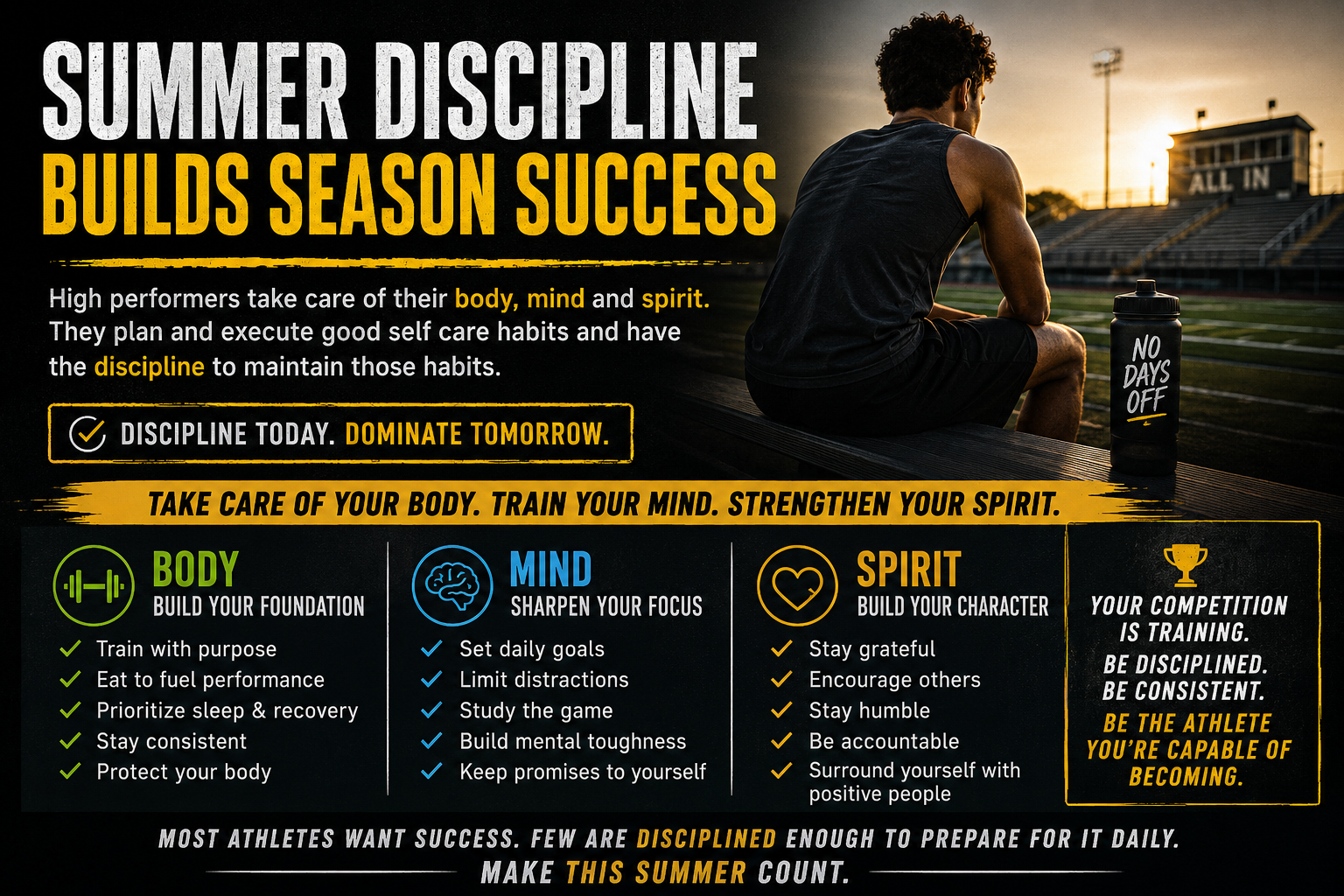
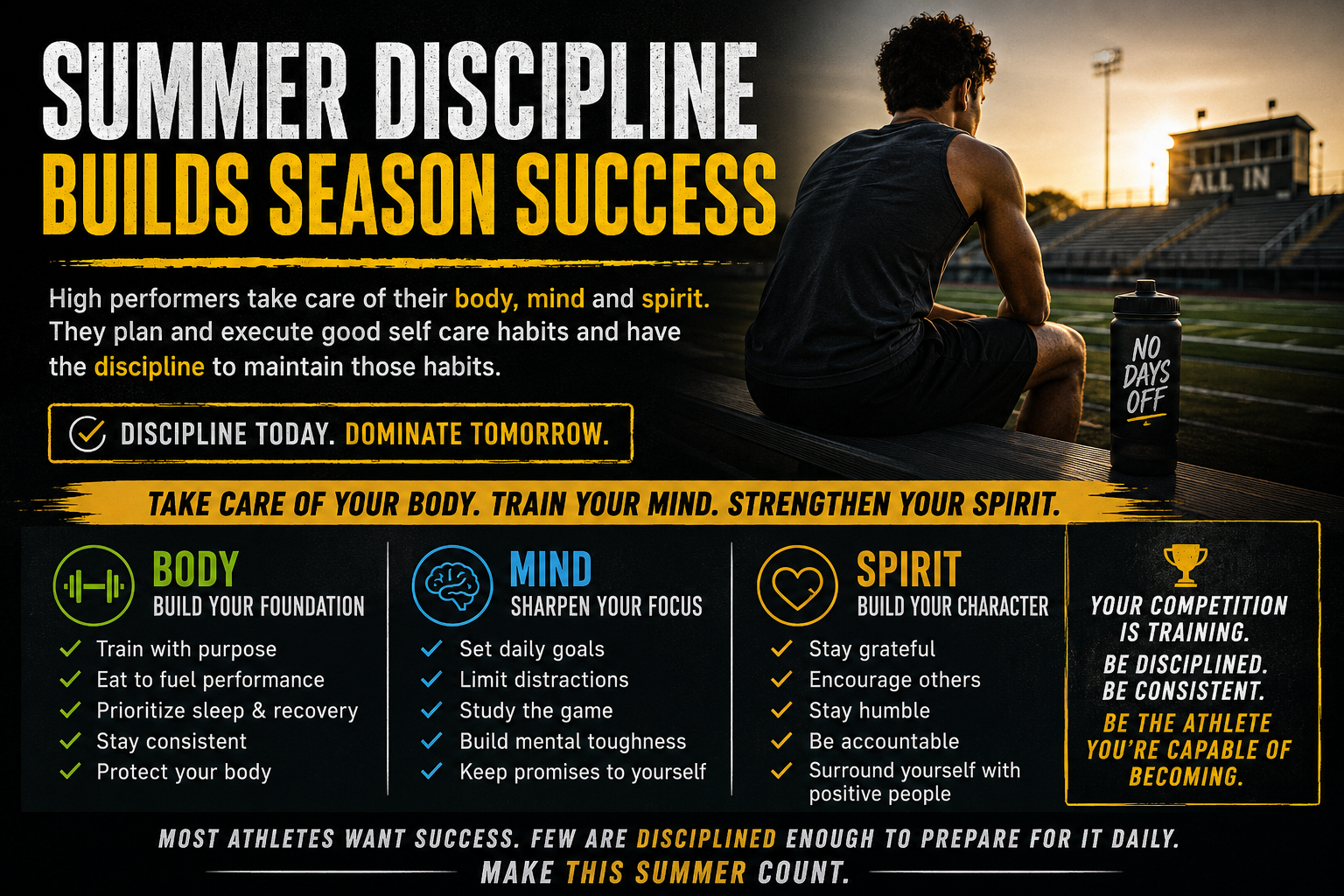
Summer Discipline Builds Season Success

Success is rarely built from one giant moment. It comes from stacking small decisions every single day.

Choosing to train when you do not feel like it.
Choosing to eat foods that fuel performance.
Choosing sleep instead of staying up all night gaming.
Choosing recovery instead of laziness.
Choosing to protect your mindset from negativity and distractions.

These decisions may seem small in the moment, but over an entire summer they create massive separation.

By August, disciplined athletes look different.
They move differently.
They think differently.
They compete differently.

Take Care of Your Body

Your body is your foundation as an athlete. If you neglect it, performance eventually suffers.

Summer is the perfect time to:

  • Build strength and power
  • Improve speed and conditioning
  • Focus on mobility and injury prevention
  • Establish better nutrition habits
  • Prioritize sleep and recovery

High performers understand recovery is not weakness — it is preparation. Proper hydration, sleep, stretching, mobility work, and nutrition are part of training, not separate from it.

Summer Discipline: The Season That Separates Good Athletes From Great Ones

For high school student-athletes, summer can become one of two things:

A season of growth… or a season of excuses.

There are no school bells. No teachers checking attendance. No mandatory team workouts every day. No structured routine forcing accountability. Summer gives athletes freedom — and freedom reveals discipline.

The athletes who continue to improve during the summer are usually the same athletes who eventually separate themselves during the season. Why? Because high performers understand something many athletes miss:

Discipline is not something you turn on when coaches are watching. It is a lifestyle.

High performers take care of their body, mind, and spirit. They plan and execute good self-care habits and have the discipline to maintain those habits even when nobody is checking on them.

That is what makes them different.

Your Competition Is Training

While some athletes are sleeping until noon, skipping workouts, eating poorly, and spending hours scrolling social media, others are building habits that will change their future.

Someone is getting stronger.
Someone is improving their speed.
Someone is studying film.
Someone is recovering properly.
Someone is becoming mentally tougher.

The reality is simple: college coaches recruit athletes who are dependable, disciplined, and consistent. Talent matters, but discipline often determines who reaches their potential.

Summer is where discipline gets tested.

Impact of 5-in-5 NCAA Proposal on High School Athletes

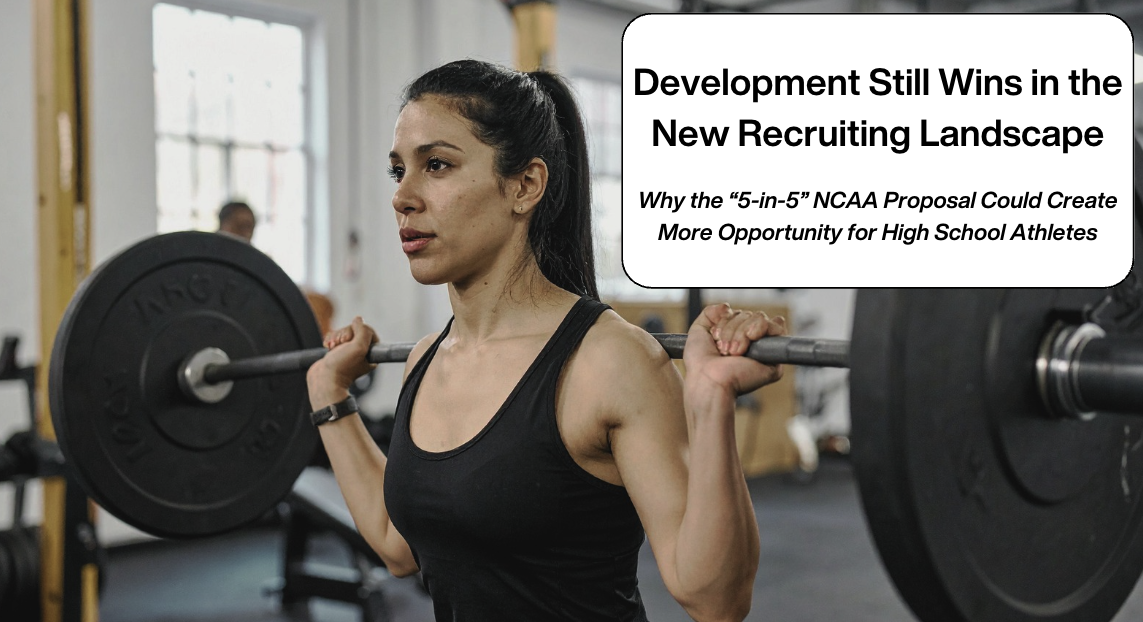
Why the “5-in-5” NCAA Proposal Could Create More Opportunity for High School Athletes

One of the biggest positives of the proposed “5-in-5” eligibility model is that it places value back on development, readiness, and long-term fit.

As recruiting continues to evolve, student-athletes who consistently improve their skills, strength, speed, athleticism, and game IQ throughout high school will continue to separate themselves from the competition. Coaches will always look for athletes who are prepared to contribute, can adapt to college athletics, and will fit the culture of their program.

The new 5-in-5 structure also helps create a more level and predictable recruiting landscape. With clearer timelines and age limits, college programs will have greater roster clarity and fewer long-term logjams created by extended eligibility years. That stability can actually benefit high school recruits.

Another important reality that often gets overlooked is what’s happening at the Division II and Division III levels. While the transfer portal has dramatically impacted college athletics, a high percentage of athletes who enter the portal never find a new school or program fit. As a result, many step away from college athletics altogether, which ultimately creates openings on rosters for incoming high school athletes.

That means opportunities continue to emerge for recruits who stay prepared and continue developing.

The student-athletes who will benefit most from this changing landscape are the ones who stay focused on growth instead of fear. Recruiting has never simply been about hype or rankings—it has always been about finding athletes who are ready, coachable, competitive, and capable of helping a program succeed.

For recruits and their parents, the message remains the same: control what you can control. Develop your game, build strong academics, communicate professionally, and continue improving. Programs at every level are still searching for athletes who are ready for the opportunity when it comes.

The Recruiting Reality: Opportunity Still Exists for Athletes Who Prepare

The proposed “5-in-5” eligibility model may change how coaches manage scholarships and rosters, but it does not eliminate opportunities for high school athletes who are prepared, proactive, and committed to development.

College recruiting has changed—but opportunity has not disappeared. It has evolved.

The reality is that college programs will always need talent. Every year, coaches across the country continue searching for athletes who can help their programs compete, develop team culture, and fit within long-term roster plans. The proposed “5-in-5” eligibility model may change how coaches manage scholarships and rosters, but it does not eliminate opportunities for high school athletes who are prepared, proactive, and committed to development.

In many ways, the new model may actually encourage more intentional recruiting decisions. With fewer eligibility loopholes, less reliance on extended redshirts, and clearer roster timelines, coaches will place an even greater emphasis on finding athletes who are truly the right fit—athletically, academically, and culturally.

That’s important because today’s recruiting landscape is already highly competitive.

Thousands of athletes compete every year for a limited number of roster spots. Coaches recruit nationally, not just locally. The transfer portal, NIL opportunities, and evolving roster management strategies have also changed how programs allocate scholarships and evaluate talent. In addition, coaches now expect athletes to market themselves professionally through film, communication, social media presence, and consistent outreach.

Breaking Down the NCAA’s Proposed “5-in-5” Eligibility Rule

The NCAA is proposing a major shift in college athlete eligibility that could reshape recruiting and roster management for years to come.

Under the new “5-in-5” model, essentially creates an age limit. Student-athletes would have five years to complete five full seasons of competition. The clock would start at either high school graduation or their 19th birthday—whichever comes first. This replaces the current system, where athletes have four seasons within a five-year window.

One of the biggest changes is the elimination of traditional redshirt seasons and most waiver exceptions. Moving forward, exceptions would be limited to specific circumstances such as maternity leave, military service, or religious missions. This creates a more straightforward, but stricter, eligibility structure.

According to NCAA President Charlie Baker, the goal is to simplify a system that has become increasingly complex due to COVID eligibility extensions, the transfer portal, and NIL opportunities.

However, not everyone is on board. Programs in sports like baseball, basketball, and hockey have raised concerns about roster stability and long-term planning. There are also early signs that legal challenges could follow if the rule is implemented.

It’s important to note that this proposal would only apply to future student-athletes starting in the 2025–26 academic year, meaning current athletes would not be affected.

What This Means for Recruits and Families

For aspiring college athletes, this change puts a greater emphasis on early planning and development. With fewer eligibility loopholes and no traditional redshirt buffer, athletes will need to be ready to contribute sooner and manage their timeline more strategically.

As recruiting continues to evolve, understanding these rule changes is critical. The athletes and families who stay informed—and adapt early—will have a clear advantage in navigating the path to college sports.

How to Use Camp Results to Improve Your Game and Recruiting Opportunities

After attending a college camp, most athletes focus on one thing—did they get noticed? While exposure is important, one of the biggest missed opportunities in recruiting is failing to use the information gained at camp to actually improve performance. Camps provide more than just verified metrics and coach interaction. They offer real, measurable feedback that can help you take the next step in your development. The key question every athlete should ask is: What am I going to do with what I just learned?

The answer is simple—use it to your advantage. Camps give you a snapshot of where you stand compared to other athletes. That includes your speed, strength, agility, and overall competitiveness. This information can help you better understand your recruiting level and begin planning for your college athletic future. If you attend a large camp and realize you struggled to compete with top-tier athletes, that’s not a failure—it’s valuable feedback. It may be a sign to reassess your recruiting strategy and focus on programs that are a more realistic fit. That could mean exploring smaller colleges or different divisions where your current skill set aligns more closely. From there, you can begin researching those programs and reaching out to coaches with a clearer, more targeted plan.

It’s also important to understand that hitting certain performance benchmarks does not automatically translate into scholarship offers. Running a fast 40-yard dash or posting strong testing numbers simply shows that you have potential. What truly matters is how that potential shows up on the field and in the classroom. Coaches evaluate complete athletes, not just numbers. Your performance in games, your consistency, your effort, and your academics all play a major role in your recruiting outcome.

For underclassmen, camp results should serve as a starting point for improvement. The season is approaching quickly, and now is the time to get to work. Identify the areas where you fell short and build a plan to improve them. If your 40 time or shuttle needs work, focus on speed and agility training. If strength is a gap, commit to a structured strength program. Use the data from the camp to guide your training with purpose rather than guessing what to work on.

For seniors heading into their final season, camp data becomes a powerful tool for positioning yourself. Use your verified metrics to support your game film. If your speed times are above average, make sure your film clearly highlights your ability to separate, chase, or close space. If your strength or agility stands out, find ways to showcase those traits in your clips. Coaches want to see that your measurable abilities translate directly to on-field performance.

At the end of the day, camps are not just about being evaluated—they are about learning, adjusting, and improving. The athletes who benefit the most are the ones who take what they learned and apply it. When you use camp data to refine your training, adjust your recruiting strategy, and enhance your performance, you turn a single event into a long-term advantage.

Beyond the Drills: The Communication Strategy Most Athletes Miss

But preparing for a camp goes beyond physical readiness. If your goal is to be recruited, you also need to prepare from a communication and recruiting strategy standpoint.

In our previous articles, we focused on physical preparation for college camps—making sure you arrive in shape, familiar with the drills, and mentally ready to compete. But preparing for a camp goes beyond physical readiness. If your goal is to be recruited, you also need to prepare from a communication and recruiting strategy standpoint. The athletes who get noticed are often the ones who make themselves known before the camp even begins.

One smart step is to try to schedule a phone call with the coach who initially contacted you or with the program’s recruiting coordinator. A short conversation can help you learn more about the program while also putting your name on their radar before the event. If a phone call isn’t possible, communication through email or other recruiting channels can still help establish that connection.

About two weeks before the camp, send an email to the position coach introducing yourself and letting them know you will be attending the event. In that message, include key information such as your name, graduation year, position, high school, and a link to your recruiting profile and highlight video. This simple step helps the coaching staff know who you are and increases the chances that they will look for you during the camp.

Social media can also be a useful communication tool. Sending a short direct message to the program’s account or the position coach—sharing the same information you sent in your email—can reinforce your interest and make sure your message is seen. The goal of these communications is simple: you want to be on the list of athletes coaches plan to evaluate during the camp.

Preparation should also include what you do after the event. Once the camp is over, take a few minutes to write down the names of the coaches you met or spoke with. If you attended a camp that included multiple schools, make sure you note the coach’s name and the college they represent. This will help you stay organized when following up later.

Within two or three days after the camp, reach out to any coaches you interacted with. Sending a follow-up email or direct message shows appreciation and genuine interest in their program. It’s helpful to have a draft message prepared in advance so you can send it quickly after the event. In your message, thank the coach for the opportunity to attend the camp and briefly mention something you learned or enjoyed about the experience. This reinforces the positive impression you made during the event.

College camps can be valuable opportunities, but the athletes who maximize them are the ones who combine strong performance with strong communication. By reaching out before the camp, engaging confidently during the event, and following up afterward, you give yourself a much better chance of staying on a coach’s radar long after the camp ends.

Elite Athletes Recruiting: Where to Find the Right College Camp Information

Parents and athletes often feel overwhelmed looking for camps, but with a clear approach, locating accurate and timely camp details becomes much easier.

In our previous article, we discussed how to strategically choose the right college camps, showcases, and combines. Once you understand the importance of being selective, the next logical question becomes: Where do you actually find reliable camp information? Parents and athletes often feel overwhelmed during this stage, but with a clear approach, locating accurate and timely camp details becomes much easier.

One of the most common questions families ask is when colleges announce their camp dates. Many college programs begin posting camp information between February and April. Some schools release dates even earlier, while others finalize details closer to summer. Because timelines vary, it is important to start checking early and monitor updates consistently rather than waiting until the last minute.

The best place to begin your search is always the official college team website for your specific sport. This is the most direct and reliable source. In many cases, programs post camp details on their athletic website before they begin actively marketing the event through email or social media. Getting into the habit of routinely checking the team site gives you an advantage and allows you to plan ahead.

Once you are on the team website, camp information is typically found in a few common locations. Look along the top navigation banner for a tab labeled “Camps,” “Recruits,” or sometimes “More+.” Some programs place camp links within the recruiting section, while others list them under additional resources. If you cannot find it immediately, scroll to the bottom footer of the site, as many schools place camp links there as well.

Yes, you can also search for camp information online using general search engines. However, keep in mind that this method often produces a broad range of results, including outdated camp pages from previous years. While online searches can be helpful, you will need to carefully verify that the information is current and connected to the official program website.

As we emphasized in the previous article, choosing the right camp is about being strategic. Finding the correct information early allows families to evaluate options through the lens of convenience, cost-effectiveness, and competitive fit. When parents and athletes stay proactive, organized, and intentional in their search process, they position themselves to make smarter recruiting decisions instead of rushed ones.

In recruiting, preparation is leverage. The earlier you gather accurate camp information, the more confidently you can build a plan that aligns with your athlete’s goals.

Smart Strategy for Choosing College Recruiting Camps, Showcases and Combines

College camps, showcases, combines, and now the ever-present “Junior Days” have become a major part of the recruiting landscape. These events can provide valuable development, high-level competition, and opportunities to get in front of college programs. However, not all events are created equal, and attending the wrong ones can cost you significant time, money, and opportunity. If you want to use camps strategically, you must approach them with a clear plan.

When evaluating recruiting events, I encourage families to use what I call the Three C’s: convenient, cost-effective, and competitive. First, choose events that realistically fit your schedule and recruiting calendar. Traveling across the country every weekend is not a strategy — it’s burnout. Be intentional about where you invest your time. Second, evaluate cost versus real opportunity. Exposure matters, but overspending does not equal better recruiting. Often, a smaller, targeted camp with genuine coach interaction delivers more value than a massive, expensive showcase. Third, compete where your ability level matches the field. If the competition is too low, you will not be challenged. If it is too high, you risk getting lost in the crowd. The right competitive setting maximizes meaningful reps and true evaluation.

One of the biggest mistakes athletes make is relying on camps as their primary recruiting strategy. Camps should support your recruiting plan, not replace it. Many large showcases host hundreds of athletes. When that happens, there are simply too many players and too few repetitions. Limited reps mean limited opportunities to demonstrate your abilities. In many cases, college coaches already have recruiting lists prepared before the camp even begins. They know who they plan to watch closely. If you show up unannounced and unprepared, your exposure may be minimal.

Before registering for any event, confirm that the head coach or your position coach will actually be present. If the coach you are trying to impress will not attend, they cannot evaluate you, build a relationship with you, or move you forward in their recruiting process. That often means you have spent a significant amount of money for little to no exposure. Never assume a coach will be there — verify it.

The smartest way to use camps, combines, and showcases is through preparation and communication. Start by researching schools that are a realistic athletic and academic fit. Target events where coaches from those programs will be in attendance. Next, communicate before the event. Do not show up as a stranger. Email coaches to introduce yourself, share your recruiting profile, include your highlight video, confirm your registration, and provide your jersey number and position. This simple step dramatically increases the likelihood that a coach will intentionally evaluate you.

Finally, prepare for the event as if it were a game. Arrive in peak condition, understand your strengths, warm up properly, compete with confidence, and demonstrate coachability. Before the event, prepare thoughtful questions about the academic program, team culture, development philosophy, and recruiting timeline. Coaches notice athletes who show maturity and genuine interest in their program.

Camps are a tool in the recruiting process, not a shortcut. Strategic camp selection saves time, money, energy, and frustration. More importantly, it positions you as a serious recruit rather than just another name on a registration list. Recruiting is not about attending the most events. It is about attending the right events with preparation, communication, and purpose.

Don’t Coast in the Off-Season: Keep Recruiting Year-Round

The first thing most students want to do when a season ends is relax and take a break. But if you’re an athlete with the goal of playing at the next level, coasting is not the best move. In fact, the off-season or the time between sports seasons is when serious athletes separate themselves from the pack. Instead of taking your foot off the gas, this is the time to rev up the engine and cover some serious ground. Remember, you only have a small four-year window to get seen, scouted, and recruited.

Taking time off can put you behind in both your development and your recruiting. It’s easy to fall into a funk where one day off turns into two, then four, then a week or even a month. College coaches recruit athletes year-round, so you should stay focused on your recruiting year-round as well. The off-season is the perfect time to train, improve your speed and strength, update your highlight video, attend camps, communicate with coaches, and get ahead academically.

So, how do you know if your recruiting is on the right track? Use these guidelines to evaluate your progress.

Freshmen: The recruiting process begins earlier than most athletes realize. As soon as you start high school, you should be building good habits. Focus on grades, strength training, skill development, and creating your first highlight clips. Recruiting truly starts the day you graduate eighth grade, so use your first off-season to build a strong foundation.

Sophomores: This is a pivotal year. Athletes who are on the recruiting radar should start receiving letters, emails, and camp invites. Use the off-season to attend camps, improve your testing numbers, and communicate with coaches.

Juniors: By this stage, you should be hearing from multiple coaches through emails, texts, or camp invitations. The off-season is critical for visits, exposure events, and taking the ACT or SAT. This is your most important recruiting year—make it count.

Seniors: Ideally, you should have been in contact with colleges the summer before your senior year. The goal is to be choosing between opportunities, not hoping for last-minute interest. Use the off-season to follow up with coaches, stay in peak condition, and be ready when opportunities arise.

Follow these guidelines and keep working between seasons, and you’ll put yourself in position to reach the home stretch of your recruiting journey.

One final piece of advice: If your recruiting isn’t going according to plan, get help. The earlier you address the problem, the more options you’ll have. Reach out for a free recruiting evaluation and get your process back on track.

Good luck!