2 Weeks in December

The high school football season for the most part is over. Except for a limited few states the final whistle has blown, gear returned, and final stats recorded. When it seem like its all finished, football recruiting, however, is just getting started.  Especially in these first two weeks in December the contact period resumes. But, only for two weeks. 

During the December contact period it is permissible for authorized athletic department staff member to have in person, off campus contacts with prospective student athletes. 

So, athletes, what can  can you do to improve your recruiting situation during these two weeks? 

  1. Get your highlight reel looking tight. By now you should have a full season highlight reel as well as a midseason highlight reel up on your Hudl page. 
  2. Broaden your reach with coaches you want to contact. Use more than one medium to contact coaches. Don’t just rely on twitter to blast out your Hudl link. Rely on email and text. And, if you’re brave enough, go old school by making a phone call. 
  3. Stay focused! Lots of recruiting happens at this time of year. Keep in mind that the contact period is only open for 2 weeks, then its back to the quiet period until January. So be patient with the process. 

Let me know how recruiting is going for you. Have questions about the recruiting process? Comment below or contact me on twitter or instagram (@michaelwoosley). I’m glad to help. 

What to know about official and unofficial college recruiting visits

Since this is the time of year for athletes to visit college campuses I thought it good to share a few helpful tips about official visits and unofficial visit. In most recruiting situations the official visit often follow one or more unofficial visits. Frequently, college coaches reserve official visits to make offers, but it is not uncommon to get a verbal offer outside of an official visit. 

By definition, an official visit is any visit to a college campus by a college-bound prospective student-athlete and his or her parents that is paid for by the college. This includes transportation, lodging, entertainment, food and as many as 3 tickets to a game. Conversely, campus visits paid for by the parents of the student-athlete is deemed and unofficial visit.

In total, student-athletes are permitted up to 5 official visits for D1 and D2 schools. However, only 1 official visit per school is allowed.
Photo by Travis Essinger on Unsplash

Traditionally, official visits have been reserved for Seniors only. However, since April 2018 new recruiting regulations have been implemented for sports such as baseball and softball, allowing  Junior and Senior student-athletes to take official visits after September 1st. In contrast, in many other sports, such as footballonly Senior student-athletes are permitted to take official visits.

In total, student-athletes are permitted up to 5 official visits for D1 and D2 schools. However, only 1 official visit per school is allowed. Parents and athletes should know that D3 and NAIA schools have no limit on official visits a student-athlete can take. Additionally, D3 and NAIA regulations are similar to those outlining the recruiting process of D1 and D2 schools where the prospective student-athlete is allowed 1 official visit per school.

Lastly, always keep this in mind that recruiting is a process. Many student-athletes and parents let their minds run wild with negative assumptions, especially when an official visit is not offered right away.  To reiterate, recruiting is a process and every coach has his or her method, budget and preference for recruiting. So, with this in mind I recommend to keep a clear head and a positive attitude. Try to relax, stay calm, and enjoy the process.

Finally, I would love to hear from athletes attending official or unofficial visits. Athletes can also tag me on twitter when posting about visits (@michaelwoosley). Also, if you need help preparing for a visit, I’m glad to schedule some time to help with preparations. Just send me an email at mwoosley@csaprepstar.com. 

Tips for communication between prospective student-athletes and college coaches

Parents and students always ask about coaches not responding to their communication. 

Three tips to why:

  1. You may be contacting the wrong coaches so be realistic in your search for best athletic and academic fit
  2. You may not be asking the right questions. Often you get a reply if you ask. But surely you won’t get a reply if you don’t ask any questions. 
  3. You need to be more proactive. Proactive  is being  persistent. Being passive is not a plan. 

Coach Mike oversees the the recruiting of talented next-level athletes to develop a recruiting strategy to get seen, scouted and recruited.  As a coach with over 20 years of experience, and a as former college athlete, Mike now mentors families through the academic, athletic and financial aspects of college recruiting.  

Website: www.csaprepstar.com/coachmike

Blog: https://eliteathletesrecruiting.com/

Starting the recruiting process

Is your inbox full of invites to camps, showcases, combines and other “recruiting events”? Have you become frustrated by the promise of exposure only to pay a bunch of money then see your kid get minimal reps and very little exposure? 


Frustrating isn’t it? Most athletes and parents are. 


So, when is the best time to start the recruiting process? Thats the topic for today. 


Did you know that most prospects are identified before end of the sophomore year? (Thats the current class of 2022!)   However,  many parents are told by high school and club to wait. That’s not good advice. Here’s why.

 1. Waiting significantly reduces the amount of time for college coaches can properly evaluate players. 


2. College coaches can only recruit players they know about. (So if they don’t know about a you they can’t recruit you!)

3. For many sports, student-athletes can take official visits, recieve phone calls and even get offers starting September 1 Junior year. 


Bottomline, there isn’t as much recruiting time as you think. Thats why its best to start as early as possible.  Read my article, Checkpoints along the recruiting journey for year by year outline. 


It is certain, families that start the process early always have better recruiting results!  Why? Staring early allows time to work through the process. Plus, the extra time allows your family to be more strategic about recruiting events and will save thousands of dollars along the way!

If you want to know how to get started, text “Gameplan” to (480) 605-4050 free recruiting assessment to outline the recruiting process for you.  

COMMUNICATING WITH COACHES DURING THE FALL SEASON

Often, I compare the recruiting process to a roller-coaster. The speed of the cart is determined by the track. How the track is designed involves many twists and turns as well as places where the pace becomes so slow that it seems to stop. Like a roller-coaster, and depending on the sport, recruiting in the Fall can simultaneously cause both excitement and anxiety so here a few tips to as you buckle-in for the ride.

During the Fall, and after the window of the contact period closes, it is very important to know what contact period of your sport and the communication regulations that accompany them. This information is easy to locate within the NCAA and NAIA regulations on their respective websites. This information can also be accessed  in your Prepstar profile.Now, be aware that all divisions (D1, D2, D3, etc) have similar, but different, communication rules. For example, D2 coaches have much more leniency  with communications in comparison to D1 coaches.  Additionally, in football, FBS schools (those that go to bowl games) have similar contact periods but different number of evaluation opportunities.

The key to communicating in the Fall is to be proactive! Throughout the year, and at any time, athletes are permitted to contact coaches. This means that to communicate with college coach outside of designated contact periods, student-athletes have to be the one to initiate contact. Additionally, this rule also applies to underclassmen (Freshman and Sophomores). Again, no matter what time of year and no matter the contact period, college coaches are permitted to talk with prospects as long as the prospect makes the first move to contact them.

So, I highly recommend that student-athletes take the initiative to reach out to coaches with emails, texts and voicemails.  Don’t ever wait for them to call, instead call them.

To wrap up, it is an understatement to say that recruiting is a year round process. There is no downtime because college coaches are always recruiting. So use the latter part of year to your advantage. For Fall sports this is a great time of year to get aquatinted with coaches, take visits and build that ever important recruiting relationship. Likewise, student-athletes that play winter or spring sports can use the Fall to as a great opportunity to get on the radar and generate interest from coaches for the upcoming seasons. Good luck!

Coach Mike oversees the the recruiting of talented next-level athletes to develop a recruiting strategy to get seen, scouted and recruited.  As a coach with over 20 years of experience, and a as former college athlete, Mike now mentors families through the academic, athletic and financial aspects of college recruiting.  

Coach Mike – Email: mwoosley@csaprepstar.com   Office: 805-622-STAR

Contact periods for football college coaches and prospective student athletes.

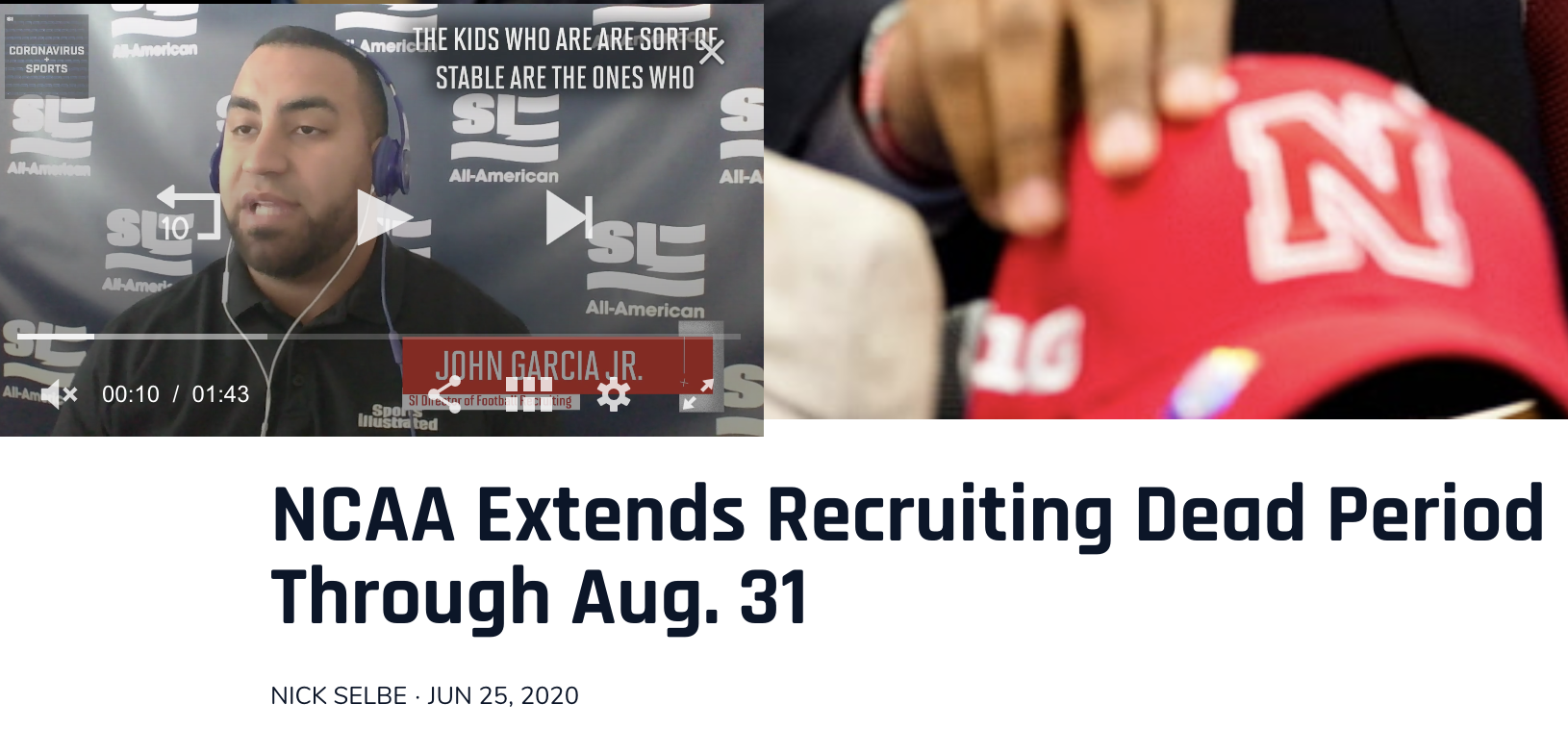
To pick up where we left off last week lets pick up where we left off. During the football season, the NCAA mandates 3 different contact periods for college coaches and prospective student athletes. The first of the two periods work in tandem. Beginning August 1, the Dead Period/ Quite Period is underway. At this time, college coaches may not have face to face contact with athletes or their parents. It also means that college coaches cannot watch players compete UNLESS that student athlete is actually on the college campus for a camp or college visit.

During the high school season, there is another contact period squeezed in September 1 through November 30, 2019

Now, during the season, there is another contact period squeezed in. The exception arrives between the days of September 1 through November 30, 2019. This is the evaluation period. By definition the evaluation period permits college coaches to watch college-bound student-athletes compete, visit their high schools, and write or telephone student-athletes or their parents. However, a college coach may not have face-to-face contact with college-bound student-athletes or their parents off the college’s campus during an evaluation period. 

So, even though coaches can see athletes compete the coaches is not permitted to communicate with the student athlete or their parents. Additionally, coaches are permitted a certain number of evaluation dates depending on the sport.  For example, football coaches are allotted 42 evaluation dates. During those dates, coaches can visit a player once at his or her high school. 

What does this mean for student-athlete seeking to get recruited? First, the primary focus for the athlete should be playing ball. It should go without saying that athletes who are distracted and don’t perform on the field won’t get recruited so limit the distractions and just go play ball.  Second, its important to be patient with the process. The contact periods are designed to slow down the process so that coaches have adequate time to scout prospects. Thirdly, players can, and should, continue reading out to coaches during all contact periods so that they stay on the radar.

Lastly, if your not sure about the ins and outs of the contact period I’m glad to send you free contact period outlines for your sport.. Simply, text “GAMEPLAN” to 480-605-4050 and I’ll send you the sport specific contact period outlines.

Three tips to record a baseball or softball recruiting video

This week is a short video blog for Recruiting video tips. Weekly, I field a lot of questions about how to make a recruiting video so today I want to share a quick video with 3 good tips for recording a recruiting video.

A well-made recruiting video is one of the most important tools for high school baseball and softball players trying to earn college baseball scholarships. Coaches don’t have the time to see every baseball prospect in person. That’s why a skills video is an essential part of your athletic profile. It takes just a few minutes for a skill video to show coaches what a high school prospect has to offer. For your skills video to be effective, you need to know specifically what coaches are looking for. If you have video but not sure if it is good enough for a coach, I offer a free recruiting video review. Simply book an appointment at the link below then send your video. I’ll check it out and give you some feedback during the short 30 minute call.

Book your appointment here. Video review

A well-made recruiting video is one of the most important tools for high school baseball and softball players trying to earn college baseball scholarships.

https://mlwoosley.wixsite.com/website/book-online/recruiting-video-review

Communicating with Coaches during the Fall Season

Often I compare the recruiting process to a roller-coaster. The speed of the cart is determined by the track. How the track is designed involves many twists and turns as well as places where the pace becomes so slow that it seems to stop. Like a roller-coaster, and depending on the sport, recruiting in the Fall can simultaneously cause both excitement and anxiety so here a few tips to as you buckle-in for the ride.
During the Fall, and after the window of the contact period closes, it is very important to know what contact period of your sport and the communication regulations that accompany them. This information is easy to locate within the NCAA and NAIA regulations on their respective websites. This information can also be accessed  in your Prepstar profile.
Now, be aware that all divisions (D1, D2, D3, etc) have similar, but different, communication rules. For example, D2 coaches have much more leniency  with communications in comparison to D1 coaches.  Additionally, in football, FBS schools (those that go to bowl games) have similar contact periods but different number of evaluation opportunities.

The key to communicating in the Fall is to be proactive! Throughout the year, and at any time, athletes are permitted to contact coaches. This means that to communicate with college coach outside of designated contact periods, student-athletes have to be the one to initiate contact. Additionally, this rule also applies to underclassmen (Freshman and Sophomores). Again, no matter what time of year and no matter the contact period, college coaches are permitted to talk with prospects as long as the prospect makes the first move to contact them.

So, I highly recommend that student-athletes take the initiative to reach out to coaches with emails, texts and voicemails.  Don’t ever wait for them to call you, instead you call them.

To wrap up, it is an understatement to say that recruiting is a year round process. There is no downtime because college coaches are always recruiting. So use the latter part of year to your advantage. For Fall sports this is a great time of year to get aquatinted with coaches, take visits and build that ever important recruiting relationship. Likewise, student-athletes that play winter or spring sports can use the Fall to as a great opportunity to get on the radar and generate interest from coaches for the upcoming seasons.

Good luck!

Coach Mike oversees the the recruiting of talented next-level athletes to develop a recruiting strategy to get seen, scouted and recruited.  As a coach with over 20 years of experience, and a as former college athlete, Mike now mentors families through the academic, athletic and financial aspects of college recruiting.  

Coach Mike – Email: mwoosley@csaprepstar.com   Office: 805-622-STAR

Reputation Ruined by a Press of a Button

This week’s tip about social media is very important. So, here’s the tip: coaches pay attention to how athletes present themselves on social media. 

Recently, All-Pro NFL superstar J.J. Watt lectured students on this very topic.  Watts’ wisdom was this, “A reputation takes years and year and years to build, and one press of a button to ruin.” You can find the article here.

Here’s an example of the harm that can’t be undone. Recently, I spoke with an athlete that was kicked off his team because someone in a picture with him was holding an illegal drug. One stupid mistake has sidelined this stellar senior athlete and jeopardized his future. Please, don’t let this happen to you.

Make wise choices to avoid costly decisions.

Social media is a tremendous way to interact with people all over the world and express ourselves in any way we choose. But with great opportunity comes great responsibility.  Here are some important things to keep in mind before you send your message into the great global conversation.

  1. Anyone, anywhere can see your post
  2. Your post speaks for your personality and character
  3. Pictures can speak for the company you keep.
  4. Posts are nearly impossible to erase once its out in cyber-space

To close, I’m not saying don’t use social media. I’m only suggesting that you use it to your advantage. Used properly social media really can make a difference with your recruiting.  So before you press ‘send’ think about the consequences. If you have any reservations for what your about to send, by all means don’t send it!

Be smart with social media.

Coach Mike Woosley

Coach Mike Woosley is a National Scouting Director at CSA-PrepStar.  As a professional collegiate sports scout Mike works with qualified next level student-athletes to find the right college athletic and academic fit. Comments and questions are always welcome.

cropped-cropped-main_logo-11.jpg

#1 recruiting mistake I see most often

As Scouting Director I get to see many of the country’s most talented athletes. As I evaluate, talk and meet with families across the nation and I’ve discovered that a larger number of them struggle with recruiting. I want to share what I’ve found to help you with your athlete’s recruiting.

Most often recruiting struggles have little to do with the athlete’s ability and more to do with timing. The number one recruiting mistake I see most often is related to starting the recruiting process too late.

Because college coaches cannot recruit a player that he/she does not know about you can avoid this mistake by starting the recruiting process early. An early start assures more control over the recruiting process and greater opportunities to be scouted and recruited by more coaches, as well as, saves your family time, money and worry.

everyone-makes-mistakes-the-wise-are-not-people-who-never-make-mistakes-but-those-who-forgive-themselves-and-learn-from-their-mistakes

However, neglecting to start early has severe consequences. The most common are

  • unnecessarily spending of precious time and money trying to make up for lost time,
  • loss of control over the recruiting process
  • no competitive advantage over the thousands of other athletes hoping to fill roster spots and get scholarships
  • athletes that are overlooked and not recruited like they should be

Partnering with PrepStar and myself can assure you the right amount of recruiting exposure and assistance you need to stay ahead of the recruiting game or catch up if you are behind.

I hope this tip is both helpful and useful for your athlete’s recruiting. I’ve included a few recruiting resources are included below to help you out.

~ Coach Mike


Coach Mike Woosley is a National Scouting Director at CSA-PrepStar.  As a professional collegiate sports scout Mike works with qualified next level student-athletes to find the right college athletic and academic fit. Comments and questions are always welcome.

cropped-cropped-main_logo-11.jpg