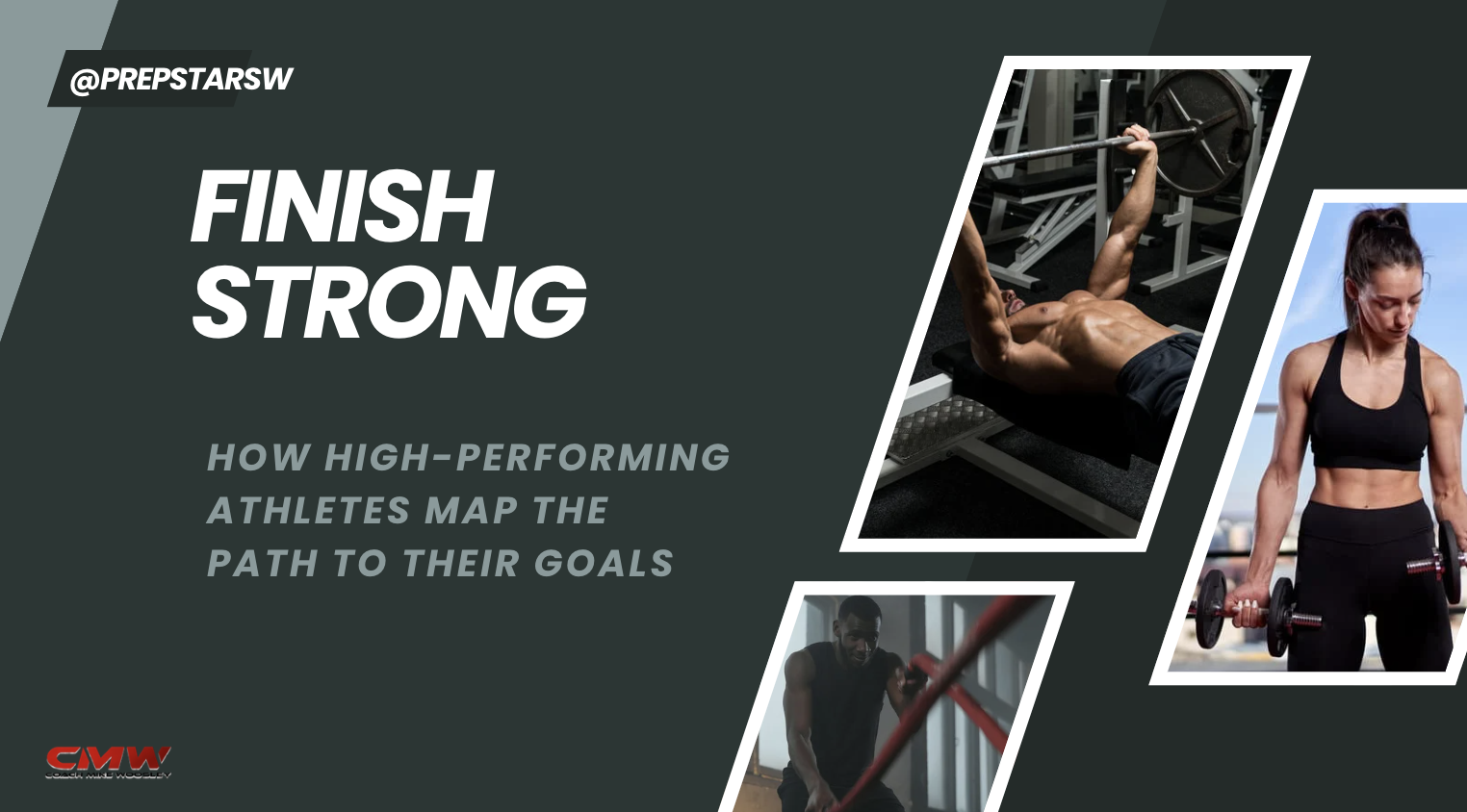
Finish Strong: How High-Performing Athletes Map the Path to Their Goals

Over the course of this series, we’ve talked about goal setting, raising your standard, recovery as a year-round priority, and the characteristics of high-performing athletes. This final piece brings everything together by focusing on one defining difference between average athletes and elite ones:

High-performing athletes don’t just set goals—they map the process to reach them.

Talent alone doesn’t create success. Neither does motivation. What separates high performers is clarity, confidence, and a detailed plan they commit to executing every day.

High-Performing Athletes Have a Clear Vision—and Confidence in That Vision

High-performing athletes (HPAs) know exactly what they want. They can see it. They believe in it. And they are intentional about mapping out what it will take to make it happen.

In all my years of coaching, I have never known an athlete who was born great. But I have known many athletes who became great—because they had a clear vision, understood what they wanted to achieve, and were confident they could get there.

That confidence doesn’t come from hype or ego. It comes from preparation. When an athlete knows the path, trusts the process, and commits to the work, confidence follows naturally.

The Elite Mindset: There Is Always Another Level

Inside the mind of a high-performing athlete is a constant drive to improve. They are never satisfied with where they are, even when they are performing at a high level.

For HPAs, the ceiling is glass—it exists to be broken.

Elite athletes believe improvement is always possible. They actively look for ways to get better, sharper, faster, and more consistent. Even at the top of their game, they understand that better coaching, better habits, and better execution provide the edge needed to break through to the next level.

This is why high performers seek feedback instead of avoiding it. They don’t fear coaching—they pursue it. Growth lives on the other side of discomfort.

Vision Without a Plan Is Just a Wish

High-performing athletes don’t stop at vision. They are intentional about mapping out a plan to reach their goals.

They ask the hard questions:

  • What skills must I develop?
  • What physical standards do I need to reach?
  • What habits must I build daily?
  • Who do I need coaching from?
  • How will I measure progress?

Once the plan is clear, execution becomes the priority. HPAs know exactly what it takes to achieve their goals—and they commit to doing those things consistently.

They don’t rely on hope. They rely on structure.

The Process Is the Advantage

The difference between athletes who dream and athletes who achieve is the willingness to plan, prepare, and execute relentlessly.

High-performing athletes:

  • Clarify their vision
  • Believe they can reach it
  • Map the process step by step
  • Seek coaching and feedback
  • Execute daily, even when it’s hard

That process—done consistently over time—is what creates breakthroughs.

Final Challenge

As you close this series and move forward, challenge yourself with this question:

Do I have a clear vision—and have I mapped the process to get there?

Goals are powerful. Standards are necessary. Recovery and habits matter. But it’s the plan—and your commitment to executing it—that ultimately determines success.

High-performing athletes don’t wait to be great. They build greatness—one intentional day at a time.

Elevate Your Game: The Characteristics of High-Performance Student-Athletes

Over the first three weeks of this year, we’ve focused on setting clear goals, raising your standard, and making recovery a year-round priority. Each of these topics points to a bigger truth: success in athletics is not accidental—it’s intentional.

High-performance student-athletes separate themselves not just by talent, but by the habits they build and the standards they live by every single day. Because elite performers are obsessed with reaching their full potential, they create specific habits—and then execute them relentlessly. To those on the outside, this level of discipline can look obsessive. To high performers, it’s simply the cost of excellence.

High Performance Is Built on Daily Habits

Elite athletes don’t rely on motivation alone. They rely on systems. Their success comes from doing the right things consistently, especially when no one is watching.

Here are several foundational self-care and performance-enhancing habits that high-performing athletes prioritize:

  • Adequate Sleep: High performers keep a consistent bedtime and wake-up time—even on weekends. Sleep is where recovery, growth, and mental sharpness are built.
  • Clean Nutrition: Healthy food fuels a healthy body and elite performance. High-performing athletes plan ahead, meal prep when needed, and make sure quality nutrition is always available.
  • Mental Preparation: Top athletes train their minds daily through inspirational content, reading, prayer, visualization, stoicism, or mindfulness practices. Strength of mind supports strength of body.
  • Smart Supplementation: Physical training depletes vitamins and nutrients. High performers work with healthcare professionals to safely replenish what their bodies need.
  • Daily Exercise and Stretching: Even outside of team practices, elite athletes maintain daily movement, mobility, and stretching routines to stay durable and ready.

These habits aren’t random—they’re intentional, repeated, and protected.

The Six Core Characteristics of High-Performance Athletes

While habits build performance, certain characteristics define high-performing student-athletes over time:

1. They Clarify the Vision and the Path
High performers know exactly what they are working toward and understand the steps required to get there. Their goals are clear, written down, and backed by a plan.

2. They Measure Results Consistently
Elite athletes track progress. They evaluate performance to identify strengths, expose weaknesses, and adjust their training accordingly. Measurement creates awareness—and awareness drives improvement.

3. They Take Full Responsibility
High performers take complete ownership of their actions, preparation, attitude, and outcomes. They don’t make excuses. They make adjustments.

4. They Possess “Want To”
This is the difference-maker. High-performing athletes want to train. They want the extra reps, the early mornings, and the work others avoid. Passion, drive, determination, and discipline all live here.

5. They Care for Body, Mind, and Spirit
Elite athletes understand that performance is holistic. They plan and execute self-care habits and have the discipline to maintain them—especially when schedules get busy or seasons get demanding.

6. They Seek Out Great Coaching
High performers don’t avoid coaching—they pursue it. They intentionally seek knowledgeable coaches, listen closely, and apply feedback to break through to the next level.

The Standard Is the Standard

As we move deeper into the year, remember this: your habits reveal your standard. Talent might open doors, but habits determine how far you go.

High-performance student-athletes don’t rise to the level of their goals—they fall to the level of their preparation. If you want more from this season and your athletic career, raise your standards, build the habits, and execute daily.

That’s how elite performance is built.

Elevate Your Game: Why Recovery Must Be a Year-Round Performance Standard

Peak performance isn’t built in one great workout. It’s built through daily decisions that allow your body and mind to adapt, grow, and perform at a high level year-round.

Last week, we challenged student-athletes to set a new standard—one built on clear goals, disciplined habits, and daily execution. But goal setting doesn’t stop with training plans or game performance. If you want to truly elevate your game and stand out in the recruiting process, recovery must become part of your ongoing performance goals.

College coaches aren’t just evaluating how hard you train; they’re evaluating durability, consistency, and long-term development. Athletes who recover the right way don’t just improve faster—they stay available, stay explosive, and stay reliable.

Peak performance isn’t built in one great workout. It’s built through daily decisions that allow your body and mind to adapt, grow, and perform at a high level year-round.

Goal #1: Make Sleep a Non-Negotiable Part of Your Training Plan

Sleep is one of the most overlooked performance tools in high school athletics. Yet it’s during sleep that your body repairs muscle tissue, restores energy systems, and locks in the skills you worked on during practice.

If your goals include getting faster, stronger, or more consistent on game day, then 7–9 hours of quality sleep must be part of your standard—not an afterthought. Elite athletes treat sleep like training: it’s scheduled, protected, and prioritized.

From a recruiting standpoint, availability matters. Athletes who recover well are more resilient, miss fewer practices, and show up sharper when it matters most.

Goal #2: Fuel Your Body to Support Performance and Development

Nutrition isn’t about shortcuts or trends—it’s about fueling performance. Set ongoing goals around eating balanced meals that include quality protein, carbohydrates, and healthy fats to support your training load.

Post-workout nutrition is especially critical. What you eat and drink after training directly impacts how quickly you recover, how sore you feel the next day, and how prepared you are for your next session.

College-level athletes understand that consistent fueling equals consistent performance. Hydration, nutrient timing, and recovery meals aren’t optional if your goal is long-term development and visibility in the recruiting process.

Goal #3: Build Active Recovery Into Your Weekly Routine

Recovery doesn’t mean being inactive. Smart athletes use active recovery to stay healthy and athletic throughout the season. Low-intensity activities like walking, cycling, swimming, mobility work, or yoga improve blood flow, reduce stiffness, and enhance flexibility.

Add in recovery tools like foam rolling, stretching, or cold exposure to help manage soreness and maintain movement quality. The key is consistency—active recovery should be planned into your week, not added only when you’re already worn down.

Athletes who move well, recover well, and stay fresh perform better late in seasons—when college coaches are paying close attention.

Recovery Is a Recruiting Advantage

High-level performance is about more than effort—it’s about sustainability. When recovery becomes a continuous goal, you train better, compete harder, and stay healthier across an entire season.

The best student-athletes don’t just chase results; they build systems. Adequate sleep, intentional nutrition, and strategic recovery form the foundation of long-term athletic development and give you a competitive edge in the recruiting process.

Set the standard. Execute it daily. Review it weekly. That’s how goals turn into habits—and habits turn into results that college coaches notice.

A New Year, A New Standard: How Student-Athletes Can Elevate Their Game

The start of a new year is more than just turning the calendar—it’s an opportunity for student-athletes to reset, refocus, and recommit to their goals. Success in high school athletics doesn’t happen by chance. It’s the result of intentional planning, daily discipline, and consistent effort both on and off the field.

To truly stand out, athletes must commit to more than simply showing up for practices and games. They need a structured approach that includes clear goal-setting, focused skill development, quality coaching and feedback, and the discipline to care for both their bodies and minds—especially during the demands of in-season competition.

Start With Clear Goals—and Write Them Down

Before progress can happen, athletes must define what success looks like. The most effective goals are specific, measurable, and written down. Whether it’s improving speed, earning a starting role, raising academic performance, or gaining college exposure, outlining goals creates clarity and accountability.

Once goals are set, the real work begins: executing daily habits that support those goals. Big achievements are built through small, consistent actions repeated over time.

1. Commit to Consistent Training and Skill Development

Consistent training is the foundation of athletic growth. This means going beyond team practices and committing to individual skill work, strength training, conditioning, and sport-specific development throughout the year.

Athletes who improve the most are those who train with purpose—focusing on weaknesses, sharpening strengths, and maintaining intensity even when motivation fades. Consistency, not perfection, is what separates average players from high performers.

2. Seek Coaching and Feedback

Great athletes don’t train in isolation. They actively seek coaching, instruction, and honest feedback. Whether it’s from a high school coach, private trainer, or trusted mentor, feedback helps athletes identify blind spots and make necessary adjustments.

Equally important is being coachable—listening, asking questions, and applying what’s taught. Growth accelerates when athletes are willing to learn, adapt, and embrace constructive criticism.

3. Focus on Recovery, Nutrition, and Mental Preparation

Training hard means nothing if the body and mind aren’t properly cared for. Recovery, nutrition, and mental preparation are often overlooked, yet they are critical to sustained performance.

Quality sleep, proper fueling, hydration, mobility work, and mental focus all contribute to staying healthy and performing at a high level—especially during long seasons filled with practices, games, travel, and academic demands. Discipline off the field directly impacts performance on it.

Execution Creates Results

The athletes who separate themselves are those who consistently execute their plan, even when it’s challenging. By setting clear goals, committing to structured training, seeking feedback, and prioritizing recovery and mental readiness, student-athletes give themselves the best chance to maximize their potential.

View Post

The new year is a chance to raise your standard. Write your goals down, create a plan, and attack each day with purpose. Success follows those who are prepared—and preparation starts now.

Connecting with College Coaches: Five Tips Every Student-Athlete Should Follow

Connecting with college coaches is one of the most important steps in the recruiting process—and one of the most misunderstood. Many student-athletes assume coaches will simply “find” them. In reality, recruiting is a proactive process that rewards preparation, communication, and persistence.

To increase your chances of building meaningful connections with college coaches, focus on the following five proven strategies.

1. Research Potential Schools

Before reaching out to any coach, take the time to research schools that align with both your athletic and academic goals. Look beyond the name on the jersey. Consider the level of competition, the coaching staff and their recruiting history, training facilities, and the quality of academic programs that support your long-term career plans. Targeting the right schools from the start leads to stronger conversations and better recruiting outcomes.

2. Reach Out to Coaches

Don’t wait for a coach to contact you—initiate the conversation. Email, social media, text messages, and phone calls are all tools athletes can use to express interest. Effective communication should highlight not only your athletic ability but also your desire to earn a college education and contribute to the program. Personalized, respectful outreach shows maturity and genuine interest, which coaches value.

3. Link Your Recruit Profile

Your recruiting profile acts as your sports resume. A PrepStar recruit profile provides college coaches with a clear snapshot of who you are as an athlete and student, including statistics, academic information, achievements, and personal details. Always include your profile link when contacting coaches. You can find your link by clicking the Settings button on the Scoreboard homepage, making it easy to share with every coach you contact.

4. Stay Active on Social Media

Social media matters in recruiting. College coaches regularly review a recruit’s online presence to learn more about their character, habits, and behavior. Stay active, positive, and professional. Share training updates, game highlights, and academic achievements while avoiding posts that could raise red flags. Think of social media as an extension of your recruiting profile.

5. Be Persistent and Patient

Recruiting is rarely an overnight process. Coaches manage hundreds of prospects and tight recruiting calendars, so responses may not come immediately. Stay patient, follow up appropriately, and continue developing your skills both on and off the field. Consistent effort, strong communication, and steady improvement often separate recruited athletes from those who get overlooked.

Final Thoughts

Connecting with college coaches requires a plan, consistent action, and the right tools. By researching schools, reaching out confidently, sharing your PrepStar recruit profile, managing your social media presence, and staying persistent, you put yourself in control of your recruiting journey.

Preparation creates opportunity—and opportunity leads to results.

Recruiting Rules Made Simple: What Every Athlete Must Know About Coach Communication

While many divisions (D1, D2, D3, etc) have similar communication rules, in actuality, there are some glaring differences.

Recruiting timelines and communication rules can appear confusing. But with a little planning and research, athletes can use them to their benefit. For example, it is very important to be aware of the contact communication periods within your sport as well as the communication regulations that accompany them. This information is easy to locate within the NCAA and NAIA regulations pages on their respective websites. This information can also be accessed in the Locker Room tab of your Prepstar recruiting profile.

It is also important to note the communication rules. While many divisions (D1, D2, D3, etc) have similar communication rules, in actuality, there are some glaring differences. The differences range from permissible emails, phone calls or visits. For example, D2 coaches in comparison to DI coaches, have much more leniency with communications. It is helpful to learn the differences.

Contact periods for all colleges run along a similar timeline however. For example, FBS schools (those that go to bowl games) have similar contact periods than FCS or D2 colleges. But, D3 colleges have nominal timeline communication.

Now, for athletes looking to take advantage of recruiting opportunities, the key is to be proactive! Please keep in mind that at any time throughout the year, athletes are permitted to contact coaches. This means that to communicate with college coaches outside of designated contact periods the student-athlete has to be the one to initiate contact. Additionally, this rule also applies to underclassmen (freshman and sophomores). So again, no matter what time of year and no matter the contact period, college coaches are permitted to talk with prospects as long as the prospect makes the first move to contact them. For this reason, I always suggest asking the coach to schedule a few minutes of his/her time for a quick call to talk about their program and recruiting process.

The NCAA posts, “The rules define who may be involved in the recruiting process, when recruiting may occur and the conditions under which recruiting may be conducted. Recruiting rules seek, as much as possible, to control intrusions into the lives of student-athletes.”
However, the statement makes no mention of prohibiting student initiated communicating with college coaches.

Clearly, it would be an advantage to use this rule to your benefit. I highly recommend that student-athletes take the initiative to reach out to coaches with emails, texts, social media and phone calls. Never wait around for coaches to call you! Instead, be proactive and make it a priority to contact them. 

To wrap up, it is an understatement to say that recruiting is anything but a year round process. There is no downtime. College coaches are always recruiting. They are always on alert, looking for that student-athlete who can impact their program. 

NCAA Replaces NLI with New Athletics Aid Offers, Integrates NIL Opportunities

Earlier this year the NCAA announced changes to the National Letter of Intent (NLI) program, transitioning from the traditional NLI to written offers of athletics aid. While this adjustment may appear significant, it largely represents a rebranding, as the core process and dates will remain the same.

Under the new system, written offers of athletics aid will replace the NLI, with signing dates adhering to the existing formula used for NLIs. Athletes will continue to sign on the same dates as before, maintaining consistency in the recruiting calendar.

An important shift, however, is the expanded scope of these written offers. Athletics aid packages will now include any Name, Image, and Likeness (NIL) agreements, meaning financial compensation from NIL deals can be part of the official athletics aid offer. This change brings clarity and transparency, allowing athletes to consider all financial aspects of their commitment when signing.

This move aims to streamline the process while aligning the official athletics aid offer with the realities of today’s collegiate sports environment, where NIL opportunities play a significant role in many athletes’ decisions. It simplifies the signing process for athletes and coaches, integrating NIL within the formal recruiting structure of college sports.

Transfer portal- Updates for 2025-2026

The NCAA has once again made  changes to the transfer portal for the 2025-2026 year. These adjustments, particularly the two-window system, are intended to streamline the transfer process while balancing flexibility and stability within college athletics.

The revamped notification-of-transfer process now operates within a single transfer window from January 2-16, with a special five-day window available for players whose seasons extend beyond January 1st. Additionally, there is now a 15-day window for players to transfer immediately after a head coaching change.  

By consolidating these periods, the NCAA aims to simplify decisions for athletes while minimizing disruptions for both teams and individual players. Additionally, the new regulations reinforce the binding nature of the National Letter of Intent (NLI), reaffirming it as a formal agreement between student-athletes and universities. This ensures that the decision to transfer is not taken lightly, preserving some level of stability within athletic programs. 

For high school athletes, the transfer portal changes may prove beneficial. With a clearer, more structured transfer process, fewer late-season transfers could mean more available scholarships and roster spots for incoming high school recruits. Coaches and recruiters can focus more efficiently on long-term development rather than immediate replacement needs, potentially leading to increased opportunities for high school seniors.

Overall, these NCAA adjustments balance athletes’ needs for flexibility with institutional stability, promising a more controlled and transparent transfer system that should benefit both current players and prospective recruits.

Prioritize, Plan, Perform: How Homeschooling Builds Elite Time-Management Skills in Athletes

For student-athletes, success doesn’t happen by accident—it comes from discipline, structure, and the ability to prioritize what matters most. Homeschooling supports this process by giving young athletes the tools and flexibility they need to excel in both academics and sports. With intentional planning and thoughtful routines, homeschooled athletes learn how to set goals, manage time, and stay focused on long-term success.

One of the greatest advantages of homeschooling is the ability to design daily schedules around an athlete’s physical and academic needs. Instead of rushing through homework late at night or struggling to stay awake after long practices, homeschoolers can use block scheduling to create a balanced day. Academic subjects can be grouped into focused learning blocks, while training, recovery, and competition are built naturally into the routine. This structure teaches athletes how to work efficiently, avoid burnout, and stay consistent.

Time management becomes second nature. Athletes learn how to plan ahead, break tasks into manageable pieces, and prioritize their responsibilities. These are skills that will serve them well in college athletics, careers, and life. Homeschooling encourages independence, accountability, and strategic thinking—qualities that every successful athlete must master.

Goal-setting becomes a central part of the homeschool athlete’s routine. They learn not only to set ambitious goals but also to build daily habits that move them closer to achieving them. Whether it’s improving on the field, boosting academic performance, or preparing for future opportunities, homeschooling provides the supportive environment needed to grow with purpose.

Homeschooling isn’t just about flexibility—it’s about teaching young athletes how to structure their lives with intention. With block scheduling, personalized routines, and strong time-management skills, they learn to balance academic achievement with athletic excellence.

Homeschooling for Busy Households: How Homeschooling Can Help Families Balance Careers, Sports, and Education

Balancing work, school, practices, and competitions often feels like a full-time job. Homeschooling changes that dynamic, offering flexibility, structure, and togetherness

For families of student-athletes, life can be a constant juggle—balancing work, school, practices, and competitions often feels like a full-time job. Homeschooling changes that dynamic, offering flexibility, structure, and togetherness all under one roof. Home truly becomes the center of learning, growth, and family connection.

Homeschooling makes it possible for parents to remain active participants in their child’s education without giving up their own careers. With today’s flexible work options, online learning tools, and support networks, families can create a rhythm that works for everyone. Parents can adjust their work hours or coordinate lessons around practices and training sessions. Learning doesn’t have to happen from 8 to 3—it can happen anytime, anywhere.

This shared approach not only fits around athletic schedules but strengthens family bonds. Parents are more engaged in their child’s academic and athletic development, witnessing their progress firsthand and guiding them through both victories and challenges. Whether it’s reviewing coursework between games or discussing life lessons during travel, every moment becomes an opportunity to connect and grow together.

Homeschooling also teaches balance and teamwork within the family. Parents model discipline and time management, while children learn responsibility and self-motivation—skills that benefit them both in sports and life.

For many homeschooling families, the reward isn’t just academic success; it’s the quality of life that comes from being truly present. Home becomes a place of support and shared purpose, where education and athletics blend seamlessly.

eliteathletesrecruiting's avatar

eliteathletesrecruitingEdit Profile

Homeschooling proves that families can thrive—parents can pursue careers, athletes can chase their dreams, and together they can build a learning environment that strengthens both hearts and minds.