THOUGHTS ON ‘RONA & RECRUITING

Utter disappointment. Really, that’s a tremendous over statement. My heart goes out to the Spring athletes as well as those athletes who were unable to take their college visits. Many 2020’s have had their recruiting and signings delayed, while 2021’s also missed the opportunity to showcase their skills this season.  Many people ask me my thoughts on how ‘Rona (COVID-19) will impact recruiting in the near future, so here’s some of my thoughts.

Let me begin by stating that by nature I am an optimistic person. It’s in DNA to see things the potential in people and circumstances.  I’m holding hope that with cooperation, diligence, and compliance the spread of the virus will be stifled so that soon athletes can take to the field again.  

Without doubt, new recruiting opportunities are sure to surface to make up for lost time. So, even though college recruiting may have been slowed this spring, there will certainly be more recruiting opportunities to come.
Photo by Peter Feghali on Unsplash

Now, in regards to recruiting, it is likely that there will be little to no significant impact on the recruiting process. By that, I mean the recruiting process will continue to move forward in spite of the sequester. I am certain, at this very moment college coaches still recruiting athletes!  They may be doing this from their offices instead of the sidelines, but make no mistake, college coaches are recruiting athletes!

Next, recruiting this summer will certainly ramp up. Ben Franklin was noted to have said, “Out of adversity comes opportunity.” Without doubt, new recruiting opportunities are sure to surface to make up for lost time. So, even though college recruiting may have been slowed this spring, there will certainly be more recruiting opportunities to come. I anticipate an increase of showcases and camps this summer. Two reasons play into this. First, more camps and showcases will help replace some revenue lost as a result of the cancelled spring season. Second, additional camps and showcases will provide coaches the opportunity to have athletes come to them. This will allow coaches to evaluate more players in a short amount of time.  Early exposure to these coaches will be a tremendous help for prospects wanting invitations to these events.

Additionally, athletes who make the most of the self sequester will be those who continue communicating with college coaches, stay in shape, and keep up with their regular routine. When the opportunity returns for student-athletes to take the field once again it will be evident who stayed on course and made the most of the downtime. Consequently, those student-athletes who choose chill-time over training time will surely fall behind. 

Lastly, as of March 30 the NCAA announced that spring college athletes can be awarded an extra year of eligibility. However, the NCAA did not mandate additional scholarship money. The NCAA did loosed the roster limit for the 2021 season. But, scholarship money awarded to student-athletes will be at the desecration of the college athletic program.

This presents an option for the student-athletes who take advantage of this gift. It is likely that that they will have to pay out of pocket for an additional year of college so that then can play one more season of Spring sports. Outside of athletes from prominent Power 5 schools, I suspect that few Spring athletes will take advantage of this benevolent offer. For most college students, the cost of college tuition might just outweigh the benefit of one more year of competition. 

Finally, and most importantly, I want to wish you all wellness, safety and good health during this unprecedented season. 

Tips to choose the right Camps, Showcases, and Combines

College camps, showcases, combines and now the ever present “Junior Days” are a necessary part of the recruiting process. Many offer the opportunity to compete against some of the top high school talent. Additionally, the experience at these events can be very valuable in the development of a young athlete. However, choosing the right event to attend can be a challenge.

For starters, relying solely on college showcases, camps and combines as the primary avenue to get recruited not a very sound strategy. Often the enormous number of camp attendees is not favorable for your exposure. In this case, too many athletes equals too few reps. Too few reps means not enough opportunity to showcase your talent. Also, typically college coaches already have developed recruiting lists of athletes they plan to watch at the camp so be cautions of camps expecting several hundred athletes. Additionally, before registering, athletes need to certain that the head coach or position coach will actually be at the event. Simple put, if the college coach wont’ be at the event, then it is impossible for him/her to see you compete, which means, there is a pretty good chance you will go unnoticed. It also means you wasted a lot of money for zero exposure.

If the college coach wont’ be at the event, then it is impossible for him/her to see you compete, which means, there is a pretty good chance you will go unnoticed. Photo by Jeffrey F Lin on Unsplash

Instead, heres a winning recruiting strategy for using camps, combines and showcases. First, do some research to make sure college coaches form the schools you feel are realistically a good fit. Once you decide on a event, make sure you are prepared for the event. Next, utilize good interactive communication before the event. This is a good opportunity to provide coaches with your recruiting profile along with any video highlights you may have. (PrepStar athletes can do this in a few clicks- message me if you need to know how). Finally, before the event, prepare a few questions to ask about the college or the athletic program.

Getting lots of camp invites? Have questions about which are legit? Need help?  Contact me to set up a time to talk (get free advise!) or use the comment section below.

High Performing Athletes- 6 common characteristics

At the start of the new year, I began as series focused on 6 major characteristics of high performing athletes. Often, I am asked about the what it takes for an athlete to reach a a high performance level beyond natural ability. So, after making a long list, researching top athletes, and persistent review I came up with 6 common characteristics. Obviously, these six characteristics is not an exhaustive list, however, I am certain that some form of these characteristics are prevalent in the life, mind and practices of anyone that is considered to be a high performing athletes. 

Any athlete who desires to perform at the highest level must exercise a extra-ordinary amount of disciple. (Photo by Scott Webb on Unsplash)


The summary of the 6 characteristics are:

  1.  High performing athletes are able to clarify the vision and path to reach their goals. 
  2. High performance athletes measure results repeatedly.  They do this to discover areas of progress as well as weaknesses.
  3. High-performing athletes take full responsibility. They take complete ownership of their actions, their plans, and their purpose.
  4. High performing athletes possess “want to”. They willfully want to practice and put in the extra reps. This characteristic is often partnered with words like passion, desire, drive and determination. 
  5. High performing athletes take care of their body, mind and spirit. They plan and execute good self care habits and have the discipline to maintain those habits. 
  6. High performing athletes seek out great coaching. They intentionally look for and listen to coaches who  can help them  break through to the next level. 

Now that you are aware of these six characteristics, the next question to consider is what is the common denominator ties them together?  In my opinion that denominator is discipline. Any athlete who desires to perform at the highest level must exercise a extra-ordinary amount of disciple. Almost to a level that seems obsessive when compared to those around him/her. High performing athletes know that to make their goals into reality uncompromising discipline is a must.  

High Performing Athletes: common characteristics- Responsibility

What does it take to be at the top of your game? Have you ever wondered what is the daily regime for those capable of performing at high level consistently. To kick off 2020 I want to outline some of the characteristics  of high performing athletes (HPAs). After all, the name of this blog has the words Elite Athletes, and assuming most of the audience are athletes, why not share helpful tips for elite athletes seeking strategies to improve. 

Photo by Freddie Collins on Unsplash


This week, the topic is responsibility. In a culture where blame is the game, people who take personal responsibility for their actions are rare. Sadly, its easier to blame someone else than to own up to our own mistakes. But this is not how HPA’s work. 


Instead, high-performing athletes take full responsibility. They would never let someone take the blame. HPAs take complete ownership of their actions, their plans and their purpose. High performing athletes want the ball in their hand when the clock is ticking down.  


So, HPAs assume full responsibly by being fully accountable. It means that no matter what the outcome, the only person to blame is yourself.  In no situation will excuses be acceptable! High performing athletes do not sit around hoping to rise to success on the back of someone else. No, high performing athletes understand that in every situation they are both 100% responsible and 100% accountable. 

High Performing Athletes: common characteristics

Helping athletes perform at the highest level possible is what Elite Athletes Recruiting is all about.  So, to kick off  2020 I will be sharing about several common characteristics that I have found in high performing athletes (HPA).


This year I want to help my readers to perform at the highest level possible in 2020. 
Last week, I outlined how high performing athletes (HPA) are able to clarify the vision and path to reach their goals. 

This week I want to impress a second common characteristic. High performance athletes measure results repeatedly.  They do this to discover areas of progress as well as weaknesses. Because, results can only become obvious over a period of time it is necessary to make it a priority to measure results. 

For most of us progressing towards our goals takes time. Days, months, years. Rarely, does success happen overnight. Thats why it is important to measure or track progress. The danger of not keep measurements is discouragement. Unless you are paying close attention, incremental progress can be easily overlooked. Likewise, neglecting to measure results can lead to plateaus where not progress is being made whatsoever. 

In a tangible way, this is the reason why stats are so important in sports. It is also the reason why score is kept in athletic competitions.  Stats and scores highlight who wins and who loses.

So to avoid stagnation, high performance athletes measure the results of both successes and failure so that they can form new strategies to help them reach new levels of achievement.
What areas of your athletic performance, business, or physical health have you set goals for in 2020?  How do you intent to measure measure progress to assure that you reach those goal

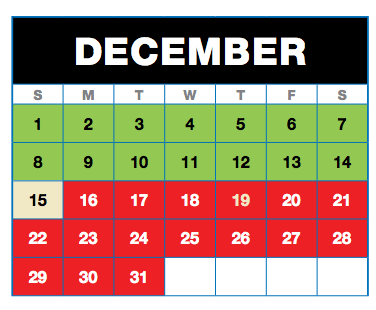
2 Weeks in December

The high school football season for the most part is over. Except for a limited few states the final whistle has blown, gear returned, and final stats recorded. When it seem like its all finished, football recruiting, however, is just getting started.  Especially in these first two weeks in December the contact period resumes. But, only for two weeks. 

During the December contact period it is permissible for authorized athletic department staff member to have in person, off campus contacts with prospective student athletes. 

So, athletes, what can  can you do to improve your recruiting situation during these two weeks? 

  1. Get your highlight reel looking tight. By now you should have a full season highlight reel as well as a midseason highlight reel up on your Hudl page. 
  2. Broaden your reach with coaches you want to contact. Use more than one medium to contact coaches. Don’t just rely on twitter to blast out your Hudl link. Rely on email and text. And, if you’re brave enough, go old school by making a phone call. 
  3. Stay focused! Lots of recruiting happens at this time of year. Keep in mind that the contact period is only open for 2 weeks, then its back to the quiet period until January. So be patient with the process. 

Let me know how recruiting is going for you. Have questions about the recruiting process? Comment below or contact me on twitter or instagram (@michaelwoosley). I’m glad to help. 

What to know about official and unofficial college recruiting visits

Since this is the time of year for athletes to visit college campuses I thought it good to share a few helpful tips about official visits and unofficial visit. In most recruiting situations the official visit often follow one or more unofficial visits. Frequently, college coaches reserve official visits to make offers, but it is not uncommon to get a verbal offer outside of an official visit. 

By definition, an official visit is any visit to a college campus by a college-bound prospective student-athlete and his or her parents that is paid for by the college. This includes transportation, lodging, entertainment, food and as many as 3 tickets to a game. Conversely, campus visits paid for by the parents of the student-athlete is deemed and unofficial visit.

In total, student-athletes are permitted up to 5 official visits for D1 and D2 schools. However, only 1 official visit per school is allowed.
Photo by Travis Essinger on Unsplash

Traditionally, official visits have been reserved for Seniors only. However, since April 2018 new recruiting regulations have been implemented for sports such as baseball and softball, allowing  Junior and Senior student-athletes to take official visits after September 1st. In contrast, in many other sports, such as footballonly Senior student-athletes are permitted to take official visits.

In total, student-athletes are permitted up to 5 official visits for D1 and D2 schools. However, only 1 official visit per school is allowed. Parents and athletes should know that D3 and NAIA schools have no limit on official visits a student-athlete can take. Additionally, D3 and NAIA regulations are similar to those outlining the recruiting process of D1 and D2 schools where the prospective student-athlete is allowed 1 official visit per school.

Lastly, always keep this in mind that recruiting is a process. Many student-athletes and parents let their minds run wild with negative assumptions, especially when an official visit is not offered right away.  To reiterate, recruiting is a process and every coach has his or her method, budget and preference for recruiting. So, with this in mind I recommend to keep a clear head and a positive attitude. Try to relax, stay calm, and enjoy the process.

Finally, I would love to hear from athletes attending official or unofficial visits. Athletes can also tag me on twitter when posting about visits (@michaelwoosley). Also, if you need help preparing for a visit, I’m glad to schedule some time to help with preparations. Just send me an email at mwoosley@csaprepstar.com. 

Tips for communication between prospective student-athletes and college coaches

Parents and students always ask about coaches not responding to their communication. 

Three tips to why:

  1. You may be contacting the wrong coaches so be realistic in your search for best athletic and academic fit
  2. You may not be asking the right questions. Often you get a reply if you ask. But surely you won’t get a reply if you don’t ask any questions. 
  3. You need to be more proactive. Proactive  is being  persistent. Being passive is not a plan. 

Coach Mike oversees the the recruiting of talented next-level athletes to develop a recruiting strategy to get seen, scouted and recruited.  As a coach with over 20 years of experience, and a as former college athlete, Mike now mentors families through the academic, athletic and financial aspects of college recruiting.  

Website: www.csaprepstar.com/coachmike

Blog: https://eliteathletesrecruiting.com/

3 Tips To Get Noticed at Camps, Combines and Showcases

Are you exhausted from all the camps, combines, showcases and other “recruiting events”? Have you become frustrated by the promise of exposure only for to get minimal reps and very little exposure?

Collegiate recruiting events can be a great way to showcase skill in competition against some of the nation’s top high school talent. But they can also become burdensome and ill-effective.

Trying to rely solely on college showcases, camps and combines to get recruited and receive an athletic scholarship is not a very sound strategy by itself.

Photo by Christopher Campbell on Unsplash

However, I have learned from past experience that trying to rely solely on college showcases, camps and combines to get recruited and receive an athletic scholarship is not a very sound strategy by itself. Most college coaches that attend these type of events developed recruiting lists of athletes they plan to watch well before they arrive.

So, if college coaches at the showcase are there to watch some other athlete how do you get their attention? What do you need to do to get noticed while hundreds of other athletes are at the same event trying to do the same thing at the same time as you?

The goal is to get on their recruiting list before the event. So, how do you do this?

So, here are 3 tips you can use to help assure you get some attention at the next camp, combine or showcase.

  1. Email college coaches scheduled to attend the event.
  2. Create a student athlete profile including academic information as well as athletic metrics that you can send to colleges coaches. (A free one is available at bit.ly/2vqZjH9)
  3. Connect with college coaches through social media outlets like Twitter or Instagram.

Again, the goal is to be seen by coaches who want to see you. Following this 3 tips before attending the next camp, combine or showcase are you are sure to get some attention.

Communicating with Coaches during the Fall Season

Often I compare the recruiting process to a roller-coaster. The speed of the cart is determined by the track. How the track is designed involves many twists and turns as well as places where the pace becomes so slow that it seems to stop. Like a roller-coaster, and depending on the sport, recruiting in the Fall can simultaneously cause both excitement and anxiety so here a few tips to as you buckle-in for the ride.
During the Fall, and after the window of the contact period closes, it is very important to know what contact period of your sport and the communication regulations that accompany them. This information is easy to locate within the NCAA and NAIA regulations on their respective websites. This information can also be accessed  in your Prepstar profile.
Now, be aware that all divisions (D1, D2, D3, etc) have similar, but different, communication rules. For example, D2 coaches have much more leniency  with communications in comparison to D1 coaches.  Additionally, in football, FBS schools (those that go to bowl games) have similar contact periods but different number of evaluation opportunities.

The key to communicating in the Fall is to be proactive! Throughout the year, and at any time, athletes are permitted to contact coaches. This means that to communicate with college coach outside of designated contact periods, student-athletes have to be the one to initiate contact. Additionally, this rule also applies to underclassmen (Freshman and Sophomores). Again, no matter what time of year and no matter the contact period, college coaches are permitted to talk with prospects as long as the prospect makes the first move to contact them.

So, I highly recommend that student-athletes take the initiative to reach out to coaches with emails, texts and voicemails.  Don’t ever wait for them to call you, instead you call them.

To wrap up, it is an understatement to say that recruiting is a year round process. There is no downtime because college coaches are always recruiting. So use the latter part of year to your advantage. For Fall sports this is a great time of year to get aquatinted with coaches, take visits and build that ever important recruiting relationship. Likewise, student-athletes that play winter or spring sports can use the Fall to as a great opportunity to get on the radar and generate interest from coaches for the upcoming seasons.

Good luck!

Coach Mike oversees the the recruiting of talented next-level athletes to develop a recruiting strategy to get seen, scouted and recruited.  As a coach with over 20 years of experience, and a as former college athlete, Mike now mentors families through the academic, athletic and financial aspects of college recruiting.  

Coach Mike – Email: mwoosley@csaprepstar.com   Office: 805-622-STAR