NCAA EXTENDS RECRUITING DEAD PERIOD THROUGH AUG. 31

By now, it is likely that you are aware that the NCAA has once again extended the recruiting Dead Period. While the dead period does limit in person evaluation there are plenty of ways you can use the dead period to your advantage to get looks from coaches. 

To quickly review from the newsletter last month the Dead Period extension means that college coaches and recruits are not permitted to have 

  • in person evaluations
  • official campus visits
  • in person contact

So, even though coaches may not have in person contact, campus visits or personal evaluations college coaches can communicate with student-athletes and their parents.

Again, these are typical Dead Period restrictions. However, like any other Dead Period the recruiting calendar, the extension does not stop the recruiting process.

Generally, the purpose of the Dead Period is to give college coaches opportunity to digitally scout, research, and yes, recruit student athletes!  However, relating to this extension the talk is that the reason for the recent extension is to allow coaches to focus on transitioning athletes back to camps and to allow time to acclimated. While, this reason may be more applicable to winter and spring sports more than fall, since many college fall sports programs began the transition process in June.

So, if anything this a promising sign that the college season is about to be underway. In turn, if the college season is underway, then the Dead Period will most surely be lifted.

Now here are some ideas that you can use to take advantage of the things athletes and coaches are allowed to do during the dead period.Ideas:

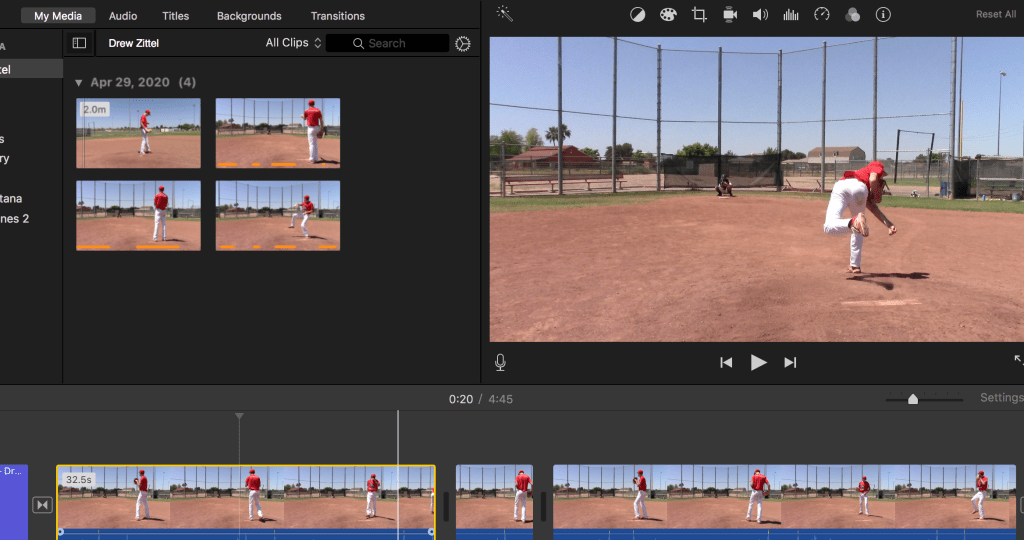
  • Make more game footage highlights
  • Make game recaps
  • Film hitting and fielding video
  • Film workouts video
  • Film training sessions (workouts, agility work, etc)
  • Film agility workouts
  • Attend online prospect days / virtual visits
  • Tag me on your post for social media (@michaelwoosley)

The goal here is to keep you recruiting moving forward by providing content for coaches to review. To do this, you have to be creative, stay focused and use the resources that you have available.

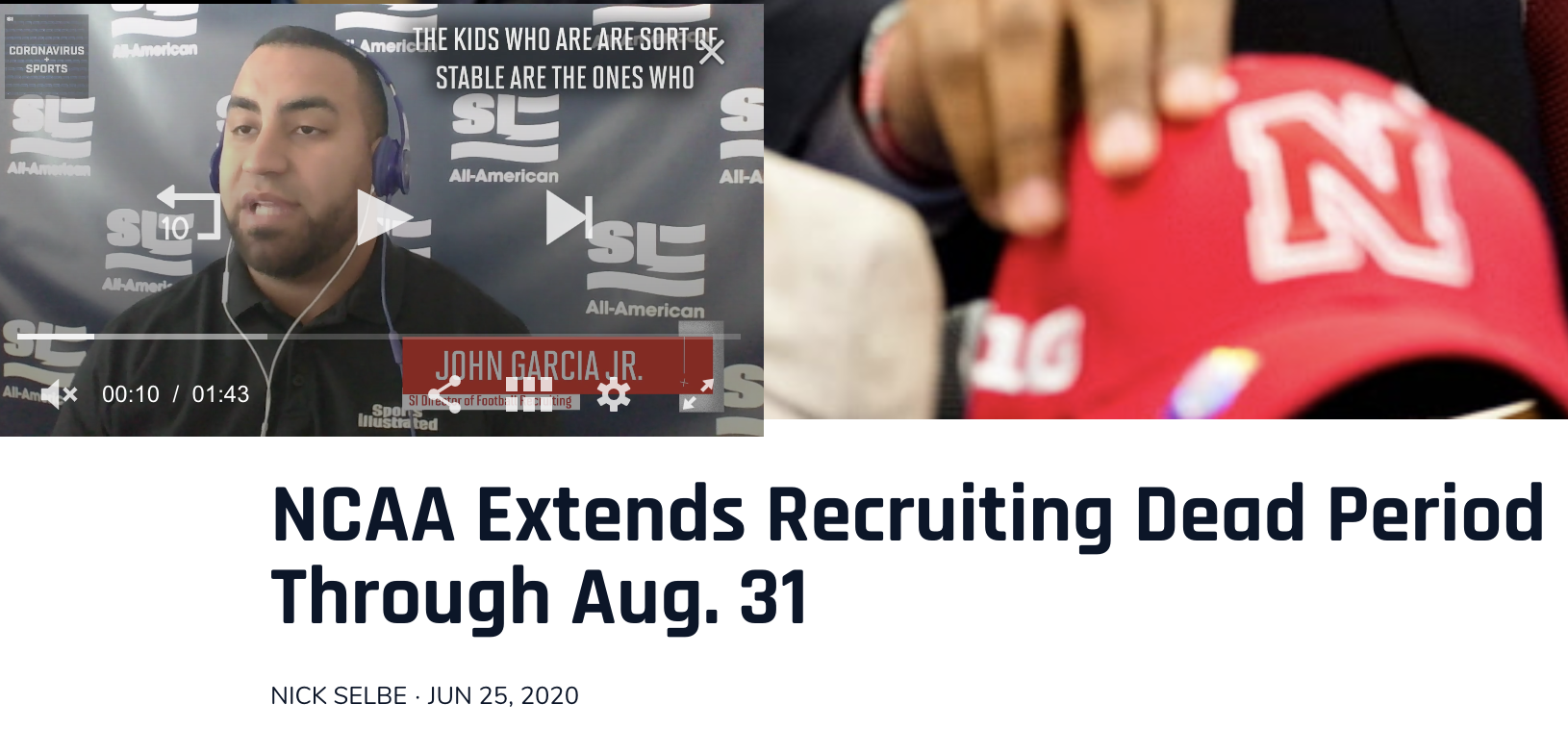
A really great interview and article about ways to use the Dead Period to your advantages is  to take from Sports Illustrated from June 25, 2020 

Watch the interview and read the article here. 
Coach Mike Prepstar Parent Interview: Jody Jones

In mid-June, I recorded an Interview with Jody Jones, retired military (Army air traffic control & air space manager) parent of four student athletes, and just a tremendously supportive parent. He graciously took the time to share with me his perspective.

Admittedly, he was with a competitor before coming to PrepStar team and he shares some of the struggles and lessons learned from that experience.

Intro

3:20 The process- how did you know it was time to get started?
4:08 Not knowing the recruiting process
6:20- Leveraging camps with exposure
6:40 DJ’s offers
7’:10 Using social media
7:30 Narrowing down the offers / making the decisions.
11:10 His experience explained
11:56 Parent involvement
12:36 How he found PrepStar
12:58 Started with a competitor first, lesson learned
13:23 One of million, no, I want to be one of a few
13:51 Different feel when I talked to Coach Mike
14:31 Coach Mike making a call and getting DJ an official visit
17:00 The advantage of starting early
17:38 Early exposure to put your athlete on the radar
17:56 Start as soon as possible
18:37 No criticism for using an outlet like PrepStar, but did with the competitor
19:15 Investing in your kids
19:35 Prepstar is a win-win situation
20:10 Supporting your kids, then the rest is up to them
22:30 Process is overwhelming for athletes…
22:55 The benefit of having supportive people around you
25:40 Verbal commitment is not signing…
26:30 Deciding to graduate early
28:30 Overall experience with PrepStar
29:02 Coach Mike and the PrepStar tam responded…it makes a difference
29:30 The importance of an interactive recruiting program
30:20 It feels like family

Extending the Recruiting Dead Period to July 31: What it means for student athletes.

Updated from article published on  

Last week, the NCAA extended the recruiting Dead period to July31 as a result of Covid-19  concerns. While the Dead Period may have mild repercussions,  it does not mean is that all recruiting has stopped. 

Many student athletes and parents should be aware what the extension means  and how it impacts recruiting. for their student athlete.  The goal of this blog is to answer those questions. 

To begin, the Dead Period extension means that college coaches and recruits are not permitted to have 

  • in person evaluations
  • official campus visits
  • in person contacts 

These are typical Dead Period restrictions.   However, like any other Dead Period throughout the recruiting calendar, the extension does not stop the recruiting process. 

Even during the extended Dead Period college coaches are still recruiting. Homepage screenshot: ESPN football recruiting May 19, 2020

So, let’s break down the Dead Period. At the core, the Dead Period is designed to give college coaches opportunity to digitally scout, research, and yes, recruit student athletes!  It’s somewhat of a respite for college coaches. The Dead Period provides coaches the time and space to recruit players without interruptions. 

The NCAA defines the Dead Period as, “a period a college coach may not have face-to-face contact with college-bound student-athletes or their parents, and may not watch student-athletes compete or visit their high schools. Coaches may write and telephone student-athletes or their parents during a dead period.”

Again, coaches may not have in person contact, campus visits or personal evaluations. They can, however, communicate with student-athletes and their parents. 

Clearly, the extension of the Dead Period does modify the typical recruiting process. However, it does not stop it altogether. 

So, my tip to the Class of 2021 recruits and beyond is to be more active and aggressive with their recruiting than ever before. Don’t get suckered into thinking that your recruiting is dead . Make sure it stays alive!

Talking High School Recruiting- podcast interview with Breakdown Sports

Process, Preparation & Performance podcast– these guys do a great job covering a wide array of topics related to high school football and high school recruiting.

In early May, I was a guest on the Process, Preparation & Performance podcast, part of the Breakdown Sports network of coaches in the state of Missouri. Coach Duke and Coach JR are consummate professionals with a passion impact high school athletes. It was a blast talking football and high school recruiting. We talked a lot about the many kinds of recruiting programs, the recruiting process and even shared some fun stories along the way. I can’t wait to be on again!

Through the Process, Preparation & Performance podcast, both athletes and parents will discover how these guys do a great job covering a wide array of topics related to high school football and high school recruiting. On the podcast page you can find interesting interviews of high school administrators, high school referees, high school coaches, college coaches and pretty much everyone in between! 

I encourage you to make time to check out this quality podcast!

The podcast episode can be streamed to at https://soundcloud.com/breakdownsports/p3-episode-7-mike-woosley-prepstar

Learn more about Breakdown Sports at  https://breakdownsports.com

Athletes can start a recruiting profile using this link bit.ly/2vqZjH9

Prepstar Animated video  bit.ly/2j09MlU

Coach Mike website: coachmikewoosley.com

Coach Mike’s Youtube channel http://ow.ly/qG3150zBAuC

Play ball! (soon)

Photo by Pierre-Etienne Vachon on Unsplash

Now that the powers that be are deciding to loosen the stay-at-home restrictions soon practices and games will resume. This is very exciting news. Recently, many of my conversations with coaches and athletes suggest that teams are starting to come together at the end of June and first week of July.  However, there will definitely be some modifications.

Here’s what we know. 

Sport will look like sport but it will be different 

  • there will be weird restrictions and over cautious regulations (no spiting in baseball????) 
  • there will be fewer fans in the stands

What we can be sure of 

  • sports are back
  • athletes will compete
  • recruting will continue to move forward

What will soon be known 

  • those that put in the work will succeed
  • those that didn’t will fail
  • those that stopped their recruiting will surely be behind.

As I have written before, high performing athletes have no off season. Their goals won’t allow them to take time off. Instead, those goals are like a magnet drawing them in. 

But for those who decided to slack off, or who were convinced that recruiting wasn’t happing during the Dead Period, here are a few things to do immediately. 

  1. Get off your a*s and get to work! There is nothing more to say about that . 
  2. Get some help, right away. Find someone who has the contacts necessary to get your name out there.  Exposure is key to the recruiting game. Get it right away.
  3. Invest in yourself. It will cost you time, sweat, and money to get recruited. Nothing worthwhile is free but things that are worthwhile come at a cost.  Truthfully, it will cost you now or cost you in the future, so you can invest in yourself now or pay the price in the future.

Extending the Recruiting Dead Period; what it means for student-athletes

Last week, the NCAA extended the recruiting Dead period to June 30 as a result of covid-19  concerns. While the Dead Period may have mild repercussions,  it does not mean is that all recruiting has stopped. 

Many student athletes and parents should be aware what the extension means  and how it impacts recruiting. for their student athlete.  The goal of this blog is to answer those questions. 

To begin, the Dead Period extension means that college coaches and recruits are not permitted to have 

  • in person evaluations
  • official campus visits
  • in person contacts 

These are typical Dead Period restrictions.   However, like any other Dead Period throughout the recruiting calendar, the extension does not stop the recruiting process. 

Even during the extended Dead Period college coaches are still recruiting. Homepage screenshot: ESPN football recruiting May 19, 2020

So, let’s break down the Dead Period. At the core, the Dead Period is designed to give college coaches opportunity to digitally scout, research, and yes, recruit student athletes!  It’s somewhat of a respite for college coaches. The Dead Period provides coaches the time and space to recruit players without interruptions. 

The NCAA defines the Dead Period as, “a period a college coach may not have face-to-face contact with college-bound student-athletes or their parents, and may not watch student-athletes compete or visit their high schools. Coaches may write and telephone student-athletes or their parents during a dead period.”

Again, coaches may not have in person contact, campus visits or personal evaluations. They can, however, communicate with student-athletes and their parents. 

Clearly, the extension of the Dead Period does modify the typical recruiting process. However, it does not stop it altogether. 

So, my tip to the Class of 2021 recruits and beyond is to be more active and aggressive with their recruiting than ever before. Don’t get suckered into thinking that your recruiting is dead . Make sure it stays alive!

.

Return to Competition (Soon)

“As adults, and especially as adults who have considerable influence on our athletes, it is important to model behaviors that demonstrate responsibility, residence, and respect. “ Shortly after the quarantine I wrote a blog on Elite Athletes Recruiting as a reminder to coaches and people of influence about the example to set for the athletes entrusted to them. 

Now, restrictions are starting to loosen and in matter of time athletes will return to competition. 


Soon, the time coming for athletes to return to the field of competition.  Certainly, for some states it will happen sooner than others.
Photo by Greg Rakozy on Unsplash

Major sports organizations are posting planned start dates along with guidelines required for player participation such as waivers, safety regulations, phases, stages and guidelines

Certainly, the time coming for athletes to return to the field of competition.  For some states it will happen sooner than others. As an example, in my home state of Arizona, plans are in process for competition to begin be the end of May.  Many other states have yet to be so bold, but surely completion will return.  I’m confident of that. 

With the light at the end of the tunnel starting to come into view, I still think what i wrote in March is relevant. As adults, and especially as adults who have considerable influence on our athletes, it is important to model behaviors that demonstrate responsibility, residence, and respect. “ 

Athletes and families are looking to us. Lead them. 

Breaking down recruiting video.

Yes, thats right. Its almost over. Soon the quarantine will be lifted and in turn athletes can return to competition. So the question for student-athletes will be, what did you do during the quarantine to help move your recruiting forward?

Hopefully, time has been invested in recruiting video. Video is crucial to the recruiting process, because most coaches recruit digitally first before seeing an athlete in person. Right now, with the stay at home policies in place, coaches have relied on video to recruit digitally.

So, what kind of recruiting video is most beneficial? And, what footage should the video feature?

Actually, the answer varies by sport. For example, game video is paramount for high school football prospects. However, sports like baseball, softball, and soccer require that skills video also accompanies game footage. Keep in mind, the purpose of the recruiting video, no matter the sport, is to demonstrate position specific athletic skills.  

It may be a matter of debate, it makes little difference if the video is professionally recorded or self-recorded.

Though it may be a matter of debate, it makes little difference if the video is professionally recorded or self-recorded. In most situations, quality cellphone video works well. I’ve recored skills video with a video camera, iPad and iPhone with good success. What matters most is the quality of athletic content not necessarily the quality of content. College coaches must be able to clearly identify the player and clearly view all the required skills.  Last year, I was talking with several scouts at a major tournament here in Phoenix, when the Oregon scout got up, took out his cell phone, walked over to the fence and began recording a players at-bat. Right there, I thought, ‘well if it’s good enough for Oregon then it’s good enough for others.’

Lastly, it should be obvious that having no video will surely stifle the recruiting process. Athletes trying to get recruited without video will find it almost impossible to gain interest. In fact, limited exposure will surely put the student-athlete at a tremendous recruiting disadvantage.

Here are 5 quick tips from a previous article I wrote about recruiting video

  1. Always make sure the video is appropriately timed (4-5 minutes)
  2. Next, make sure that your best plays are in the first 30 to 60 seconds.
  3. Then make sure to highlight position specific skills.
  4. Most importantly, highlight videos should feature you, not other players.
  5. Lastly, keep questionable plays out of your video.

Because highlight videos carry a lot of significance in your recruiting I’m glad to review your highlight videos before you send them to a coach or post them online.  You want some outside help with your recruiting video. If so, schedule a FREE recruiting video consultation where I will take a look at your highlight or skills video to provide you helpful tips and feedback. Schedule your free recruiting video review here.

The Recruiting Process: A parent’s perspective.

Over the Easter weekend, I recorded an Interview with Jeff Wozniak, teacher, parent of student athlete, and all around good guy. He graciously took the time to share with me his point of view as a parent of a student athlete going through the recruiting process. 

Jeff played college ball back in the day. But, as most of us old-timers know, the recruiting process is much different today. It was great hearing about his experience as he and his wife walked alongside their son through his recruiting process. 

Jeff provides, from the parent perspective, some great insight about the recruiting process that I think will be helpful to parents and players alike. 

0:00  Intro

0:43  Making the decision to start the recruiting process.

2:40  The best time to start the recruiting process

3:12   How to get the advantage in the recruiting process

3:33   Seeing the value in recruiting assistance: relationships and connections

4:44   Committing to a college

5:26   The advantage of starting the recruiting process early

6:22   Accountability throughout the recruiting process

7:13   The triangle effect

8:00   Teaming up with outside resources (PrepStar/Coach Mike

8:45   The benefits of PrepStar

9:28   The family advisor

9:40   Criticism for using an outside resource and how to ignore it

10:30  Investing in your kids’ future

11:40  Timeline of his sons’ recruiting process

13:02  Getting the first offer

14:41  Decommitting (restarting the recruiting process)

16:35  How PrepStar helped get a second scholarship offer

19:23  Advice for parents: let the program work

21:45  Coach Mike : my Jerry Maguire

23:10  Without PrepStar my son would be out in the cold

25:00  College rosters after COVID-19

26:21  Let PrepStar work the process; trust the process to get the best offer

27:21  Parent’s pressure and angst in the process

28:26  What college coaches want to see

29:54  Overall experience: telling others about PrepStar 

32:32  Parent  perspective: coaches don’t want to talk to parents, they want to talk to professionals. 

33:31 Final thoughts

Admittedly, in some parts the audio and video recording is less than desired.

To learn more about PrepStar recruiting go here.

High Performing Athletes- Self discipline during social distancing

I’m over it. You’re probably over it too. The new routine you created is now starting to get old since we’re in the second month of the social-distancing, self -isolation, sequester. So, what do you do next? How do you create a new routine designed to keep you performing at a high level?

Let’s break down the 6 characteristics of high performing athletes to help guide you:

  •  High performing athletes are able to clarify the vision and path to reach their goals. 
    • Even though it looks like no end is in sight, high performing athletes are, right now, playing out the scenes in their minds, of games they haven’t played yet. They can see themselves on the field dominating the opponent!
  • High performance athletes measure results repeatedly.  They do this to discover areas of progress as well as weaknesses.
    • The gym is closed, meal prep is difficult, and the temptation to stay up late is very real. But the high performing athlete is very aware of weakness and is meticulously measuring progress. To them its a challenge not just maintain but pack on muscle, get faster, and throw farther.
  • High-performing athletes take full responsibility. They take complete ownership of their actions, their plans, and their purpose.
    • For a high performing athlete it is unquestionable to stay at home, sit inside and not get any workouts in. They are putting in the work! They are getting up early and eating clean. High performing athletes don’t listen to the talking heads spouting about the possibility of no season ahead. The high performing athletes ignore that bull and remain accountability to their teammates.
  • High performing athletes possess “want to”. They willfully want to practice and put in the extra reps. This characteristic is often partnered with words like passion, desire, drive and determination. 
    • Against conventional wisdom and the smack-talk of the slackers, the high performing athletes are getting extra reps today. High performing athletes are obsessive about their sport. The thought of not doing something every day that will make them better at their sport makes them ill.
  • High performing athletes take care of their body, mind, and spirit. They plan and execute good self care habits and have the discipline to maintain those habits. 
    1. Access to resources have been limited, the high performing athlete finds creative ways for self care. They allow themselves to explore new techniques. High performing athletes take self care seriously.
  • High performing athletes seek out great coaching. They intentionally look for and listen to coaches who  can help them  break through to the next level. 
    • Regardless of the current constraints, the high performing athlete has kept in contact with their coach. To the high performing athlete, the mentorship of the coach holds great value. The bond towards reaching a common goal is so strong that the high performing athlete make it a priority to stay in touch.