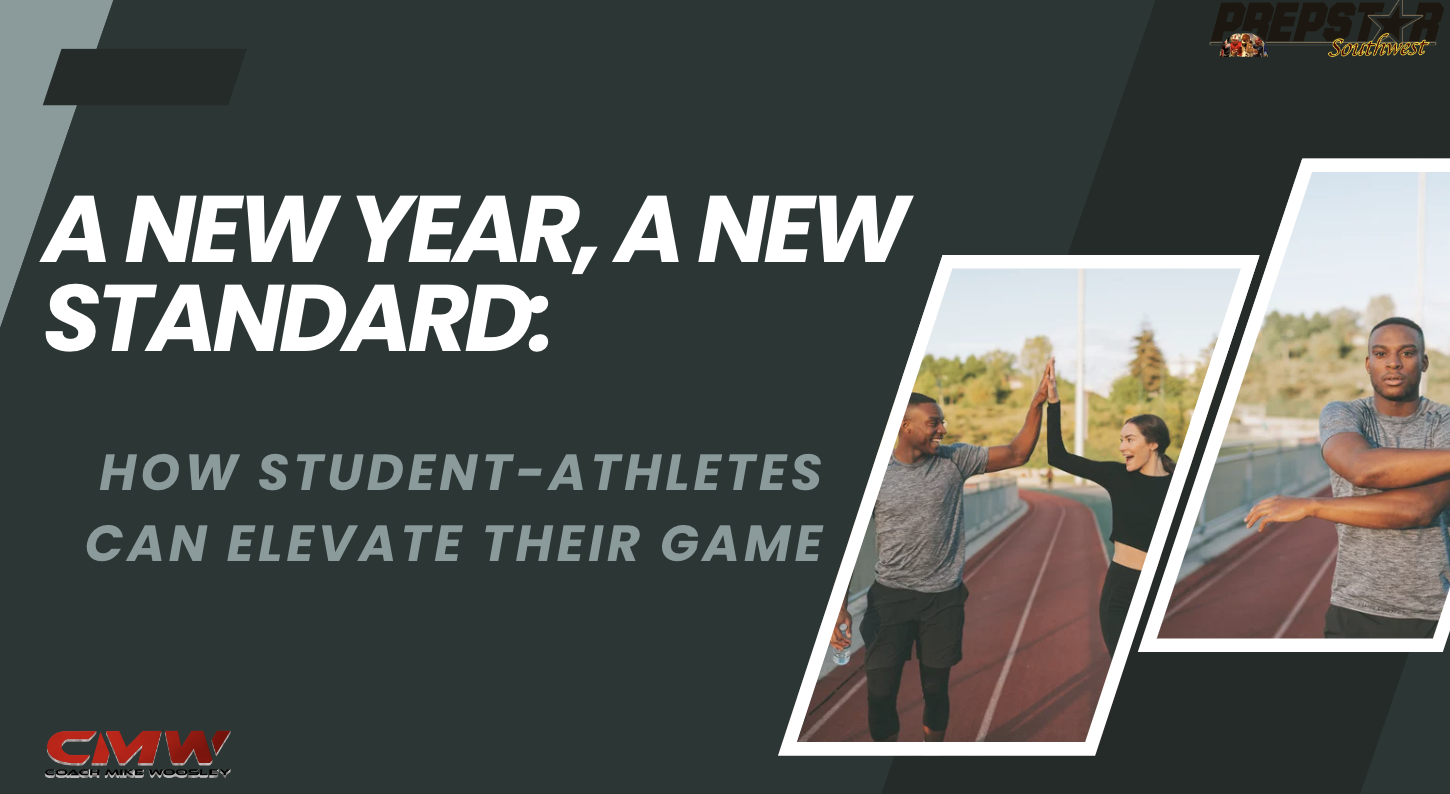
A New Year, A New Standard: How Student-Athletes Can Elevate Their Game

The start of a new year is more than just turning the calendar—it’s an opportunity for student-athletes to reset, refocus, and recommit to their goals. Success in high school athletics doesn’t happen by chance. It’s the result of intentional planning, daily discipline, and consistent effort both on and off the field.

To truly stand out, athletes must commit to more than simply showing up for practices and games. They need a structured approach that includes clear goal-setting, focused skill development, quality coaching and feedback, and the discipline to care for both their bodies and minds—especially during the demands of in-season competition.

Start With Clear Goals—and Write Them Down

Before progress can happen, athletes must define what success looks like. The most effective goals are specific, measurable, and written down. Whether it’s improving speed, earning a starting role, raising academic performance, or gaining college exposure, outlining goals creates clarity and accountability.

Once goals are set, the real work begins: executing daily habits that support those goals. Big achievements are built through small, consistent actions repeated over time.

1. Commit to Consistent Training and Skill Development

Consistent training is the foundation of athletic growth. This means going beyond team practices and committing to individual skill work, strength training, conditioning, and sport-specific development throughout the year.

Athletes who improve the most are those who train with purpose—focusing on weaknesses, sharpening strengths, and maintaining intensity even when motivation fades. Consistency, not perfection, is what separates average players from high performers.

2. Seek Coaching and Feedback

Great athletes don’t train in isolation. They actively seek coaching, instruction, and honest feedback. Whether it’s from a high school coach, private trainer, or trusted mentor, feedback helps athletes identify blind spots and make necessary adjustments.

Equally important is being coachable—listening, asking questions, and applying what’s taught. Growth accelerates when athletes are willing to learn, adapt, and embrace constructive criticism.

3. Focus on Recovery, Nutrition, and Mental Preparation

Training hard means nothing if the body and mind aren’t properly cared for. Recovery, nutrition, and mental preparation are often overlooked, yet they are critical to sustained performance.

Quality sleep, proper fueling, hydration, mobility work, and mental focus all contribute to staying healthy and performing at a high level—especially during long seasons filled with practices, games, travel, and academic demands. Discipline off the field directly impacts performance on it.

Execution Creates Results

The athletes who separate themselves are those who consistently execute their plan, even when it’s challenging. By setting clear goals, committing to structured training, seeking feedback, and prioritizing recovery and mental readiness, student-athletes give themselves the best chance to maximize their potential.

The new year is a chance to raise your standard. Write your goals down, create a plan, and attack each day with purpose. Success follows those who are prepared—and preparation starts now.

Committing to a College: What to Do If a Coach Leaves Before You Sign

The college recruiting process can feel stressful and overwhelming, but when an athlete finally commits to a school, it’s often a huge relief and a moment worth celebrating. Unfortunately, that excitement can quickly turn into uncertainty if the coach who recruited you leaves the program before you officially sign.

This situation is more common than many families realize. Coaching changes happen every year across all levels of college athletics, and a verbal commitment does not always guarantee what comes next. If you find yourself in this position, don’t panic—there are clear steps you can take to protect your future and continue pursuing your college goals.

Understand What a Verbal Commitment Really Means

First, it’s important to understand that a verbal commitment is not binding for either the athlete or the school. While it reflects mutual interest and intent, it does not legally secure a roster spot or athletic aid. Until paperwork is signed, the recruiting process is technically still open.

This is why coaching changes before signing day can create uncertainty. A new staff may reassess the roster, recruiting board, or scholarship allocations.

Step 1: Contact the Recruiting Coach or Athletic Department

If the coach who recruited you is leaving or has already left, reach out as soon as possible. If they are still available, ask directly whether your spot and offer remain secure. In some cases, outgoing coaches will advocate for committed recruits during the transition.

If the coach is already gone, contact the athletic department or recruiting coordinator to ask about next steps. Clear, professional communication is key.

Step 2: Introduce Yourself to the New Coaching Staff

Don’t wait for the new staff to contact you. Be proactive.

Send an introductory email to the new head coach or position coach that:

  • Reintroduces who you are
  • Confirms your verbal commitment
  • Highlights your recent athletic and academic progress
  • Expresses continued interest in the program

This gives the new staff context and shows maturity, initiative, and professionalism—traits coaches value.

Step 3: Keep Your Options Open

Until something is signed, it’s wise to continue communicating with other programs that have shown interest. This is not being disloyal; it’s being realistic. Let those coaches know about the coaching change and where you stand.

Having options protects you if the new staff decides to go in a different direction.

Athletic Grant-in-Aid Agreements: What You Need to Know

What many people still call the National Letter of Intent (NLI) has evolved. Today, athletes sign Athletic Grant-in-Aid agreements, which outline the financial aid being provided by the institution for athletic participation.

Once signed:

  • The agreement is binding for the academic year stated
  • The athlete agrees to attend that institution
  • Other schools must stop recruiting the athlete

While this is an exciting milestone, it’s also a serious commitment. Breaking a signed agreement can lead to penalties, including transfer restrictions or loss of eligibility, depending on the situation.

Because of this, athletes should only sign once they are confident in:

  • The coaching staff
  • Their role on the team
  • The academic and athletic fit

Final Thoughts

A coaching change before signing can feel unsettling, but it doesn’t have to derail your recruiting journey. Stay proactive, communicate clearly, and lean on trusted advisors—parents, high school coaches, and recruiting professionals—to help guide your decisions.

Remember: your commitment should be to the right fit for you, not just to a coach. By understanding the process and taking the right steps, you can navigate this challenge with confidence and position yourself for long-term success.

Connecting with College Coaches: Five Tips Every Student-Athlete Should Follow

Connecting with college coaches is one of the most important steps in the recruiting process—and one of the most misunderstood. Many student-athletes assume coaches will simply “find” them. In reality, recruiting is a proactive process that rewards preparation, communication, and persistence.

To increase your chances of building meaningful connections with college coaches, focus on the following five proven strategies.

1. Research Potential Schools

Before reaching out to any coach, take the time to research schools that align with both your athletic and academic goals. Look beyond the name on the jersey. Consider the level of competition, the coaching staff and their recruiting history, training facilities, and the quality of academic programs that support your long-term career plans. Targeting the right schools from the start leads to stronger conversations and better recruiting outcomes.

2. Reach Out to Coaches

Don’t wait for a coach to contact you—initiate the conversation. Email, social media, text messages, and phone calls are all tools athletes can use to express interest. Effective communication should highlight not only your athletic ability but also your desire to earn a college education and contribute to the program. Personalized, respectful outreach shows maturity and genuine interest, which coaches value.

3. Link Your Recruit Profile

Your recruiting profile acts as your sports resume. A PrepStar recruit profile provides college coaches with a clear snapshot of who you are as an athlete and student, including statistics, academic information, achievements, and personal details. Always include your profile link when contacting coaches. You can find your link by clicking the Settings button on the Scoreboard homepage, making it easy to share with every coach you contact.

4. Stay Active on Social Media

Social media matters in recruiting. College coaches regularly review a recruit’s online presence to learn more about their character, habits, and behavior. Stay active, positive, and professional. Share training updates, game highlights, and academic achievements while avoiding posts that could raise red flags. Think of social media as an extension of your recruiting profile.

5. Be Persistent and Patient

Recruiting is rarely an overnight process. Coaches manage hundreds of prospects and tight recruiting calendars, so responses may not come immediately. Stay patient, follow up appropriately, and continue developing your skills both on and off the field. Consistent effort, strong communication, and steady improvement often separate recruited athletes from those who get overlooked.

Final Thoughts

Connecting with college coaches requires a plan, consistent action, and the right tools. By researching schools, reaching out confidently, sharing your PrepStar recruit profile, managing your social media presence, and staying persistent, you put yourself in control of your recruiting journey.

Preparation creates opportunity—and opportunity leads to results.

Recruiting Rules Made Simple: What Every Athlete Must Know About Coach Communication

While many divisions (D1, D2, D3, etc) have similar communication rules, in actuality, there are some glaring differences.

Recruiting timelines and communication rules can appear confusing. But with a little planning and research, athletes can use them to their benefit. For example, it is very important to be aware of the contact communication periods within your sport as well as the communication regulations that accompany them. This information is easy to locate within the NCAA and NAIA regulations pages on their respective websites. This information can also be accessed in the Locker Room tab of your Prepstar recruiting profile.

It is also important to note the communication rules. While many divisions (D1, D2, D3, etc) have similar communication rules, in actuality, there are some glaring differences. The differences range from permissible emails, phone calls or visits. For example, D2 coaches in comparison to DI coaches, have much more leniency with communications. It is helpful to learn the differences.

Contact periods for all colleges run along a similar timeline however. For example, FBS schools (those that go to bowl games) have similar contact periods than FCS or D2 colleges. But, D3 colleges have nominal timeline communication.

Now, for athletes looking to take advantage of recruiting opportunities, the key is to be proactive! Please keep in mind that at any time throughout the year, athletes are permitted to contact coaches. This means that to communicate with college coaches outside of designated contact periods the student-athlete has to be the one to initiate contact. Additionally, this rule also applies to underclassmen (freshman and sophomores). So again, no matter what time of year and no matter the contact period, college coaches are permitted to talk with prospects as long as the prospect makes the first move to contact them. For this reason, I always suggest asking the coach to schedule a few minutes of his/her time for a quick call to talk about their program and recruiting process.

The NCAA posts, “The rules define who may be involved in the recruiting process, when recruiting may occur and the conditions under which recruiting may be conducted. Recruiting rules seek, as much as possible, to control intrusions into the lives of student-athletes.”
However, the statement makes no mention of prohibiting student initiated communicating with college coaches.

Clearly, it would be an advantage to use this rule to your benefit. I highly recommend that student-athletes take the initiative to reach out to coaches with emails, texts, social media and phone calls. Never wait around for coaches to call you! Instead, be proactive and make it a priority to contact them. 

To wrap up, it is an understatement to say that recruiting is anything but a year round process. There is no downtime. College coaches are always recruiting. They are always on alert, looking for that student-athlete who can impact their program. 

Homeschooling for Busy Households: How Homeschooling Can Help Families Balance Careers, Sports, and Education

Balancing work, school, practices, and competitions often feels like a full-time job. Homeschooling changes that dynamic, offering flexibility, structure, and togetherness

For families of student-athletes, life can be a constant juggle—balancing work, school, practices, and competitions often feels like a full-time job. Homeschooling changes that dynamic, offering flexibility, structure, and togetherness all under one roof. Home truly becomes the center of learning, growth, and family connection.

Homeschooling makes it possible for parents to remain active participants in their child’s education without giving up their own careers. With today’s flexible work options, online learning tools, and support networks, families can create a rhythm that works for everyone. Parents can adjust their work hours or coordinate lessons around practices and training sessions. Learning doesn’t have to happen from 8 to 3—it can happen anytime, anywhere.

This shared approach not only fits around athletic schedules but strengthens family bonds. Parents are more engaged in their child’s academic and athletic development, witnessing their progress firsthand and guiding them through both victories and challenges. Whether it’s reviewing coursework between games or discussing life lessons during travel, every moment becomes an opportunity to connect and grow together.

Homeschooling also teaches balance and teamwork within the family. Parents model discipline and time management, while children learn responsibility and self-motivation—skills that benefit them both in sports and life.

For many homeschooling families, the reward isn’t just academic success; it’s the quality of life that comes from being truly present. Home becomes a place of support and shared purpose, where education and athletics blend seamlessly.

eliteathletesrecruiting's avatar

eliteathletesrecruitingEdit Profile

Homeschooling proves that families can thrive—parents can pursue careers, athletes can chase their dreams, and together they can build a learning environment that strengthens both hearts and minds.

Flexibility and Focus: How Homeschooling Empowers Student-Athletes to Balance Sports, Study, and Life

For student-athletes, every day is a balancing act between academics, training, competition, and recovery. Traditional school schedules often leave little room for flexibility, rest, or individual focus—but homeschooling changes that. The flexibility of homeschooling allows families to adapt learning around an athlete’s unique needs, ensuring both academic success and personal growth.

Homeschooling gives student-athletes the opportunity to thrive on a schedule that matches their rhythm. Morning practices, midweek tournaments, and travel days no longer disrupt their education. Lessons can be completed at different times, and assignments can be customized to match the athlete’s learning pace and interests. This kind of adaptability not only reduces stress but helps students maintain focus, motivation, and confidence in both academics and athletics.

Curiosity-driven learning is another hallmark of homeschooling. Athletes can dive into topics that excite them—sports science, nutrition, psychology, or even sports management—turning their passions into real educational experiences. By encouraging independent research and exploration, homeschooling builds self-discipline and critical thinking, skills that transfer seamlessly to the competitive world of sports.

Perhaps the most meaningful benefit of homeschooling is the gift of time. Without the demands of rigid school hours and long commutes, families can prioritize what truly matters: their children’s well-being, growth, and happiness. There’s more time for recovery, family meals, goal setting, and genuine connection.

In a world that often pushes young athletes to move faster and do more, homeschooling allows them to slow down just enough to enjoy the journey—to learn deeply, train intentionally, and grow into well-rounded, fulfilled individuals. It’s not just an alternative to traditional education; it’s a lifestyle that nurtures both the mind and the body.

Learning Beyond the Desk: The Power of Hands-On, Real-World Education

One of the greatest gifts of homeschooling is the freedom to make learning an adventure. When education isn’t confined to four walls or a rigid schedule, the world itself becomes the classroom. Nature walks, field trips, and hands-on projects open doors to discovery that traditional settings often overlook—and for student-athletes, this freedom can be a game changer.

Homeschooling encourages students, especially athletes, to explore topics that spark their curiosity while balancing their athletic training. Whether it’s studying ecosystems on a hike, learning history through museum visits, or building a science project in the backyard, every experience deepens understanding far beyond a textbook. These moments of exploration lead to self-discovery—helping students uncover new interests, strengths, and even potential career paths beyond sports.

For young athletes, homeschooling also removes the pressure of the traditional school structure. They don’t have to follow a rigid academic route but can still complete all required coursework to remain NCAA or NAIA eligible for college recruiting. Families can customize lessons, track credits, and meet academic standards while maintaining the flexibility needed for training, travel, and competition. It’s an approach that supports both athletic goals and educational excellence.

Most importantly, homeschooling reminds us that education isn’t limited to a classroom—it’s happening everywhere. A trip to the grocery store can become a lesson in nutrition and budgeting. A tournament weekend doubles as a geography or social studies lesson. Every experience builds both knowledge and character.

When students are given the time and freedom to explore the world around them—while still meeting academic milestones—they learn that success isn’t about following a single path. It’s about creating one that fits their passions, purpose, and potential.

Taking Control: Why Homeschooling is the Perfect Fit for Today’s Competitive Athletes

For student-athletes, time is one of the most valuable resources. Between early practices, long tournaments, travel days, and recovery, balancing academics and athletics can feel overwhelming. That’s where homeschooling truly shines. It gives young athletes the flexibility they need to train harder, recover better, and perform at their best—both on the field and in the classroom.

Traditional school schedules often control a student-athlete’s day from start to finish, leaving little room for proper rest, training, or nutrition. Homeschooling flips that structure. Families can design a schedule that works around practices, competitions, and travel. Whether it’s starting lessons early to free up afternoons for strength training or taking rest days after a tournament, homeschooling gives athletes the ability to manage their time strategically.

Homeschool student athletes control their schedule, so they can control their progress.

This flexibility also supports better health and performance. With homeschooling, athletes can plan nutritious meals throughout the day instead of grabbing quick snacks between classes. They can prioritize recovery—essential for preventing injuries and maintaining long-term performance—without feeling rushed or penalized for missing class time.

Most importantly, homeschooling empowers athletes and their families to take control of their schedule rather than letting a school dictate it. That autonomy teaches valuable life skills such as time management, accountability, and discipline—qualities every successful athlete needs.

In a world where student-athletes are expected to excel in both academics and sports, homeschooling provides the perfect balance. It’s not just an alternative education option—it’s a lifestyle that supports dreams, builds character, and gives young athletes the freedom to thrive on their own terms.

If you’re homeschool family and ready to take the next step toward your college recruiting journey follow my IG page- homefieldadvantagehq – our page to help homeschool athletes reach the next level.

#HomeFieldAdvantage
#HomeschoolAthlete
#homeschoolsports
#HomeschoolToCollege
#PrepForCollegeSports
#AthleteRecruiting

How Homeschooled Athletes Can Qualify for College Sports

Homeschooling continues to rise across the country. In the 2022–23 school year, about 3.4% of all K–12 students in the U.S. — roughly 3 to 4 million — were homeschooled, up from around 2.8% in 2018–19. With more families choosing home education for flexibility, faith, or focus on athletics, many homeschool athletes are now setting their sights on competing at the next level.

The path to college sports is absolutely open for homeschool athletes — it just takes organization, preparation, and understanding the NCAA eligibility process.

Start by creating your Student-Athlete Account at the NCAA Eligibility Center. This is your official starting point for NCAA verification and where you’ll upload your transcript, course details, and proof of graduation.

Next Build a Complete Homeschool Transcript. The transcript should list all courses, grades, and credits earned and be signed and dated by your homeschool administrator (usually a parent). This serves as your official record of academic achievement.

Then, Provide Course Descriptions and Meet NCAA Core Standards. Each course needs a brief outline that includes textbooks, grading methods, and objectives. The NCAA requires 16 core courses in English, math, science, and social studies, so make sure your curriculum matches those expectations.

Along the way, keep detailed records. Save syllabi, graded work, and reading lists. The NCAA may request additional documentation, and staying organized will make the process much smoother. Student athletes will need to submit proof of graduation. So, a homeschool diploma or written statement confirming your graduation date completes your eligibility file.

Throughout your high school care it is important to compete, so get on the field and get noticed!

Join a homeschool athletic association, club program, or — where allowed — your local public school team to gain competitive experience. Exposure is key to being recruited by college coaches.

Coach’s Tip: PrepStar has helped thousands of student-athletes, including homeschoolers, get seen and recruited by college coaches nationwide. If you’re homeschooled and ready to take the next step toward your college recruiting journey follow my IG page- homefieldadvantagehq – our page to help homeschool athletes reach the next level.

Choosing the Right NCAA Eligibility Account

The NCAA Eligibility Center offers three types of accounts. To start your registration begin with the free profile page. As students move through their high school career the NCAA helps you progress through the verification process by sending an email with instructions to help prospective student athletes matriculate through the verification process.  

 Athletes are advised to begin the Clearinghouse process in the beginning of their junior year. At that time, athletes must arrange to meet with a guidance counselor at your high school in order to review the Clearinghouse process. If you are a senior and have not already begun the Clearinghouse process, don’t panic, there is still time. Set up to meet with your guidance counselor in the next few days and get started with the Clearinghouse process.

3 types of NCAA Eligibility accounts:

  • Profile Page (Free) – A great starting point! If you’re not sure about competing in college yet, this account allows you to receive updates and easily upgrade later.
  • Certification Account (Required for D1 & D2 Athletes) – If you plan to compete at the Division I or II level, you’ll need to upgrade to this account to get officially certified.
  • International Student Account – Designed for student-athletes from outside the U.S.

The link to the NCAA Eligibility Center can be found in the Locker Room tab of your PrepStar recruiting profile.  For athletes not PrepStar verified, search for the The NCAA Eligibility Center.