Committing to a College: What to Do If a Coach Leaves Before You Sign

The college recruiting process can feel stressful and overwhelming, but when an athlete finally commits to a school, it’s often a huge relief and a moment worth celebrating. Unfortunately, that excitement can quickly turn into uncertainty if the coach who recruited you leaves the program before you officially sign.

This situation is more common than many families realize. Coaching changes happen every year across all levels of college athletics, and a verbal commitment does not always guarantee what comes next. If you find yourself in this position, don’t panic—there are clear steps you can take to protect your future and continue pursuing your college goals.

Understand What a Verbal Commitment Really Means

First, it’s important to understand that a verbal commitment is not binding for either the athlete or the school. While it reflects mutual interest and intent, it does not legally secure a roster spot or athletic aid. Until paperwork is signed, the recruiting process is technically still open.

This is why coaching changes before signing day can create uncertainty. A new staff may reassess the roster, recruiting board, or scholarship allocations.

Step 1: Contact the Recruiting Coach or Athletic Department

If the coach who recruited you is leaving or has already left, reach out as soon as possible. If they are still available, ask directly whether your spot and offer remain secure. In some cases, outgoing coaches will advocate for committed recruits during the transition.

If the coach is already gone, contact the athletic department or recruiting coordinator to ask about next steps. Clear, professional communication is key.

Step 2: Introduce Yourself to the New Coaching Staff

Don’t wait for the new staff to contact you. Be proactive.

Send an introductory email to the new head coach or position coach that:

  • Reintroduces who you are
  • Confirms your verbal commitment
  • Highlights your recent athletic and academic progress
  • Expresses continued interest in the program

This gives the new staff context and shows maturity, initiative, and professionalism—traits coaches value.

Step 3: Keep Your Options Open

Until something is signed, it’s wise to continue communicating with other programs that have shown interest. This is not being disloyal; it’s being realistic. Let those coaches know about the coaching change and where you stand.

Having options protects you if the new staff decides to go in a different direction.

Athletic Grant-in-Aid Agreements: What You Need to Know

What many people still call the National Letter of Intent (NLI) has evolved. Today, athletes sign Athletic Grant-in-Aid agreements, which outline the financial aid being provided by the institution for athletic participation.

Once signed:

  • The agreement is binding for the academic year stated
  • The athlete agrees to attend that institution
  • Other schools must stop recruiting the athlete

While this is an exciting milestone, it’s also a serious commitment. Breaking a signed agreement can lead to penalties, including transfer restrictions or loss of eligibility, depending on the situation.

Because of this, athletes should only sign once they are confident in:

  • The coaching staff
  • Their role on the team
  • The academic and athletic fit

Final Thoughts

A coaching change before signing can feel unsettling, but it doesn’t have to derail your recruiting journey. Stay proactive, communicate clearly, and lean on trusted advisors—parents, high school coaches, and recruiting professionals—to help guide your decisions.

Remember: your commitment should be to the right fit for you, not just to a coach. By understanding the process and taking the right steps, you can navigate this challenge with confidence and position yourself for long-term success.

Recruiting Rules Made Simple: What Every Athlete Must Know About Coach Communication

While many divisions (D1, D2, D3, etc) have similar communication rules, in actuality, there are some glaring differences.

Recruiting timelines and communication rules can appear confusing. But with a little planning and research, athletes can use them to their benefit. For example, it is very important to be aware of the contact communication periods within your sport as well as the communication regulations that accompany them. This information is easy to locate within the NCAA and NAIA regulations pages on their respective websites. This information can also be accessed in the Locker Room tab of your Prepstar recruiting profile.

It is also important to note the communication rules. While many divisions (D1, D2, D3, etc) have similar communication rules, in actuality, there are some glaring differences. The differences range from permissible emails, phone calls or visits. For example, D2 coaches in comparison to DI coaches, have much more leniency with communications. It is helpful to learn the differences.

Contact periods for all colleges run along a similar timeline however. For example, FBS schools (those that go to bowl games) have similar contact periods than FCS or D2 colleges. But, D3 colleges have nominal timeline communication.

Now, for athletes looking to take advantage of recruiting opportunities, the key is to be proactive! Please keep in mind that at any time throughout the year, athletes are permitted to contact coaches. This means that to communicate with college coaches outside of designated contact periods the student-athlete has to be the one to initiate contact. Additionally, this rule also applies to underclassmen (freshman and sophomores). So again, no matter what time of year and no matter the contact period, college coaches are permitted to talk with prospects as long as the prospect makes the first move to contact them. For this reason, I always suggest asking the coach to schedule a few minutes of his/her time for a quick call to talk about their program and recruiting process.

The NCAA posts, “The rules define who may be involved in the recruiting process, when recruiting may occur and the conditions under which recruiting may be conducted. Recruiting rules seek, as much as possible, to control intrusions into the lives of student-athletes.”
However, the statement makes no mention of prohibiting student initiated communicating with college coaches.

Clearly, it would be an advantage to use this rule to your benefit. I highly recommend that student-athletes take the initiative to reach out to coaches with emails, texts, social media and phone calls. Never wait around for coaches to call you! Instead, be proactive and make it a priority to contact them. 

To wrap up, it is an understatement to say that recruiting is anything but a year round process. There is no downtime. College coaches are always recruiting. They are always on alert, looking for that student-athlete who can impact their program. 

How Homeschooled Athletes Can Qualify for College Sports

Homeschooling continues to rise across the country. In the 2022–23 school year, about 3.4% of all K–12 students in the U.S. — roughly 3 to 4 million — were homeschooled, up from around 2.8% in 2018–19. With more families choosing home education for flexibility, faith, or focus on athletics, many homeschool athletes are now setting their sights on competing at the next level.

The path to college sports is absolutely open for homeschool athletes — it just takes organization, preparation, and understanding the NCAA eligibility process.

Start by creating your Student-Athlete Account at the NCAA Eligibility Center. This is your official starting point for NCAA verification and where you’ll upload your transcript, course details, and proof of graduation.

Next Build a Complete Homeschool Transcript. The transcript should list all courses, grades, and credits earned and be signed and dated by your homeschool administrator (usually a parent). This serves as your official record of academic achievement.

Then, Provide Course Descriptions and Meet NCAA Core Standards. Each course needs a brief outline that includes textbooks, grading methods, and objectives. The NCAA requires 16 core courses in English, math, science, and social studies, so make sure your curriculum matches those expectations.

Along the way, keep detailed records. Save syllabi, graded work, and reading lists. The NCAA may request additional documentation, and staying organized will make the process much smoother. Student athletes will need to submit proof of graduation. So, a homeschool diploma or written statement confirming your graduation date completes your eligibility file.

Throughout your high school care it is important to compete, so get on the field and get noticed!

Join a homeschool athletic association, club program, or — where allowed — your local public school team to gain competitive experience. Exposure is key to being recruited by college coaches.

Coach’s Tip: PrepStar has helped thousands of student-athletes, including homeschoolers, get seen and recruited by college coaches nationwide. If you’re homeschooled and ready to take the next step toward your college recruiting journey follow my IG page- homefieldadvantagehq – our page to help homeschool athletes reach the next level.

Prepstar featured athlete- riley carson

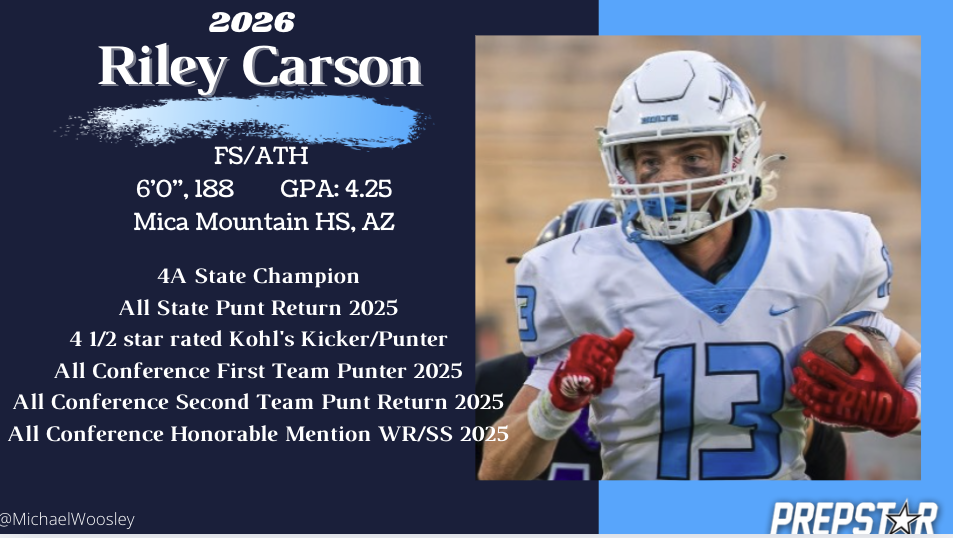
The PrepStar featured athlete for this week is Riley Carson. Riley is a versatile, high-impact player who excels in multiple phases of the game. Carson contributes as a wide receiver and strong safety, demonstrating his athleticism and football IQ. His presence on special teams is elite, where he serves as a punter, kickoff specialist, and punt returner. A key contributor to Mica Mountain’s 2024 4A State Championship team, Riley was also selected All Conference First Team Punter, All Conference Second Team Punt Return, All Conference Honorable Mention Wide Receiver and Strong Safety. 

This summer he also picked up offers from Lake Forest, Western New Mexico, Wabash, Minot State and Pacific and was selected for the 2025 Fiesta Bowl All State Selection (Punter). Recently, I caught up with the rising Senior about preparation for the coming season and some memorable moments.

Metrics
Height 6’0”
Weight 188

Academics
GPA 4.25

Link to recruit profile: PrepStar 360 Athlete
Link to Hudl: 2024 Season Highlights
Twitter/X: @Riley_no13

What made you fall in love with your sport?
Bonding and making relationships with the people around me.

What’s one aspect of your game you’re working on right now?
Being a better play recognition in real time.

What’s the best piece of advice you’ve received from a coach?
Do everything you try at 100%

What’s been your biggest highlight or proudest moment?
Winning the 2024 state championship with the football team.

Who do you look up to as an athlete?
I look up to my dad.

If a college coach asked what sets you apart, what would you say?
I would say my versatility.

What’s your go-to music before games?
Whatever is being played on the speaker in the locker room.

What’s your favorite pre-game snack or meal?
A dirt-n-worms from Freddy’s.

If you weren’t an athlete, what would your hobby be?
I would be a competitive cornhole player.

The PrepStar featured athlete

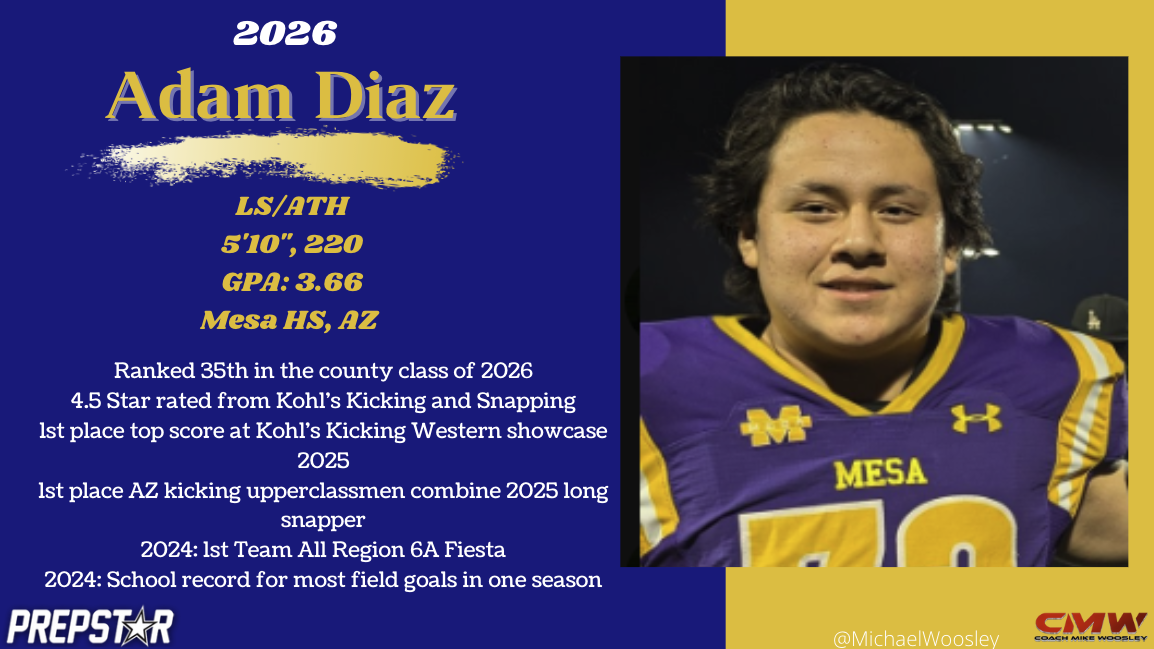
The PrepStar featured athlete for this week is Adam Diaz.  Ranked among the top snappers in the state of Arizona placing 1st place top score at the 2025 Kohl’s Kicking Western Showcase with average snap times of .72 seconds!  Diaz also 1st place AZ Kicking Upperclassmen Combine 2025 for long snappers. Overall, Adam is ranked 35th in the county class of 2026 with a 4.5 star rating. Additionally, he was selected 1st Team All Region 6A Fiesta after the 2024 season. Recently, I caught up with the rising Senior about preparation for the coming season and some memorable moments.

Metrics : Ht: 5’10”, Wt: 220 

Academics : GPA 3.66  

Link to recruit profile: PrepStar 360 Athlete

Link to Hudl: 2024 Season Highlights

Twitter/X: ​​@Diazaj2000

Are you hoping to compete at the next level?

Yes, I am looking forward to competing at college. Since a young age it has been my goal.

What are your academic goals in college (college major)?

I don’t have a specific major picked yet but I think I’m leaning towards engineering. 

What’s the best part of being a student-athlete?

I think the best part of being a student athlete is that it keeps you busy.

What made you start playing your sport?

I started playing it when I was younger and just liked it the more I played

What has been your most unforgettable sports moment?

My most memorable moment was winning the championship the last year of youth football

What’s one thing fans may not know about you?

Fans may not know that I like being a long snapper. I love it! 

Who’s your biggest supporter?

My dad is definitely my biggest supporter. He has been with me for literally every step of my football journey. 

What song gets you pumped up before a game?

I don’t necessarily have a favorite song, it’s more of a genre like indie pop.

Keys to Connecting with College Coaches: 5 Tips for High School Athletes

How High School Athletes Can Successfully Connect with College Coaches

The recruiting process can feel overwhelming, especially when you’re trying to stand out and make real connections with college coaches. If you’re a student-athlete looking to take the next step in your athletic and academic journey, here are five essential tips to help you build relationships with college coaches and get noticed.

1. Do Your Homework on Schools

Start by researching colleges that fit your athletic level and academic goals. Look into the team’s performance, coaching staff, facilities, academic support, and overall campus environment. The more you know, the better you can target schools where you’ll be a strong fit—and show genuine interest when you contact coaches.

2. Initiate Contact with Coaches

Don’t wait to be discovered—take the first step. Send a well-written email or direct message introducing yourself and explaining why you’re interested in their program. Be polite, professional, and personal. Mention specific reasons why you admire the school and team. Follow up with a short phone call or text if appropriate. Coaches appreciate athletes who take initiative.

3. Share Your Recruiting Profile

Make it easy for coaches to evaluate you by including a link to your PrepStar recruit profile in your messages. Your profile should highlight your athletic achievements, stats, GPA, test scores, and a short bio. You can find your profile link by clicking the Settings button on your Scoreboard homepage. A strong, updated profile helps coaches get to know you quickly.

4. Use Social Media the Right Way

Your social media can be a powerful recruiting tool—or a red flag. College coaches often review athletes’ profiles to learn more about their personality and behavior. Post highlights, training clips, and positive content that reflects your work ethic and character. Clean up anything that might raise concerns.

5. Be Consistent and Stay Patient

Recruiting takes time. You might not hear back right away, and that’s okay. Keep training, improving your skills, and staying in touch with coaches. Send updates when you have new highlights or achievements. Persistence shows dedication, and the right opportunity will come with consistent effort.

Final Thought:
Connecting with college coaches is about being proactive, professional, and prepared. Stay focused, stay positive, and keep showing coaches that you’re ready—both on and off the field.

College Athletic Scholarships By the Numbers 

Here’s an overview of athletic scholarships available across NCAA Division I, Division II, and Division III:

Division I

  • Sports Sponsored: Division I schools offer the most scholarships due to the larger athletic budgets and higher revenue sports like football and basketball.
  • Athletic Scholarships: Approximately 138,500 full or partial athletic scholarships are available in Division I.

Division II

  • Athletic Scholarships: Approximately 36,500 scholarships are awarded in Division II.
  • Sports Sponsored: While scholarships are fewer compared to Division I, athletes often receive partial scholarships combined with academic aid or need-based grants.

Division III

  • Athletic Scholarships: None (officially).
  • Key Notes:
    • Division III schools do not offer athletic scholarships, but athletes often receive substantial financial aid packages, including academic scholarships, grants, and need-based aid.
    • Many Division III athletes receive support comparable to what is offered in scholarship-granting divisions.

Key Notes:

  • Headcount sports (e.g., football, basketball, women’s gymnastics, tennis, and volleyball) provide full scholarships.
  • Equivalency sports (e.g., baseball, track and field, soccer) allow coaches to divide scholarships among multiple athletes.
  • All sports in Division II are considered equivalency sports, meaning scholarships are often split among team members.
  • Division III schools do not offer athletic scholarships, but athletes often receive substantial financial aid packages, including academic scholarships, grants, and need-based aid.
  • Many Division III athletes receive support comparable to what is offered in scholarship-granting divisions.


Reputation Ruined by a Press of a Button

This week’s tip about social media is very important. So, here’s the tip: coaches pay attention to how athletes present themselves on social media. 

Recently, All-Pro NFL superstar J.J. Watt lectured students on this very topic.  Watts’ wisdom was this, “A reputation takes years and year and years to build, and one press of a button to ruin.” You can find the article here.

Here’s an example of the harm that can’t be undone. Recently, I spoke with an athlete that was kicked off his team because someone in a picture with him was holding an illegal drug. One stupid mistake has sidelined this stellar senior athlete and jeopardized his future. Please, don’t let this happen to you.

Make wise choices to avoid costly decisions.

Social media is a tremendous way to interact with people all over the world and express ourselves in any way we choose. But with great opportunity comes great responsibility.  Here are some important things to keep in mind before you send your message into the great global conversation.

  1. Anyone, anywhere can see your post
  2. Your post speaks for your personality and character
  3. Pictures can speak for the company you keep.
  4. Posts are nearly impossible to erase once its out in cyber-space

To close, I’m not saying don’t use social media. I’m only suggesting that you use it to your advantage. Used properly social media really can make a difference with your recruiting.  So before you press ‘send’ think about the consequences. If you have any reservations for what your about to send, by all means don’t send it!

Be smart with social media.

Coach Mike Woosley

Coach Mike Woosley is a National Scouting Director at CSA-PrepStar.  As a professional collegiate sports scout Mike works with qualified next level student-athletes to find the right college athletic and academic fit. Comments and questions are always welcome.

cropped-cropped-main_logo-11.jpg

Signing Day Is About More Than Signatures

February is a month of important dates. Most dates on the calendar people know; Super Bowl (Feb 1), Valentines’ Day (Feb 14), Presidents Day (Feb 16). But, for most senior student athletes there is one very important day in February … Signing Day!

hats-national-signing-day-0205

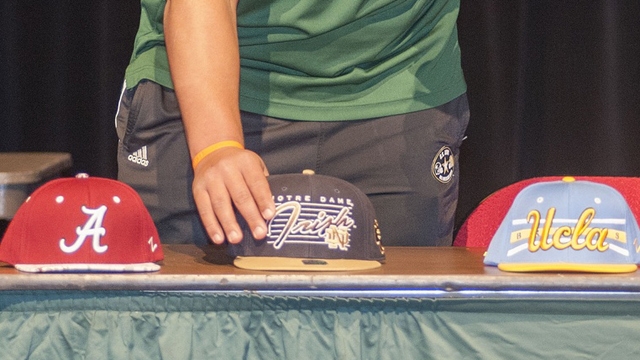
Signing Day is also known in the athletic world as the day athletes sign their National Letter of Intent. It is the day when verbal commitments between college coaches and student-athletes become solidified thanks to a well executed recruiting strategy.  (Tip- verbal are not binding until you sign on the dotted lines. College coaches and student-athletes are notorious for verbally committing to more than one college or student-athlete..thus the hats:)

Here’s a quick review of the NLI Signing Day

What is a National Letter of Intent?
A National Letter of Intent is signed by a college-bound student-athlete when the student-athlete agrees to attend a Division I or II college or university for one academic year.  Division 3 and Junior Colleges (JUCO) do not have formal signing days (yet). The NLI is a binding agreement between Participating institutions agree to provide financial aid for one academic year to the student-athlete as long as the student-athlete is enrolled in classes and academically eligible for financial aid under NCAA rules.

Off Limits
When a student athlete signs his or her National Letter of Intent ends the recruiting process and competing schools are prohibited from recruiting that student-athlete.

Change Your Mind

Once a student-athlete signs a National Letter of Intent she or he may request a release from his or her contract with the school. If a student-athlete signs a National Letter of Intent with one school but enrolls in a different college or university, she or he will lose one full year of eligibility. To be athletically eligible the student-athlete must complete a full academic year at their new school before being allowed to compete.

Different Signing Days for Different Sports

Signing day varies by sport. The reason for this is because some spring sports like baseball, softball and track do not conclude until after February 4. Signing day for different sports is April 15. I posted the chart to reference.

Screen Shot 2015-01-23 at 6.48.08 PM
Chart provided by the National Letter of Intent homepage

Good luck to all the senior student-athletes signing to play college ball next year at the college or university of their choice.


Coach Mike Woosley is a National Scouting Director at CSA-PrepStar.  As a professional collegiatecropped-main_logo-12.jpg sports scout Mike works with qualified next level student-athletes to find the right college athletic and academic fit.

Poise over Panic: Prepare for the Unexpected in Recruiting

I’m a big Ohio State fan. No matter where I’ve lived across the country my Buckeye allegiance has always run true. So, obviously winning the National Championship this season is a great accomplishment, especially considering the tremendous amount of unexpected events that this team had to overcome to achieve their goal; injuries, expulsions, even death to name a few!
24-tmb
I see a lot of similarities between the recruiting process and the recent Ohio State season. There are lots of unexpected events that can happen to throw you off track. But with the right preparation, teamwork, and a little luck, the unexpected can be overcome to reach your ultimate goal of playing sports at the collegiate level.


Anticipate the unexpected

Let me give you an example of what’s happening now for seniors who didn’t anticipate the unexpected. Right now, many senior athletes are scrambling to sign with a college. Many of them didn’t have a recruiting strategy going to start the process so now they are panicking to find an available roster spot. Last minute panic for athletes is never good. Here are a few reasons why.

  1.  Last minute panic doesn’t always assure the right fit.
    • Many athletes settle for a college because they need both athletic and academic scholarships to afford colleges. As a result, a student -athlete signs with a college without doing adequate research on the available positions he/she can compete for or looking into the quality of academic programs offered. (Athletes- never compromise and sign with a college that doesn’t have the major you want to study! Always seek academics first and athletics second!)
  2. Last minute panic doesn’t always get you adequate scholarship money.
    • Be aware colleges will take advantages of desperate athletes. There’s only so many scholarships and only so much scholarship money to go around, so schools will do what they to get the best deal possible.
  3. Last minute panic may result in not getting a scholarship.
    • Athletes know that every play ends, every game times out, and every season concludes. The same is true with every recruiting period. Time will eventually run out.


Poise, not panic

We all know that its nearly impossible to avoid the unexpected, it is possible however to avoid panic. In fact, the opposite of panic is poise. Athletes that have poise are able to perform under pressure and adversity.

So, how can you avoid the last minute panic? Simple. Be prepared, work with a team, and hope for a little luck. Follow these simple tips and you’ll be poised for success.

  1. Be prepared for recruiting by designing a game plan.
    • Like all good coaches, develop a winning strategy before the game begins and make adjustments accordingly.
  2. Teamwork is necessary for recruiting.
    • Games are not won by individuals; teamwork in games! This team may include parents, coaches, school administrators, counselors and recruiting coaches. Please, don’t fool yourself by thinking that you can get a scholarship all by yourself. Every one of your recruiting teammates will have a crucial role in helping you get to the next level.
  3. Luck is defined as success or failure brought on by chance rather than one’s actions.
    • Like unexpected events, luck sometimes luck brings you unexpected opportunities.  From time to time athletes need a little luck.


A Great Plan Makes for a Great Celebration  

29906170001_3968751245001_Screen-Shot-2015-01-02-at-8-12-13-AM To wrap up, look at recruiting like this. Ohio State didn’t win the championship because they had a great player.  No, they won because they had a great plan, great team of players and a little luck to help them along the way.

Finally, the recruiting process is supposed to be an enjoyable experience. It isn’t supposed to be stress-filled panic. And most definitely the final months of recruiting shouldn’t be a scramble, but a celebration.


Coach Mike Woosley is a National Scouting Director at CSA-PrepStar. As a professional collegiate cropped-main_logo-12.jpgsports scout Mike works with qualified next level student-athletes to  find the right college athletic and academic fit.