Let them play?

Every student athlete is impacted by the Covid-19 virus. Weeks ago the severity of the spread was underestimated, thousands of people took to social media with posts of “Let them play!”  Little did we know that a pandemic was encroaching that would dole a knockout blow to all spring sports, at every level throughout our great country. 

As adults, and especially as adults who have considerable influence on our athletes, it is important to model behaviors that demonstrate responsibility, residence, and respect.
As adults, and especially as adults who have considerable influence on our athletes, it is important to model behaviors that demonstrate responsibility, residence, and respect. 

At least for most. 

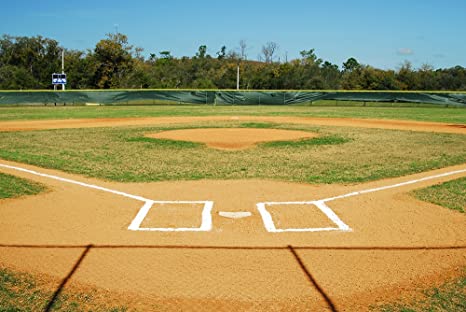
Recently, on a return visit to the grocery, I drove by a neighborhood baseball part, noticing the movement of colorful little dots scattering the outfield. Not sure what I was observing, I drove into the parking lot astounded to see a little league baseball team practicing.  Enamored and  disappointed, I shook my head. 

Now, I’m all for sports. I love sports, for two decades I’ve coached sports and my children are also athletes. They are involved in team sports and when the sanctions were passed down each one of them lost  their season.  

But, I also know that sports in not more important than life. As adults, and especially as adults who have considerable influence on our athletes, it is important to model behaviors that demonstrate responsibility, residence, and respect. 

Responsibly that models to our athletes that certain risks are not more rewarding than wins.

Resilience that models to our athletes fortitude in face of adversity. 

Respect that models to our athletes that right choices always supersede selfish ignorance. 

In years to come, athletes of all ages will remember the season that was cut short. They will be pained by the possibility of what could have been. But, they will also remember those responsible for leading them. How they made touch decisions  in their best interest, so that in the years to come these same athletes and their children can take the field again. 

Tips to choose the right Camps, Showcases, and Combines

College camps, showcases, combines and now the ever present “Junior Days” are a necessary part of the recruiting process. Many offer the opportunity to compete against some of the top high school talent. Additionally, the experience at these events can be very valuable in the development of a young athlete. However, choosing the right event to attend can be a challenge.

For starters, relying solely on college showcases, camps and combines as the primary avenue to get recruited not a very sound strategy. Often the enormous number of camp attendees is not favorable for your exposure. In this case, too many athletes equals too few reps. Too few reps means not enough opportunity to showcase your talent. Also, typically college coaches already have developed recruiting lists of athletes they plan to watch at the camp so be cautions of camps expecting several hundred athletes. Additionally, before registering, athletes need to certain that the head coach or position coach will actually be at the event. Simple put, if the college coach wont’ be at the event, then it is impossible for him/her to see you compete, which means, there is a pretty good chance you will go unnoticed. It also means you wasted a lot of money for zero exposure.

If the college coach wont’ be at the event, then it is impossible for him/her to see you compete, which means, there is a pretty good chance you will go unnoticed. Photo by Jeffrey F Lin on Unsplash

Instead, heres a winning recruiting strategy for using camps, combines and showcases. First, do some research to make sure college coaches form the schools you feel are realistically a good fit. Once you decide on a event, make sure you are prepared for the event. Next, utilize good interactive communication before the event. This is a good opportunity to provide coaches with your recruiting profile along with any video highlights you may have. (PrepStar athletes can do this in a few clicks- message me if you need to know how). Finally, before the event, prepare a few questions to ask about the college or the athletic program.

Getting lots of camp invites? Have questions about which are legit? Need help?  Contact me to set up a time to talk (get free advise!) or use the comment section below.

High Performing Athletes- 6 common characteristics

At the start of the new year, I began as series focused on 6 major characteristics of high performing athletes. Often, I am asked about the what it takes for an athlete to reach a a high performance level beyond natural ability. So, after making a long list, researching top athletes, and persistent review I came up with 6 common characteristics. Obviously, these six characteristics is not an exhaustive list, however, I am certain that some form of these characteristics are prevalent in the life, mind and practices of anyone that is considered to be a high performing athletes. 

Any athlete who desires to perform at the highest level must exercise a extra-ordinary amount of disciple. (Photo by Scott Webb on Unsplash)


The summary of the 6 characteristics are:

  1.  High performing athletes are able to clarify the vision and path to reach their goals. 
  2. High performance athletes measure results repeatedly.  They do this to discover areas of progress as well as weaknesses.
  3. High-performing athletes take full responsibility. They take complete ownership of their actions, their plans, and their purpose.
  4. High performing athletes possess “want to”. They willfully want to practice and put in the extra reps. This characteristic is often partnered with words like passion, desire, drive and determination. 
  5. High performing athletes take care of their body, mind and spirit. They plan and execute good self care habits and have the discipline to maintain those habits. 
  6. High performing athletes seek out great coaching. They intentionally look for and listen to coaches who  can help them  break through to the next level. 

Now that you are aware of these six characteristics, the next question to consider is what is the common denominator ties them together?  In my opinion that denominator is discipline. Any athlete who desires to perform at the highest level must exercise a extra-ordinary amount of disciple. Almost to a level that seems obsessive when compared to those around him/her. High performing athletes know that to make their goals into reality uncompromising discipline is a must.  

HIGH PERFORMING ATHLETES: COMMON CHARACTERISTICS- “HAVE TO”

This week I continue to outline major characteristics of high performing athletes (HPAs). For this week, the  characteristics  is one of those easily identifiable traits. It’s one that is so obvious that it makes other athletes (and often their parents) envious. I would further go on to say that this characteristic is one that can be learned. Its is like a match struck and put to a fire, smoldering then suddenly bursting into flame. 

This week I want to outline a characteristic in high performing athletes that is best described as “want to”. This characteristic is often partnered with words like passion, desire, drive and determination.  HPAs with this characteristic understand that “want to” means willing desire. It’s as if the putting in the work is a privilege and the pain of pushing the limits is actually enjoyable. In contrast, to “want to” is “have to”.  Athletes who “have to” require an amount of compromise and external motivation to put in the work. 

Photo by Ruben Leija on Unsplash

High performing athletes with “want to” are uncompromising. They put in the time for work outs. The do it because they love it, not because coach says to, or because their parents say so.  Instead, HPA’s with “want to”  put in the work because of the passion for the game. Further, they love to compete against others and against their personal personal records.    HPAs with “want to”  don’t have to be dragged out of bed. And they don’t have to rely on motivational hype to get started. No, instead they are self-motivated and self-driven. 

HPA’s with “want to” passion also realize that the externals of the game matter. The externals of the game make a difference so they put in the work in the gym, in training, in practice, outside of practice and in the film room. In their free time, they study the game to improve their sport IQ. With a critical eye, HPAs study themselves looking to evaluate and critique personal preparation, practice and performance. They also pay attention to what they eat, how they sleep, and who they hang out with.  Because HPAs with “want to “ recognizes that all of these things impact passion and performance. 

But as mentioned earlier, the “want to” characteristic can be learn. It is not exclusive only for a small group. No, with encouragement, confidence and focus new habits and routines can be develop that change “have to” athletes into “want to” high performing athletes.

High Performing Athletes: common characteristics- Responsibility

What does it take to be at the top of your game? Have you ever wondered what is the daily regime for those capable of performing at high level consistently. To kick off 2020 I want to outline some of the characteristics  of high performing athletes (HPAs). After all, the name of this blog has the words Elite Athletes, and assuming most of the audience are athletes, why not share helpful tips for elite athletes seeking strategies to improve. 

Photo by Freddie Collins on Unsplash


This week, the topic is responsibility. In a culture where blame is the game, people who take personal responsibility for their actions are rare. Sadly, its easier to blame someone else than to own up to our own mistakes. But this is not how HPA’s work. 


Instead, high-performing athletes take full responsibility. They would never let someone take the blame. HPAs take complete ownership of their actions, their plans and their purpose. High performing athletes want the ball in their hand when the clock is ticking down.  


So, HPAs assume full responsibly by being fully accountable. It means that no matter what the outcome, the only person to blame is yourself.  In no situation will excuses be acceptable! High performing athletes do not sit around hoping to rise to success on the back of someone else. No, high performing athletes understand that in every situation they are both 100% responsible and 100% accountable. 

High Performing Athletes: common characteristics

Helping athletes perform at the highest level possible is what Elite Athletes Recruiting is all about.  So, to kick off  2020 I will be sharing about several common characteristics that I have found in high performing athletes (HPA).


This year I want to help my readers to perform at the highest level possible in 2020. 
Last week, I outlined how high performing athletes (HPA) are able to clarify the vision and path to reach their goals. 

This week I want to impress a second common characteristic. High performance athletes measure results repeatedly.  They do this to discover areas of progress as well as weaknesses. Because, results can only become obvious over a period of time it is necessary to make it a priority to measure results. 

For most of us progressing towards our goals takes time. Days, months, years. Rarely, does success happen overnight. Thats why it is important to measure or track progress. The danger of not keep measurements is discouragement. Unless you are paying close attention, incremental progress can be easily overlooked. Likewise, neglecting to measure results can lead to plateaus where not progress is being made whatsoever. 

In a tangible way, this is the reason why stats are so important in sports. It is also the reason why score is kept in athletic competitions.  Stats and scores highlight who wins and who loses.

So to avoid stagnation, high performance athletes measure the results of both successes and failure so that they can form new strategies to help them reach new levels of achievement.
What areas of your athletic performance, business, or physical health have you set goals for in 2020?  How do you intent to measure measure progress to assure that you reach those goal

Recruiting Email Format: essential info to send to college coaches

Communication between athletes and coaches is essential! Absolutely no athletes get recruited without communicating with college coaches. For this reason alone, every athletes should know not only how to communicate but what information needs to be shared with a coach.

coachToday, my goal is provide you some tips on what information needs to be included in an email to a college coach.

To begin, start by emailing a response to the coaches at the colleges you are interested in. Also, when writing the email, keep the email personal, short and sweet.

Next, make sure to always include; First and Last Name, Position, Graduating year, Height (weight optional) and GPA all in the email subject line. Most coaches use email headlines to filter the specific types of athletes they’re looking for.

Use these tips and you will surely get their attention!

Would you like me to send you an email format to use? Leave a note in the comment section or text me at 480-442-6226.


Readers are welcome to leave comments to this week’s post or ask questions to be answered in next week’s post.  As always, I can be reached around the clock on twitter @michaelwoosley.

Six Details to Include in a Short Email to College Coaches

Athletes that get recruited know that at some point it is necessary to email a college coach. This brief communication is crucial to your recruiting because needs to be short but detailed enough to give the coach enough information to put you on the recruiting radar. So, if writing isn’t your strong-suit or your unsure of what to include this blog will help.

For serious recruitings drafting a recruiting email takes serious effort
For serious recruits drafting a recruiting email takes serious effort

The format I’m sharing with you is great for the initial email to college coaches. However, if a coach contacts you this email will work, but you need to add one extra detail.  That detail is to ALWAYS thank the coach for contacting you. Do this in the introduction of the email. Also its a good idea to include how the coach contacted you. For example,  “Thank you for taking the time to contact me… write me…..email me..send me a postcard…”

Now, on to the 6 important details. Here’s what should be included. 

1. Introduce yourself

  • Name, City, State,

2. Give them some specifics about you

  • graduation year, sport, position, academic interest
  • I attended the [camp/combine] on [date]

3. Tell them something about their program and/or college (some brief research will help )

  • Ex. “Your school has both a great [sport] team but also a top-notch [subject] program”

4. Request information about the college’s athletic and academic programs be sent to your home

  • Ex. “I would like to know more about your athletic program and the academic programs offered at [name of the school]”

5. Include address and phone number in your signature.

  • Name, address, phone

6. Help them connect with you on social media

  • hyperlink your Twitter handle or Facebook profile info at the bottom of your signature.

Again, remember to keep this email short. Its not necessary to be long winded. Truthfully, no more than two paragraphs is necessary.

One other tip. As your recruiting gets more serious a longer email will be necessary. I’ll show you what to include for that email in another blog.

Good luck,

cropped-cropped-main_logo-11.jpg

Coach Mike Woosley is a National Scouting Director at CSA-PrepStar.  As a professional collegiate sports scout Mike works with qualified next level student-athletes to find the right college athletic and academic fit. Comments and questions are always welcome.

How to make a positive impression during a recruiting interview

4 Things to Know for a Recruiting Interview


Set yourself apart by treating your recruiting visit like you would a job interview

In the coming months many 2017 student athletes will take official college visits to solidify the next steps of their recruiting. It is much like a job interview in many respects. Bosses have reviewed the resume, checked references and decided to scheduled the final interview. So treat your recruiting visit like you would a job interview.

College coaches can now contact 2017 recruits  So if you’re not hearing from college coaches contact me immediately (mwoosley@csaprepstar.com) so I can help you get the recruiting exposure you need to get noticed!

Keep in mind that while your resume is your athletic and academic accomplishments, what’s really going to put you at the top of the list is how set yourself apart during the recruiting interview. So, here are four tips that you need to know to leave a positive impression during a recruiting interview.

  1. Use proper English grammar. Coaches take their job seriously, so it makes sense that they also look to find serious players. Demonstrate that you are articulate and intelligent by using good grammar.
  2. Dress for success. Leave the warm-ups at home. Dress nicely and wear a tie. Don’t worry about standing out. That’s what you are there for, after all!
  3. Separate yourself from the pack. When everyone else is goofing off, keep in mind that the reason you are there is get noticed and get a scholarship!
  4. Answer questions confidently. Rehearse your responses to questions that a coach may ask. Anticipate questions that revolve around your strengths, weaknesses, concept of team, individual goals, work ethic, and responsibility.

Remember, the objective of the recruiting interview is impress the coach so you move up the recruiting board and ultimately increase your chanced to get scholarships.  Follow these tips and you’ll be well on your way to a successful recruiting interview.

Good luck on your upcoming interview!

Coach Mike Woosley


Coach Mike Woosley is a National Scouting Director at CSA-PrepStar.  As a professional collegiate sports scout Mike works with qualified next level student-athletes to find the right college athletic and academic fit. Comments and questions are always welcome.

cropped-cropped-main_logo-11.jpg

How social media can help your recruiting

Social media can help with self-promotion

Social media can be a great tool for self promotion for your recruiting. I use it everyday to promote players, share ideas, tips and motivational coaches quotes. On several occasions college coaches have connected with me via social media to ask about my PrepStar athletes.

Social media can also help you connect with coaches, player and key people at prospective colleges. Here’s why.

Many college coaches use social media as another recruiting tool. For them, its a good way to find out what kind of person you are just by viewing your social media pages, posts and interactions.

Screen Shot 2015-06-26 at 12.33.10 PMTwo Reasons to Use Social Media

So, if you don’t have a social media account I recommend that you get one soon. Here are two good reasons a why.

First, social media is a great way to start and keep a recruiting relationship going. But what about the email? Emails definitely have a place in recruiting.  However, connecting with a coach via social media can open the door of opportunity to send the email to tell the coach more about you.  Also, social media is a good way to stay in touch after you’ve gotten to know one another.

Second, NCAA guidelines are a bit vague on the contacting athletes through social media. Texts and emails on the other hand are more regulated and count as a recruiting contact. Use loophole to your advantage advantage.

Lets Review Some Basics

Now, if you want to use social media like Twitter and Facebook to your advantage let’s cover a few basics. Follow these tips and you’re sure to help you use social media to your advantage.

  1. Connect with coaches follow teams to learn about program
  2. Follow college players to collect information, get to know them and learn about the program.
  3. Make your posts interesting. If you put a link, give your follower a reason to want to click the link and find out more about you.
  4. Be wise with the content you post. Don’t post profanity, vulgar or offensive material. And if its on your page delete remove it now!  You want to post content that presents you in a positive way.
  5.  Its not smart to post injuries, failures and absolutely no whining/complaining about a coach or teammates!

    Are you crying? There's no crying in baseball!
    Are you crying? There’s no crying in baseball!

Okay, now that you’ve decided to use social media to your advantage use the social media search menu and started connecting. Also, if you haven’t already, make sure to connect with me on Twitter @michaelwoosley.

Next week, I’ll share some tips on how to get the most out of your social media communications.

Good luck!

cropped-main_logo-12.jpg

Coach Mike Woosley is a National Scouting Director at CSA-PrepStar.  As a professional collegiate sports scout Mike works with qualified next level student-athletes to find the right college athletic and academic fit. Comments and questions are always welcome.