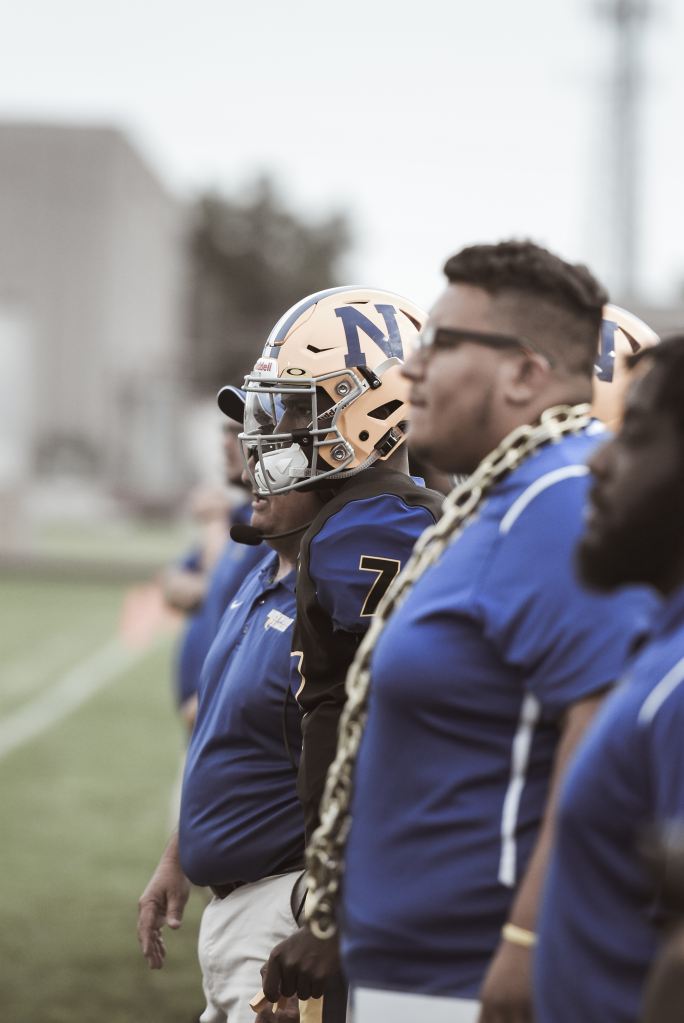
Breaking down recruiting video.

Yes, thats right. Its almost over. Soon the quarantine will be lifted and in turn athletes can return to competition. So the question for student-athletes will be, what did you do during the quarantine to help move your recruiting forward?

Hopefully, time has been invested in recruiting video. Video is crucial to the recruiting process, because most coaches recruit digitally first before seeing an athlete in person. Right now, with the stay at home policies in place, coaches have relied on video to recruit digitally.

So, what kind of recruiting video is most beneficial? And, what footage should the video feature?

Actually, the answer varies by sport. For example, game video is paramount for high school football prospects. However, sports like baseball, softball, and soccer require that skills video also accompanies game footage. Keep in mind, the purpose of the recruiting video, no matter the sport, is to demonstrate position specific athletic skills.  
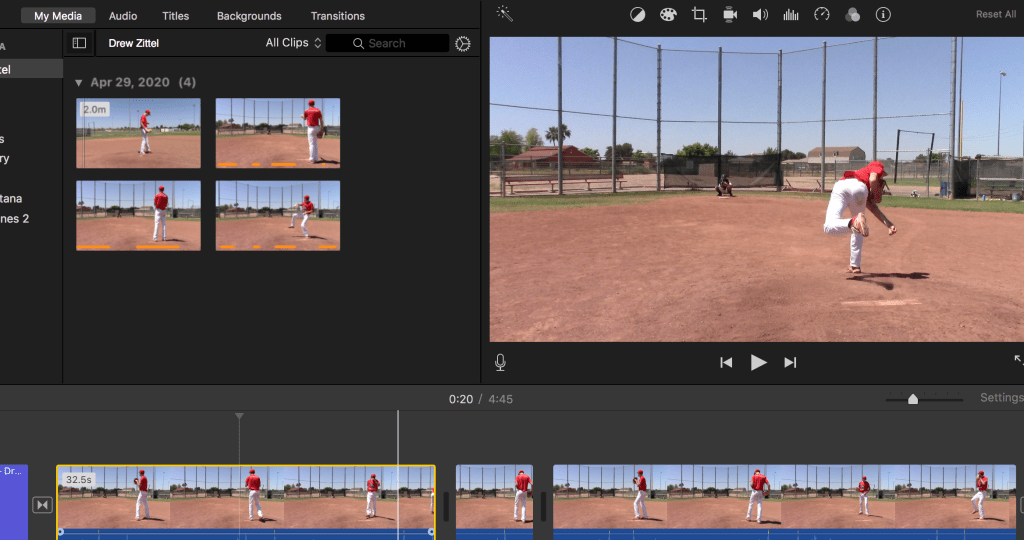
It may be a matter of debate, it makes little difference if the video is professionally recorded or self-recorded.

Though it may be a matter of debate, it makes little difference if the video is professionally recorded or self-recorded. In most situations, quality cellphone video works well. I’ve recored skills video with a video camera, iPad and iPhone with good success. What matters most is the quality of athletic content not necessarily the quality of content. College coaches must be able to clearly identify the player and clearly view all the required skills.  Last year, I was talking with several scouts at a major tournament here in Phoenix, when the Oregon scout got up, took out his cell phone, walked over to the fence and began recording a players at-bat. Right there, I thought, ‘well if it’s good enough for Oregon then it’s good enough for others.’

Lastly, it should be obvious that having no video will surely stifle the recruiting process. Athletes trying to get recruited without video will find it almost impossible to gain interest. In fact, limited exposure will surely put the student-athlete at a tremendous recruiting disadvantage.

Here are 5 quick tips from a previous article I wrote about recruiting video

  1. Always make sure the video is appropriately timed (4-5 minutes)
  2. Next, make sure that your best plays are in the first 30 to 60 seconds.
  3. Then make sure to highlight position specific skills.
  4. Most importantly, highlight videos should feature you, not other players.
  5. Lastly, keep questionable plays out of your video.

Because highlight videos carry a lot of significance in your recruiting I’m glad to review your highlight videos before you send them to a coach or post them online.  You want some outside help with your recruiting video. If so, schedule a FREE recruiting video consultation where I will take a look at your highlight or skills video to provide you helpful tips and feedback. Schedule your free recruiting video review here.
Let them play?

Every student athlete is impacted by the Covid-19 virus. Weeks ago the severity of the spread was underestimated, thousands of people took to social media with posts of “Let them play!”  Little did we know that a pandemic was encroaching that would dole a knockout blow to all spring sports, at every level throughout our great country. 

As adults, and especially as adults who have considerable influence on our athletes, it is important to model behaviors that demonstrate responsibility, residence, and respect.
As adults, and especially as adults who have considerable influence on our athletes, it is important to model behaviors that demonstrate responsibility, residence, and respect. 

At least for most. 

Recently, on a return visit to the grocery, I drove by a neighborhood baseball part, noticing the movement of colorful little dots scattering the outfield. Not sure what I was observing, I drove into the parking lot astounded to see a little league baseball team practicing.  Enamored and  disappointed, I shook my head. 

Now, I’m all for sports. I love sports, for two decades I’ve coached sports and my children are also athletes. They are involved in team sports and when the sanctions were passed down each one of them lost  their season.  

But, I also know that sports in not more important than life. As adults, and especially as adults who have considerable influence on our athletes, it is important to model behaviors that demonstrate responsibility, residence, and respect. 

Responsibly that models to our athletes that certain risks are not more rewarding than wins.

Resilience that models to our athletes fortitude in face of adversity. 

Respect that models to our athletes that right choices always supersede selfish ignorance. 

In years to come, athletes of all ages will remember the season that was cut short. They will be pained by the possibility of what could have been. But, they will also remember those responsible for leading them. How they made touch decisions  in their best interest, so that in the years to come these same athletes and their children can take the field again. 

Tips to choose the right Camps, Showcases, and Combines

College camps, showcases, combines and now the ever present “Junior Days” are a necessary part of the recruiting process. Many offer the opportunity to compete against some of the top high school talent. Additionally, the experience at these events can be very valuable in the development of a young athlete. However, choosing the right event to attend can be a challenge.

For starters, relying solely on college showcases, camps and combines as the primary avenue to get recruited not a very sound strategy. Often the enormous number of camp attendees is not favorable for your exposure. In this case, too many athletes equals too few reps. Too few reps means not enough opportunity to showcase your talent. Also, typically college coaches already have developed recruiting lists of athletes they plan to watch at the camp so be cautions of camps expecting several hundred athletes. Additionally, before registering, athletes need to certain that the head coach or position coach will actually be at the event. Simple put, if the college coach wont’ be at the event, then it is impossible for him/her to see you compete, which means, there is a pretty good chance you will go unnoticed. It also means you wasted a lot of money for zero exposure.

If the college coach wont’ be at the event, then it is impossible for him/her to see you compete, which means, there is a pretty good chance you will go unnoticed. Photo by Jeffrey F Lin on Unsplash

Instead, heres a winning recruiting strategy for using camps, combines and showcases. First, do some research to make sure college coaches form the schools you feel are realistically a good fit. Once you decide on a event, make sure you are prepared for the event. Next, utilize good interactive communication before the event. This is a good opportunity to provide coaches with your recruiting profile along with any video highlights you may have. (PrepStar athletes can do this in a few clicks- message me if you need to know how). Finally, before the event, prepare a few questions to ask about the college or the athletic program.

Getting lots of camp invites? Have questions about which are legit? Need help?  Contact me to set up a time to talk (get free advise!) or use the comment section below.

High Performing Athletes- 6 common characteristics

At the start of the new year, I began as series focused on 6 major characteristics of high performing athletes. Often, I am asked about the what it takes for an athlete to reach a a high performance level beyond natural ability. So, after making a long list, researching top athletes, and persistent review I came up with 6 common characteristics. Obviously, these six characteristics is not an exhaustive list, however, I am certain that some form of these characteristics are prevalent in the life, mind and practices of anyone that is considered to be a high performing athletes. 

Any athlete who desires to perform at the highest level must exercise a extra-ordinary amount of disciple. (Photo by Scott Webb on Unsplash)


The summary of the 6 characteristics are:

  1.  High performing athletes are able to clarify the vision and path to reach their goals. 
  2. High performance athletes measure results repeatedly.  They do this to discover areas of progress as well as weaknesses.
  3. High-performing athletes take full responsibility. They take complete ownership of their actions, their plans, and their purpose.
  4. High performing athletes possess “want to”. They willfully want to practice and put in the extra reps. This characteristic is often partnered with words like passion, desire, drive and determination. 
  5. High performing athletes take care of their body, mind and spirit. They plan and execute good self care habits and have the discipline to maintain those habits. 
  6. High performing athletes seek out great coaching. They intentionally look for and listen to coaches who  can help them  break through to the next level. 

Now that you are aware of these six characteristics, the next question to consider is what is the common denominator ties them together?  In my opinion that denominator is discipline. Any athlete who desires to perform at the highest level must exercise a extra-ordinary amount of disciple. Almost to a level that seems obsessive when compared to those around him/her. High performing athletes know that to make their goals into reality uncompromising discipline is a must.  

High Performance Athletes Common Characteristics: Great coaching

This week I round out the major characteristics of high performing athletes (HPAs). The characteristic outlined this week is focused on great coaching. All high performing athletes willingly seek great coaching because of the insatiable drive to improve. 

In the mind of an elite high performing athlete they must find ways to get better!  Inside their mind there is a constant drive to improve. For them, the ceiling is glass, it can be broken. Even if at the top of their game, HPA’s are certain that more coaching will give them what they need to break through another next level. High performing athletes seek out coaches because the drive to improve is great than arrogance that they’re already at the top of their game. 

Coaching chalkboard

For example, in the book Relentless Tim Grover illuminates the unyielding pursuit of excellence by some of the NBA’s past and present superstars. In other professional sports such as baseball, even the game’s greatest hitters are known to take regular hitting lessons.  In fact, if you do some research you will surely find that top athletes of every professional sport seek out great coaches. 

Here are three reasons to seek a great coach: 
1. Great coaches know first hand what is necessary for an athlete to become great. 

2.Great coaches see the things players cannot see. Therefore can help you make positive improvements.

3. Great coaches also understand what it takes for you to achieve at your highest level. So great coaches motivate you to achieve greatness. They comprehend your vision and therefore will push you past the point of self-induced limitations.

Firmly, I believe that great coaches make great players. In contrast, great players don’t make great coaches. Don’t believe me, think about how many coaches fail even though their team is stacked with great players? So if you are willing to get coaching, don’t just go out and find any so-called coach, I encourage you to seek out a great coach. 

HIGH PERFORMING ATHLETES: COMMON CHARACTERISTICS- “HAVE TO”

This week I continue to outline major characteristics of high performing athletes (HPAs). For this week, the  characteristics  is one of those easily identifiable traits. It’s one that is so obvious that it makes other athletes (and often their parents) envious. I would further go on to say that this characteristic is one that can be learned. Its is like a match struck and put to a fire, smoldering then suddenly bursting into flame. 

This week I want to outline a characteristic in high performing athletes that is best described as “want to”. This characteristic is often partnered with words like passion, desire, drive and determination.  HPAs with this characteristic understand that “want to” means willing desire. It’s as if the putting in the work is a privilege and the pain of pushing the limits is actually enjoyable. In contrast, to “want to” is “have to”.  Athletes who “have to” require an amount of compromise and external motivation to put in the work. 

Photo by Ruben Leija on Unsplash

High performing athletes with “want to” are uncompromising. They put in the time for work outs. The do it because they love it, not because coach says to, or because their parents say so.  Instead, HPA’s with “want to”  put in the work because of the passion for the game. Further, they love to compete against others and against their personal personal records.    HPAs with “want to”  don’t have to be dragged out of bed. And they don’t have to rely on motivational hype to get started. No, instead they are self-motivated and self-driven. 

HPA’s with “want to” passion also realize that the externals of the game matter. The externals of the game make a difference so they put in the work in the gym, in training, in practice, outside of practice and in the film room. In their free time, they study the game to improve their sport IQ. With a critical eye, HPAs study themselves looking to evaluate and critique personal preparation, practice and performance. They also pay attention to what they eat, how they sleep, and who they hang out with.  Because HPAs with “want to “ recognizes that all of these things impact passion and performance. 

But as mentioned earlier, the “want to” characteristic can be learn. It is not exclusive only for a small group. No, with encouragement, confidence and focus new habits and routines can be develop that change “have to” athletes into “want to” high performing athletes.

What makes a high Performing athlete?

Soon 2020 will be here. In fact from the writing of this blog the new year is less than two weeks away.  So, as the New Year approaches its time to start thinking about how to perform at your highest level in 2020? 


When I was in high school there were dudes who were stellar athletes. Many of them were so athletic and naturally gifted well above their peers. But even though they were outstanding athlete, in the end they  never accomplish much. When their career ended they never went anywhere. Simply put, they were just gamers. Guys who just showed up, played well, but often failed to perform consistently at a high level. 


Helping athletes  perform at the highest level possible is what Elite Athletes Recruiting is all about.  So, heading into 2020 I will be sharing about several common characteristics that I have found in high performing athletes (HPA).


The first characteristic I have found of high performing athletes is clarity in the vision.  HPA’s with clarity of vision have a unique way to see themselves winning. HPA’s can take a goal, clearly envision it, then reverse engineer that goal to make a comprehensive plan of action clearly marking out the path to make their vision reality.  


But, clarity of vision isn’t just about winning, it is also about confidence. HPA’s with clarity of vision have a level of confidences about them that often gets mistaken for arrogance. Today, this is often labeled as “swag”. But swag isn’t what makes HPA’s confident. No, HPA’s know confidence as a result of knowing how many thousand physical and mental reps have already been invested.
Performing a high level implies that their is a level to attain.  HPA look have a clear vision and confidence in that vision so that they know what steps to take to get started. In all my years of coaching I have never known an athletes who is born great. But I have known athletes who have become great because they had  a clear of vision, understood what they wanted to achieve and were confident they that could get there. 

Tis the Recruiting Season

Now that Thanksgiving is over we can safely say that the holidays are officially here. In just two weeks time Christmas will be hear then soon after a New Year will be upon us.  For student-athletes hoping to get recruited December is a major season for recruiting .

My hope is for student-athletes to have a happy and merry recruiting season. So, I put together a short list for the student-athletes who are serious about getting recruited during the holiday season.

Here are a few items that should be on your list.

  1. Make sure to have quality highlight or skills video
  2. Update all stats or metrics to the most recent measurements.
  3. Purge social media of inappropriate posts. When in doubt, just delete it.
  4. Get on the phone. Call, text or email coaches at colleges
  5. Plan campus visits to colleges high on your radar
  6. Schedule then study for the ACT/SAT college entry exams.

Have questions? Need help? Get a FREE recruiting consultation on any of the items on this list by just clicking here or leave a comment below.

Coach Mike

2 Weeks in December

The high school football season for the most part is over. Except for a limited few states the final whistle has blown, gear returned, and final stats recorded. When it seem like its all finished, football recruiting, however, is just getting started.  Especially in these first two weeks in December the contact period resumes. But, only for two weeks. 

During the December contact period it is permissible for authorized athletic department staff member to have in person, off campus contacts with prospective student athletes. 

So, athletes, what can  can you do to improve your recruiting situation during these two weeks? 

  1. Get your highlight reel looking tight. By now you should have a full season highlight reel as well as a midseason highlight reel up on your Hudl page. 
  2. Broaden your reach with coaches you want to contact. Use more than one medium to contact coaches. Don’t just rely on twitter to blast out your Hudl link. Rely on email and text. And, if you’re brave enough, go old school by making a phone call. 
  3. Stay focused! Lots of recruiting happens at this time of year. Keep in mind that the contact period is only open for 2 weeks, then its back to the quiet period until January. So be patient with the process. 

Let me know how recruiting is going for you. Have questions about the recruiting process? Comment below or contact me on twitter or instagram (@michaelwoosley). I’m glad to help. 

What to know about official and unofficial college recruiting visits

Since this is the time of year for athletes to visit college campuses I thought it good to share a few helpful tips about official visits and unofficial visit. In most recruiting situations the official visit often follow one or more unofficial visits. Frequently, college coaches reserve official visits to make offers, but it is not uncommon to get a verbal offer outside of an official visit. 

By definition, an official visit is any visit to a college campus by a college-bound prospective student-athlete and his or her parents that is paid for by the college. This includes transportation, lodging, entertainment, food and as many as 3 tickets to a game. Conversely, campus visits paid for by the parents of the student-athlete is deemed and unofficial visit.

In total, student-athletes are permitted up to 5 official visits for D1 and D2 schools. However, only 1 official visit per school is allowed.
Photo by Travis Essinger on Unsplash

Traditionally, official visits have been reserved for Seniors only. However, since April 2018 new recruiting regulations have been implemented for sports such as baseball and softball, allowing  Junior and Senior student-athletes to take official visits after September 1st. In contrast, in many other sports, such as footballonly Senior student-athletes are permitted to take official visits.

In total, student-athletes are permitted up to 5 official visits for D1 and D2 schools. However, only 1 official visit per school is allowed. Parents and athletes should know that D3 and NAIA schools have no limit on official visits a student-athlete can take. Additionally, D3 and NAIA regulations are similar to those outlining the recruiting process of D1 and D2 schools where the prospective student-athlete is allowed 1 official visit per school.

Lastly, always keep this in mind that recruiting is a process. Many student-athletes and parents let their minds run wild with negative assumptions, especially when an official visit is not offered right away.  To reiterate, recruiting is a process and every coach has his or her method, budget and preference for recruiting. So, with this in mind I recommend to keep a clear head and a positive attitude. Try to relax, stay calm, and enjoy the process.

Finally, I would love to hear from athletes attending official or unofficial visits. Athletes can also tag me on twitter when posting about visits (@michaelwoosley). Also, if you need help preparing for a visit, I’m glad to schedule some time to help with preparations. Just send me an email at mwoosley@csaprepstar.com.